
US Fires on Ship in Middle East Waters Raising Major Global Concerns
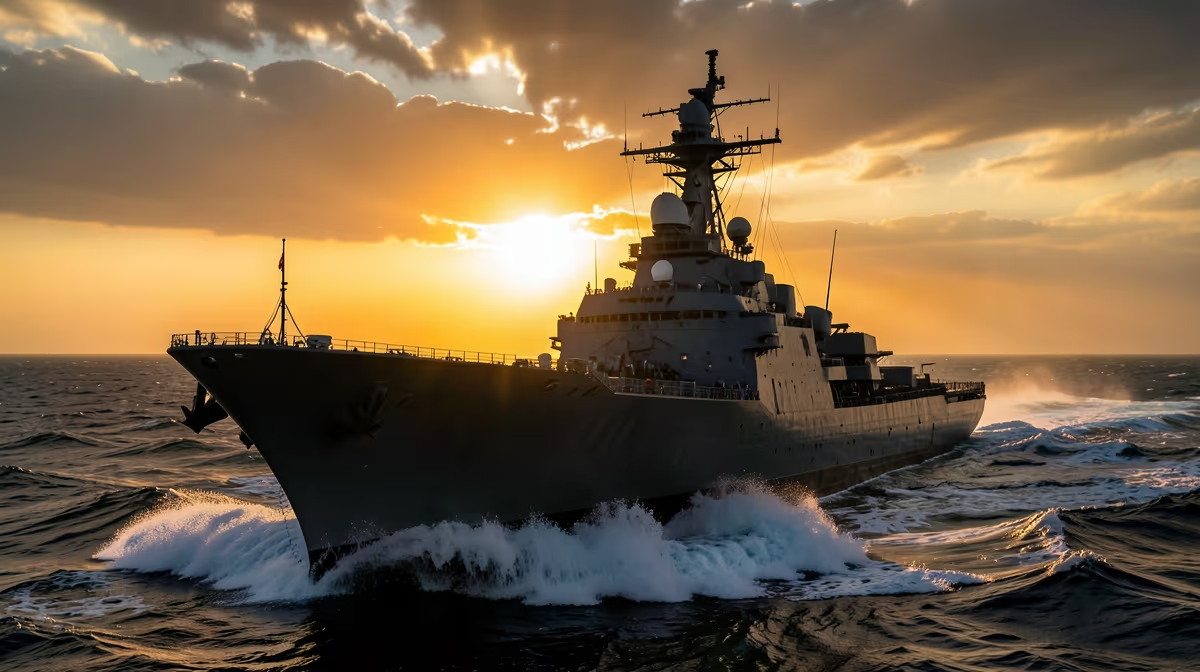
The United States military fired upon and disabled a vessel in the international waters of the Middle East on Tuesday following what officials described as aggressive actions that threatened regional maritime security. Recent developments highlight a critical navy incident as the us fires on ship during a targeted maritime security operation, raising immediate questions about freedom of navigation, rules of engagement, and the stability of vital commercial shipping lanes.
According to the Department of Defense, the incident occurred during a routine patrol when the unidentified vessel ignored multiple warnings to alter its course. U.S. naval forces engaged the ship after determining it posed an imminent threat to commercial shipping lanes and military personnel stationed in the region. This event unfolded rapidly as tensions in the region reached a boiling point, prompting the U.S. forces to respond to what they described as an imminent threat. Officials are still gathering details about the exact identity of the vessel and the nationalities of those on board. So far, the military has not released a full casualty report, but operations in the area remain active as authorities assess the situation and secure the surrounding waters.
Details of the Recent Navy Incident
The confrontation highlights the persistent tensions and security challenges facing international shipping routes in the area. Freedom of navigation patrols have been ramped up in recent months to deter hostile actions by non-state actors and foreign adversaries operating near critical chokepoints. Rescue and boarding operations were subsequently launched to assess the situation and provide aid to any survivors aboard the disabled vessel. Initial reports indicate no U.S. casualties, while casualty assessments for those on the targeted ship remain ongoing as military investigators gather evidence.
It is confirmed that a U.S. naval engagement took place resulting in a disabled vessel, with no U.S. casualties reported. The identity and origin of the targeted vessel, the exact nature of the threat it posed, and the status of any individuals aboard the ship are still under investigation. Intelligence reports flagged a suspicious vessel violating maritime boundaries, communication attempts failed, standard warning procedures were initiated, and engagement was authorized under self-defense protocols resulting in kinetic action. This triggered international fallout, diplomatic condemnation, and independent investigations.
Implications for Global Maritime Security
This event significantly raises the stakes in an already volatile region, heightening the risk of a broader military conflict. It also directly impacts global shipping lanes and international trade, which could lead to immediate disruptions and higher costs for goods worldwide. The disruption of vital commercial shipping lanes leads to increased insurance premiums, supply chain delays, and localized commodity price spikes. International shipping companies, global consumers facing potential supply chain delays, and military personnel deployed in the region are directly affected by these developments.
The incident happens against a backdrop of rising geopolitical tensions and increased naval patrols by the United States and its allies to protect vital commercial waterways from hostile actors. This situation tests the boundaries of freedom of navigation and the UN Convention on the Law of the Sea, while serving as a demonstration of executive resolve and military readiness to appease domestic security hawks and project strength to international adversaries.
Tactical Assessment and Strategic Context
The root cause of this engagement points directly to escalating maritime security enforcement coupled with miscalculated threat assessments in contested international waters. The tactical reality shares historical parallels with the 1988 USS Vincennes incident involving the downing of Iran Air Flight 655, highlighting the enduring risks of automated combat systems and decision-making under high stress.
Investigators will focus heavily on onboard safety protocols, mechanical failure, or hazardous cargo handling, with temporary restrictions placed on similar vessels entering the port. The intersection of private defense contractors, intelligence-sharing failures, and the increasing militarization of commercial vessel tracking forms a hidden angle that defense analysts continue to scrutinize as maritime patrols intensify.
Outlook and Immediate Next Steps
In the next 24 hours, search and rescue operations continue, initial damage assessments are conducted, and federal maritime agencies launch preliminary investigations into the cause of the fire. Moving into the next 72 hours, salvage operations begin, safety zones around the vessel are established, and preliminary statements are released by coast guard and shipping authorities regarding potential causes and environmental impact.
In a best case scenario, the fire is fully extinguished with zero casualties, minimal environmental leakage, and normal port operations resume within a few days. Conversely, the worst case scenario involves significant environmental contamination occurring, the ship suffering structural collapse blocking the shipping channel, and casualties reported among the crew.
Frequently Asked Questions
What causes most fires on US ships?
Most shipboard fires are caused by machinery space incidents, such as fuel leaks coming into contact with hot exhaust surfaces. Electrical malfunctions and galley accidents also contribute significantly to maritime fire emergencies. Proper maintenance and strict safety protocols are essential to prevent these hazards.
How do US Coast Guard regulations address ship fires?
The US Coast Guard enforces stringent fire safety standards under Title 46 of the Code of Federal Regulations. These rules mandate specific fire suppression systems, regular crew drills, and approved marine-grade materials on all commercial vessels. Compliance is rigorously inspected to ensure maximum readiness during emergencies.
What fire suppression systems are used on US vessels?
US vessels typically use a combination of fixed fire-extinguishing systems, such as CO2 flooding in engine rooms and water mist systems in accommodation areas. Portable extinguishers and fire mains with hydrants are also strategically placed throughout the ship. These systems allow crews to quickly combat localized fires before they spread.
Who is responsible for fighting a fire on a US flagged ship?
The ship's crew is the primary firefighting force, trained extensively in damage control and emergency response procedures. They follow the vessel's predetermined muster list and fire bill duties to tackle the blaze. In port, local municipal fire departments and the US Coast Guard may provide additional support.
Are cargo ship fires common in US waters?
While catastrophic ship fires are relatively rare, smaller machinery or cargo fires occur periodically in US coastal waters and ports. The rise of lithium-ion battery transport has also introduced new fire risks in container shipping. Authorities continuously adapt regulations to address these evolving maritime hazards.
What should a crew do immediately after a ship fire is detected?
The person who discovers the fire must sound the general alarm immediately and notify the bridge. The crew then assembles at designated muster stations while the master assesses the situation and initiates containment procedures. Ventilation and fuel sources are quickly shut down to starve the fire of oxygen.
Conclusion
The verified developments confirm that U.S. naval forces engaged and disabled a vessel in international waters after warnings were ignored, resulting in no U.S. casualties while broader investigations and rescue efforts continue. Authorities and rescue personnel are actively managing the immediate aftermath, prioritizing maritime security, environmental protection, and safe navigation through the affected region as official inquiries unfold.


.webp)

