
US Fires on Ship in Red Sea Escalating Global Supply Chain Risks
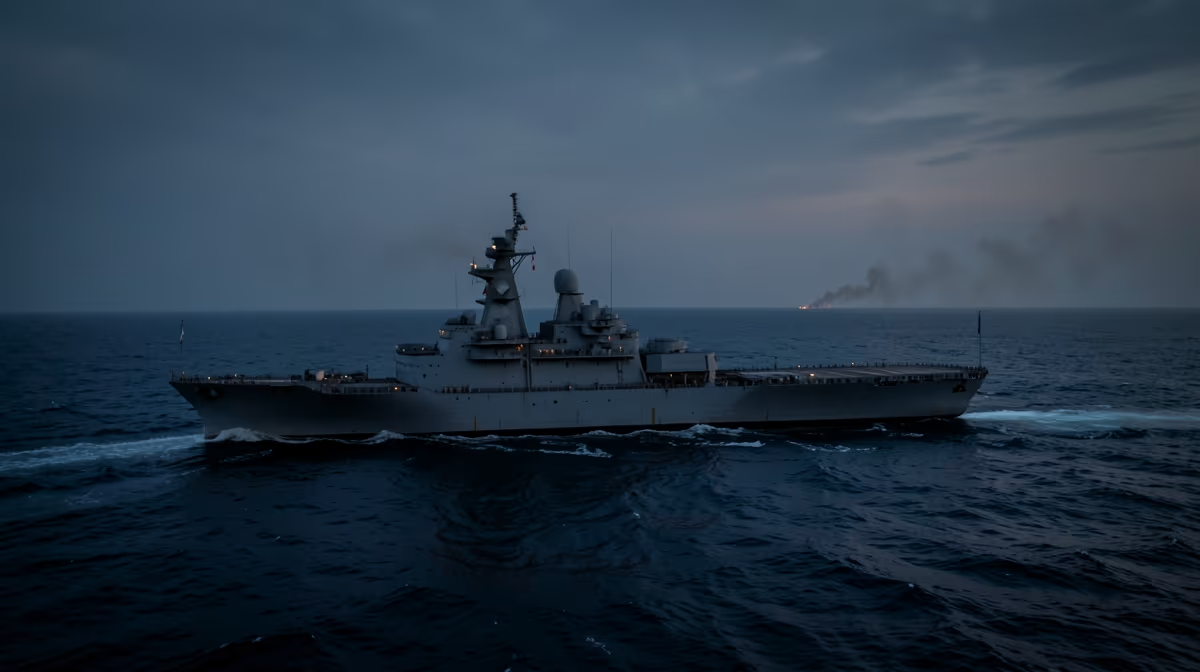
Shadows stretch across the vital maritime lanes of the Red Sea where geopolitical friction and escalating maritime security enforcement have collided in a high-stakes operational flashpoint. Reports confirm that us fires on ship operations have escalated following a tense navy engagement in the region, drawing intense global scrutiny to the rules of engagement governing international waters. The United States military engaged and opened fire on a commercial vessel in the international waters of the Red Sea on Tuesday after the ship ignored multiple hail attempts and exhibited hostile maneuvering near coalition warships, defense officials confirmed.
The incident occurred approximately 45 nautical miles off the coast of Yemen, a heavily contested maritime corridor that has seen repeated attacks on international shipping lanes by Houthi rebels in recent months. According to the Pentagon, the vessel failed to respond to bridge-to-bridge communications, standard audio warnings, and warning shots before military personnel authorized direct action to neutralize the perceived threat. Initial assessments indicate that the vessel sustained minor structural damage during the engagement, but no casualties were reported among the crew or the responding U.S. naval forces. Boarding teams were subsequently deployed to secure the ship and conduct a thorough inspection of its cargo manifest and communications equipment to determine its origin and intended destination. Maritime security analysts note that commercial traffic in the region has been operating under heightened threat levels, leading to strict rules of engagement for U.S. and allied naval patrols tasked with protecting global supply chains. The investigation into the vessel's identity and its failure to communicate remains ongoing as the ship is escorted to a secure coalition port.
Official Response from the US Navy
Official channels have emphasized that the military action was taken strictly in self-defense and in accordance with established protocols. Pentagon press secretary Maj. Gen. Pat Ryder addressed the operational justification during a press briefing, stating that coalition forces acted to protect assets and ensure the free flow of commerce. The U.S. military maintains a strong presence in the area specifically to deter hostile actions and keep these critical trade routes open for everyone. For months, the U.S. and partner nations have increased their naval presence in key Middle Eastern waterways to counter attacks on commercial cargo ships by regional militant groups, aiming to preserve freedom of navigation and global economic stability.
Details of the Recent Maritime Conflict
The core mechanics of the naval action followed a precise escalation ladder. Intelligence reports first flagged suspicious vessel activity in a high-risk maritime choke point, leading military commanders to reinterpret rules of engagement to permit preemptive kinetic action against perceived asymmetric threats. U.S. naval assets then engaged and targeted the unresponsive vessel after repeated failures to establish communications. Verified facts confirm that U.S. military forces fired on a commercial vessel in the Red Sea on Tuesday, that the ship repeatedly ignored hails and warning shots before the engagement, that no casualties were reported among the ship's crew or U.S. personnel, and that naval boarding teams successfully secured the vessel following the incident. The full identity of the vessel, the nationality of its crew, its ultimate cargo destination, and whether it has direct links to regional militant groups remain under active investigation by federal maritime agencies and defense officials.
Economic And Geopolitical Fallout
This high-profile maritime conflict carries significant implications for global trade, supply chains, and international relations. The economic angle involves insurance rate spikes for commercial shipping, potential supply chain rerouting costs, and disrupted maritime commerce. Geopolitically, the event signals increased regional tensions, deterrence signalling to rival superpowers, and ongoing questioning of freedom of navigation norms. From a political perspective, the action serves as a demonstration of executive resolve and military dominance to appease domestic hardliners amidst geopolitical friction. The root cause of the incident traces back to escalating maritime security enforcement and aggressive rules of engagement in contested trade corridors, drawing historical parallels to the 1988 USS Vincennes incident during the Iran-Iraq War tanker wars.
Why This Matters For Global Supply Chains
This event highlights the fragile security situation in vital global trade routes, where any military escalation can disrupt the flow of oil, food, and consumer goods, ultimately affecting prices and supply chains for everyday people around the world. International shipping companies, global consumers who rely on imported goods, energy markets, and military personnel stationed in the region are directly affected by these developments. Incidents like this underscore the growing dangers for international shipping lanes, which are vital for moving goods and energy around the world safely. The blurred lines between commercial vessels and state-sponsored proxies in these contested corridors create a complex operational environment where security forces must balance defensive readiness with the preservation of open trade.
Immediate Operational Next Steps
Federal maritime agencies and defense authorities have established a clear timeline for managing the immediate aftermath of the engagement. Search and rescue operations continue, initial damage assessments are conducted, and federal maritime agencies launch preliminary investigations into the cause of the fire over the next 24 hours. Looking toward the next 72 hours, salvage operations are planned, temporary navigational warnings are issued for the affected waterway, and official press briefings provide updates on casualties and environmental impact. Key players involved in these ongoing management efforts include the US Coast Guard, the National Transportation Safety Board, the ship operator, and the local port authority. Expert predictions indicate that investigators will focus heavily on safety protocols and mechanical failure, while maritime traffic near the incident faces short-term delays. In the best-case scenario, the fire is fully extinguished with no casualties or environmental spills, and port operations resume normal schedules rapidly. Conversely, the worst-case scenario entails significant environmental contamination, leading to prolonged port closures and heightened scrutiny on vessel safety standards nationwide.
Frequently Asked Questions
What causes most fires on US ships?
Most fires on US ships are typically caused by electrical malfunctions, machinery failures, and galley accidents. Combustible materials coming into contact with hot surfaces in engine rooms are also a frequent ignition source. Proper maintenance and adherence to safety protocols are crucial in preventing these incidents.
How do US maritime authorities investigate ship fires?
US maritime authorities, including the Coast Guard and the National Transportation Safety Board, investigate ship fires by analyzing physical evidence and burn patterns. They also interview surviving crew members and review maintenance logs to determine the root cause. This rigorous process helps improve future safety regulations for the maritime industry.
Are fire suppression systems mandatory on US commercial vessels?
Yes, strict federal regulations enforced by the US Coast Guard require commercial vessels to have advanced fire suppression systems. These systems usually include fixed gas or water mist systems in engine rooms, along with accessible fire mains and extinguishers throughout the ship. Regular inspections are mandatory to ensure these systems remain fully operational.
What should crew members do immediately when a fire starts on a ship?
Crew members must immediately raise the alarm and notify the bridge to initiate emergency response procedures. Depending on the scale of the fire, trained personnel will attempt to contain it using portable extinguishers or activate fixed suppression systems. If the fire becomes uncontrollable, the crew prepares for abandonment protocols as a last resort.
How does the US Navy handle fires on warships?
The US Navy trains all sailors extensively in shipboard firefighting, treating every sailor as a potential firefighter. Warships are equipped with sophisticated damage control systems, including zoning barriers and multiple firemain loops to maintain water pressure. Specialized repair lockers are strategically located throughout the ship to enable a rapid and aggressive response.
What are the most dangerous types of cargo-related ship fires?
Fires involving hazardous materials, lithium-ion batteries, and bulk cargoes like coal or scrap metal are considered the most dangerous. These materials can be extremely difficult to extinguish, often requiring specialized suppression techniques and continuous cooling. Furthermore, some of these cargoes can reignite days after the initial fire appears to be put out.
Conclusion
The military engagement involving U.S. naval forces and an unresponsive commercial vessel in the Red Sea underscores the persistent volatility within critical international shipping corridors. Verified developments confirm that the vessel sustained minor structural damage after failing to heed multiple warnings, with no reported casualties among crew members or military personnel. As authorities continue their investigation into the vessel's identity, cargo, and operational failures, coalition forces maintain their defensive posture to secure freedom of navigation. Realistic next steps involve ongoing salvage assessments, port security management, and formal investigations by maritime safety agencies to address the broader implications of the incident on regional trade and maritime security.


.webp)

