
US South Korea Military Drills Scale Back In Major Defense Policy Shift
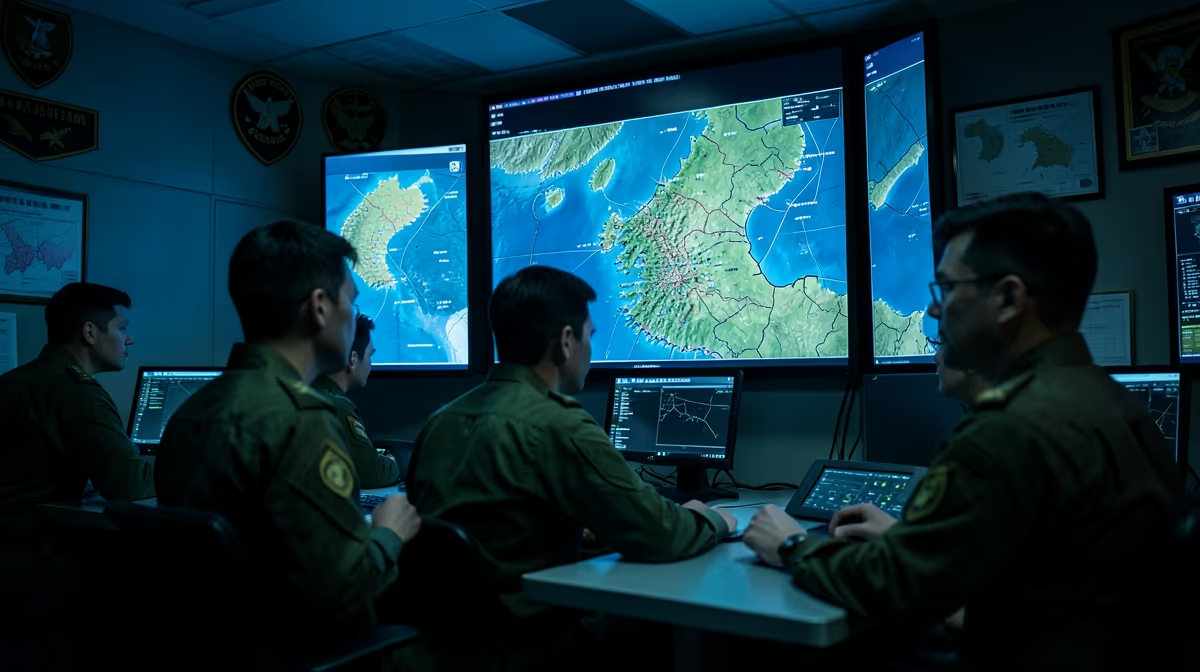
President Trump has ordered the Pentagon to scale back joint military exercises with South Korea, pointing to his "very good" relationship with North Korean leader Kim Jong Un as the primary reason. In a major shift in foreign policy, Trump scales back US South Korea military drills, citing ongoing diplomatic efforts with Kim Jong Un. The decision to reduce the military drills with a key Asian ally has drawn significant attention across international media outlets including CNN, ABC News, NPR, The Washington Post, and Forbes. According to the reports, the move represents a notable shift in US defense posture regarding the Korean Peninsula. Officials and analysts have raised concerns over what this means for US reliability in the region, while noting the administration's emphasis on diplomatic ties with Pyongyang. Seoul has also responded to the sudden shift in military coordination.
Background Context and Origins
For decades, the United States and South Korea have conducted large-scale joint military exercises to ensure military readiness against potential threats from North Korea. These exercises are historically viewed by Washington and Seoul as essential for defense, but are frequently condemned by Pyongyang as rehearsals for invasion. The root cause of the current policy shift stems from a strategic pivot driven by personal diplomacy and presidential preference to scale back joint military exercises with South Korea in light of purported good relations with North Korean leader Kim Jong Un.
President Trump ordered the Pentagon to reduce joint military drills with South Korea, citing positive personal ties with Kim Jong Un. Major news outlets including CNN, ABC News, NPR, The Washington Post, and Forbes reported on the decision. The decision has raised concerns over US reliability and sparked a response from Seoul.
Key Developments and What Unfolded
President Donald Trump has ordered the Pentagon to scale back joint military exercises with South Korea. The decision was explicitly linked to his self-described "very good" relationship with North Korean leader Kim Jong Un. The move has sparked significant debate, as these long-standing military drills are designed to maintain readiness and protect regional allies. While the administration is banking on diplomacy and personal rapport with Pyongyang, critics and analysts worry about the long-term implications for regional security.
- President Trump ordered the Pentagon to reduce joint military exercises with South Korea.
- Trump cited his "very good" ties and relationship with North Korean leader Kim Jong Un as the reason for the scale-back.
- Major news outlets including CNN, ABC News, NPR, and The Washington Post reported on the development.
- The decision has raised concerns among critics regarding US alliance reliability and security in the region.
- Seoul has responded to the announcement, which affects long-standing allied defense preparations.
Political and Geopolitical Angle
Domestic critics argue the move undermines traditional security alliances and questions US reliability, while proponents view it as a continuation of direct, leader-to-leader engagement aimed at reducing tensions on the Korean Peninsula. The decision directly impacts the security architecture in East Asia, altering US-South Korea deterrence posture against North Korea and potentially shifting strategic calculations for regional powers like China and Japan. Beyond the publicized diplomatic rapport, this unilateral adjustment may serve as an implicit signal to pressure Seoul regarding defense cost-sharing agreements or to test alternative diplomatic frameworks.
Trump has handed a gift to Kim Jong Un and deepened concerns over US reliability.
Economic Fallout and Security Assessment
Scaling back large-scale military drills potentially reduces the immediate operational and financial costs associated with deploying defense assets to the region, though it raises broader questions regarding long-term regional stability and defense spending. Changes to US military drills with South Korea directly impact geopolitical stability in East Asia and test the strength of traditional security alliances. It signals a shift toward personal diplomacy over conventional military deterrence, which could either open doors to peace or leave allies feeling vulnerable. The population affected includes South Korean citizens and government officials, US military personnel stationed in the region, North Korea, and neighboring countries like Japan and China.
| Timeline Event | Description |
|---|---|
| Phase 1 | President Trump orders the Pentagon to reduce joint military drills with South Korea, citing positive personal ties with Kim Jong Un. |
| Phase 2 | South Korean authorities respond to the announced drawdown amidst rising domestic and regional security concerns. |
| Phase 3 | International analysts and media outlets debate the implications of the decision for US alliance reliability and regional deterrence. |
Analyst View and Expert Perspective
Analysts would likely expect the decision to spark renewed debate among defense experts regarding alliance reliability and the effectiveness of using concessions for diplomatic engagement with North Korea. Past high-profile summits and unilateral halts to major military exercises during previous phases of US-North Korea diplomacy temporarily eased rhetoric but produced limited verifiable denuclearization progress.
The reduction in military drills serves as a diplomatic gesture that fosters a more constructive dialogue environment with North Korea without significantly compromising joint defense readiness, though worst-case projections warn it could be perceived as a weakening of the US security commitment to the region.
Next Steps and Outlook
Seoul is expected to release further official responses regarding the scaling back of joint military exercises, while regional defense officials analyze the operational impact of the directive given to the Pentagon. Diplomatic channels between Washington, Seoul, and international observers will likely evaluate the geopolitical consequences of leveraging personal ties with North Korea over traditional military readiness.
Frequently Asked Questions
Why did Donald Trump scale back US-South Korea military drills?
President Trump decided to reduce joint military exercises with South Korea primarily by citing his "very good" personal ties and relationship with North Korean leader Kim Jong Un. The decision reflects a shift in diplomatic approach toward Pyongyang.
What specific actions did Trump order the Pentagon to take?
Trump ordered the Pentagon to scale back and reduce the scope of joint military exercises conducted with key ally South Korea. This directive marks a tangible change in US military posture in the region.
How has South Korea responded to the scaling back of military drills?
Seoul has responded to Trump's decision to scale back the military exercises while navigating the implications for regional defense. The move has prompted discussions regarding alliance coordination and readiness on the Korean Peninsula.
Why are critics concerned about Trump reducing these joint exercises?
Critics argue that scaling back the drills hands a significant gift to Kim Jong Un without securing tangible denuclearization commitments in return. Furthermore, it has deepened existing concerns among allies regarding long-term US reliability and defense commitments.
What is the background behind US-South Korea joint military exercises?
For decades, the US and South Korea have conducted large-scale joint military drills to maintain defensive readiness against potential threats from North Korea. These exercises have frequently been a point of tension and a target for condemnation by Pyongyang.
What happens next following the reduction of US-South Korea drills?
Moving forward, military planners and diplomats will assess how the scaled-back exercises impact deterrence capabilities and future diplomatic negotiations with North Korea. Observers will also monitor whether North Korea reciprocates the gesture with diplomatic engagement.
Conclusion
President Trump has officially ordered the Pentagon to scale back joint military exercises with South Korea, citing his positive personal relationship with North Korean leader Kim Jong Un. This major foreign policy shift has been heavily covered by international news organizations including CNN, ABC News, NPR, The Washington Post, and Forbes, prompting immediate responses from Seoul and reigniting debates among defense analysts. As regional authorities and military planners evaluate the operational and strategic fallout, upcoming diplomatic and defense assessments will determine the long-term impact of this decision on the Korean Peninsula and the broader US-South Korea alliance.
Sources
- Trump says US will reduce joint military exercises with key ally South Korea — CNN
- Trump scales back US-South Korea drills, cites 'very good' ties with Kim Jong Un — ABC News - Breaking News, Latest News and Videos
- Trump orders Pentagon to scale back joint exercises with South Korea — NPR
- Trump has handed a gift to Kim Jong Un and deepened concerns over US reliability — CNN
- Trump reduces military exercises with South Korea, citing good ties with Kim Jong Un — The Washington Post
- Trump Scales Back Korea Military Drill Touting ‘Good Relationship’ With Kim Jong Un—Seoul Responds — Forbes