
NFL Brian Dawkins Video Triggers Clash With Department of Homeland Security
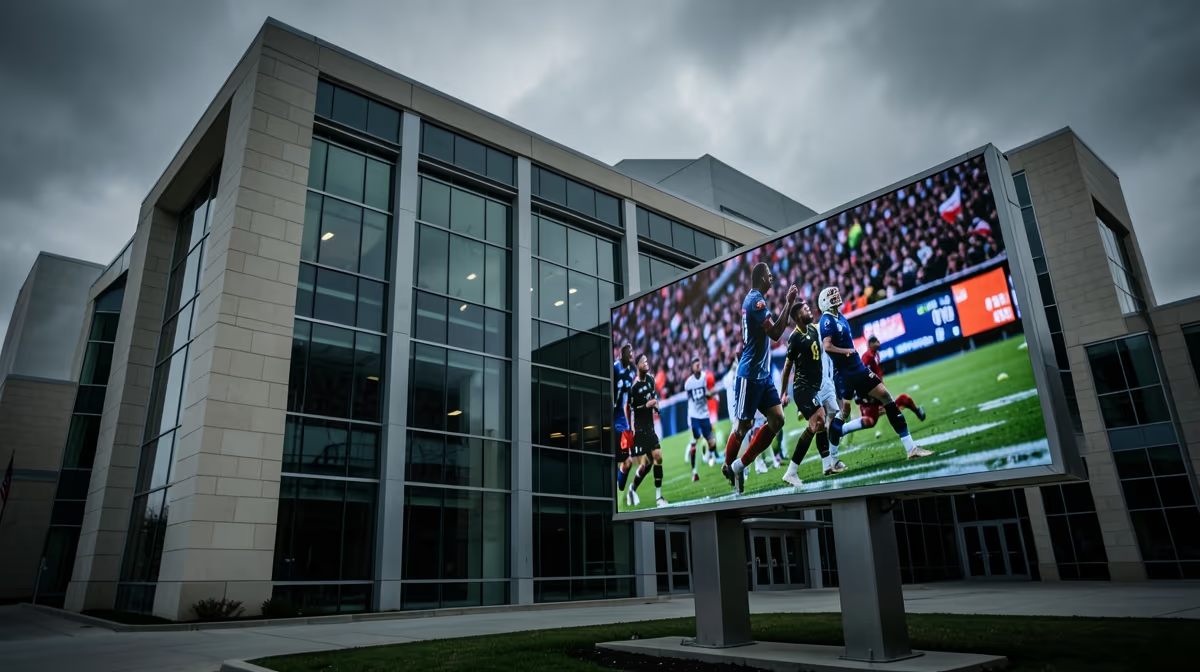
A federal security agency’s digital outreach has unexpectedly collided with the legal protections of professional sports icons, creating a public standoff over media rights. The latest controversy involves an official request regarding the NFL Brian Dawkins video shared online, signaling a breakdown in the clearance protocols usually required for high-profile endorsements.
The National Football League has formally intervened after the Department of Homeland Security (DHS) published a promotional video featuring the former Philadelphia Eagles star and Pro Football Hall of Famer. This unusual cross-section of professional sports copyright management and federal agency media usage has drawn significant scrutiny, as the league and the former player move to protect intellectual property from unauthorized government use.
The central conflict revolves around the unauthorized use of Brian Dawkins’ likeness by the Department of Homeland Security, prompting a formal takedown request by the NFL after the athlete confirmed he never granted permission for the material.
The Unauthorized Broadcast and Immediate Pushback
The controversy began when the Department of Homeland Security released a video on social media featuring Brian Dawkins. The production, intended for official government messaging, quickly gained traction but was immediately met with a public denial of consent from the athlete himself. Dawkins, an icon of the Philadelphia Eagles, stated clearly that he did not give permission for his likeness or appearance to be used in the material.
In response to the athlete’s public statement, the National Football League stepped in to represent the interests of its former player and the league's collective media rights. The NFL formally requested that the DHS remove the video from all social media channels. This move highlights the strict boundaries the league maintains regarding how its figures—past and present—are portrayed in official media, especially when that media is generated by a federal entity.
Clearance Protocol Failures
Reports from major news outlets, including ESPN and The New York Times, confirm that the lack of explicit consent was the primary driver for the takedown request. While federal agencies often partner with public figures for awareness campaigns or recruitment efforts, these collaborations typically require exhaustive licensing agreements. In this instance, the production appears to have bypassed standard protocol, leading to a direct confrontation between a private cultural institution and a federal executive agency.
Intellectual Property and the Right of Publicity
At its core, this incident is a dispute over intellectual property and the "right of publicity." The NFL and its players guard their brand equity with significant legal resources, ensuring that no commercial or political entity appropriates their image without a negotiated agreement. This situation highlights the importance of personal rights and the necessity of securing consent before utilizing a public figure's image to avoid legal and public relations complications.
The incident raises questions about the internal oversight of digital media teams within federal agencies. Analysts suggest that the root cause may lie in how federal contractors or media units procure and vet media assets. The unauthorized use of a prominent sports figure creates a conflict over likeness permissions and the boundaries of government use of public figures. Even when government campaigns have positive intentions, the failure to secure rights can lead to swift cease-and-desist actions.
Organizations must secure proper permissions before utilizing a private individual's or public figure's image to avoid legal and public relations complications.
Political and Institutional Friction
The standoff between the NFL and the DHS suggests a deeper institutional friction. There is a visible tension between federal executive agencies and private cultural institutions like the NFL regarding institutional autonomy and messaging control. This case represents a moment where a federal body attempted to co-opt sports culture for public outreach, only to be rebuffed by the league’s legal framework.
From a geopolitical and domestic perspective, the incident highlights friction regarding the perceived overreach of the security and communication apparatus into popular culture. When a federal agency uses a sports legend's image without authorization, it creates a precedent that the NFL and other private sectors are keen to shut down immediately. This is not just about one video; it is about the appropriateness of federal bodies utilizing private sector icons for government-sanctioned messaging.
Historical Parallels in Media Rights
This is not the first time a major entity has faced pushback for unauthorized media use. Historically, musicians and athletes have frequently issued demands for public takedowns when their songs or likenesses are used by political campaigns or government entities without a license. The NFL’s intervention mirrors these past actions, reinforcing the standard that celebrity status does not grant a government agency a "free pass" to bypass intellectual property laws.
Economic Impact and Brand Equity
The economic angle of this dispute is significant. The NFL manages multi-million dollar brand equity and image rights that are protected against unauthorized commercial or political appropriation. Allowing a federal agency to use a Pro Football Hall of Famer's likeness for free or without a contract could devalue future licensing opportunities for the player and the league.
By requesting the removal of the NFL Brian Dawkins video, the league is asserting that its media assets and the likenesses of its most famous alumni are not public domain. The protection of these assets is vital for the long-term economic health of sports branding. This situation serves as a reminder that even for a government agency like the DHS, the rules of intellectual property are non-negotiable.
Chronology of the Dispute
The timeline of the dispute shows a rapid escalation from the video's initial publication to the formal demand for its removal.
| Phase | Description |
|---|---|
| Publication | DHS publishes a social media video featuring former NFL star Brian Dawkins without his or the league's explicit authorization. |
| Public Response | Brian Dawkins publicly states he did not give permission for the video, leading to immediate public scrutiny. |
| Legal Intervention | The NFL formally requests the Department of Homeland Security to take the video down from all social media channels. |
| Resolution Stage | The NFL and DHS address the intellectual property dispute as the video is expected to be removed. |
Expert Prediction and Future Outlook
The immediate future of this controversy is likely to involve a swift removal of the content and a review of how the oversight occurred. In the next 24 hours, the Department of Homeland Security is expected to review the request made by the NFL. Within the next 72 hours, further statements may be released by the NFL, DHS, or Brian Dawkins to clarify the circumstances of the promotional video.
Expert Perspectives
Analysts and experts in sports media rights expect the video to be promptly removed from government channels while discussions regarding likeness permissions are resolved. The best-case scenario involves the DHS amicably taking down the video and reaching a mutual understanding with the league. However, the worst-case scenario could see prolonged friction between sports organizations and federal entities regarding the proper authorization and use of sports figures in official government content.
Ultimately, this situation will likely force federal agencies to implement more rigorous vetting processes for their digital media teams. Ensuring that every asset used in a public-facing campaign has a clear, documented chain of permission is essential for maintaining the credibility of government communication.
Frequently Asked Questions
Why did the NFL ask DHS to take down the Brian Dawkins video?
The NFL requested that the Department of Homeland Security remove a social media video featuring former Philadelphia Eagles star Brian Dawkins. Reports indicate that Dawkins stated he never gave permission for his likeness or appearance to be used in the material.
What is the background of the Brian Dawkins DHS video controversy?
The controversy emerged when a government-related social media post featured the former NFL safety without his authorization. The unexpected use of a prominent sports figure quickly drew attention from both league officials and media outlets.
Did Brian Dawkins give permission for the video?
No, according to reports covering the incident, the former Eagles star explicitly stated that he did not grant permission for his appearance. This lack of consent was a primary driver behind the NFL's intervention.
Who is affected by the NFL's request to Homeland Security?
The situation directly involves the NFL, the Department of Homeland Security, and former player Brian Dawkins. It raises questions about the unauthorized use of athlete likenesses in official government or agency communications.
What happens next regarding the removed Dawkins video?
Following the NFL and Dawkins' objections, attention turns to how federal agencies vet their promotional content and social media materials. Resolution typically involves compliance with right-of-publicity standards and the immediate removal of disputed media.
Which teams and organizations are involved in the Brian Dawkins news?
The incident centers around the National Football League (NFL) and former Philadelphia Eagles star Brian Dawkins, alongside federal entities like the Department of Homeland Security. Coverage of the event has been widely reported by major outlets including ESPN, CBS News, and The Athletic.
Conclusion
The request by the NFL for the Department of Homeland Security to remove a video featuring Brian Dawkins underscores the rigid legal boundaries surrounding athlete likenesses. With Dawkins confirming that he never granted permission for his appearance, the incident highlights a significant failure in the clearance protocols within the federal agency's media department. As the situation moves toward a resolution, it serves as a critical case study in the protection of intellectual property against unauthorized government usage. The next steps will likely involve the permanent removal of the content and a possible formal clarification from the agencies involved to prevent future infringements on the rights of public figures.
Sources
- Eagles' DeVonta Smith is headed into another stratosphere — ESPN
- ProphetX Promo Code FOXSPORTS Unlocks a $75 Bonus Ahead of Eagles vs. Bears — foxsports.com
- Eagles vs. Bears score, live updates: Case Keenum to start for Chicago over Tyson Bagent with Caleb Williams injured; Zach Ertz rejoins Philly — Yahoo Sports
- NFL asks DHS to take down video featuring Brian Dawkins; ex-Eagles star says he didn’t give permission - The Athletic — The New York Times
- NFL asks Homeland Security to take down video of former Philadelphia Eagle Brian Dawkins — CBS News
- NFL asks DHS to take down Brian Dawkins social media video — ESPN


.webp)

