
Nicolas Cage Malibu mansion sinkhole sparks an urgent coastal crisis
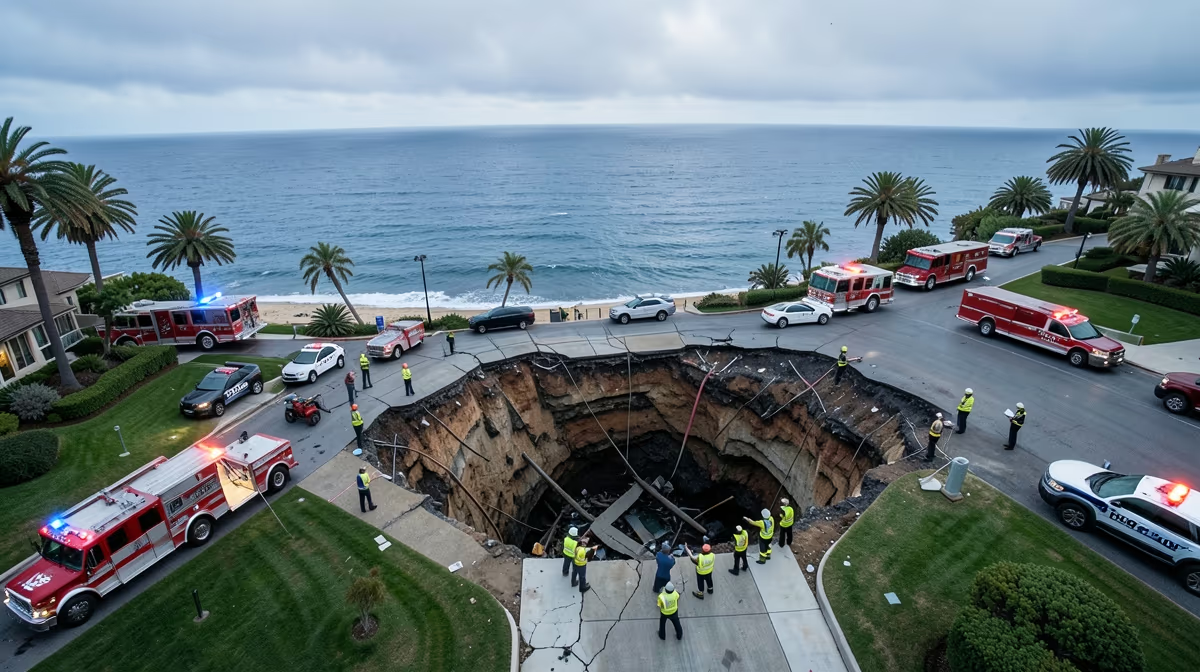
The fragile boundary separating multi-million dollar luxury real estate from the relentless power of the Pacific Ocean has fractured dramatically on the Southern California coast. A sudden geological collapse has thrust a prominent beachfront estate into the center of an unfolding environmental emergency, illustrating how quickly nature can reclaim the state's most coveted shores. Recent geological events have brought renewed attention to the Nicolas Cage Malibu mansion sinkhole, highlighting the growing threat of coastal erosion along the California coastline. The $10.5 million beachfront property became a visual testament to the instability of Malibu’s coast when a massive sinkhole formed, swallowing a significant portion of the driveway and triggering a race against time to save the surrounding neighborhood.
Extreme emergency measures are being deployed to try and save the neighborhood and the property following the sea wall failure.
What Unfolded in Malibu
On September 8, 2026, a sudden geological collapse on the Malibu shoreline thrust a prominent beachfront estate into the center of an environmental emergency. A massive sinkhole opened up abruptly beneath the driveway of Nicolas Cage's $10.5 million beachfront mansion, causing a dramatic collapse that swallowed a portion of the driveway. The incident, widely documented by Page Six, Fox News, and the Los Angeles Times, became a vivid example of the intense geological forces reshaping California’s coast.
The collapse occurred as a direct result of ongoing coastal erosion that has steadily undermined the local shoreline. A failing sea wall, meant to protect the mansion and adjacent properties from the Pacific Ocean, could no longer withstand the wave action. The Hollywood Reporter and FOX 11 Los Angeles reported that local emergency services and coastal engineers rushed to the scene to assess structural damage and deploy containment measures.
According to the New York Post, the damage has triggered a race against time. Extreme measures are being deployed to stabilize the site, not just to save the $10.5 million mansion, but also to protect the wider neighborhood from further destabilization caused by the failing sea wall.
How California Coastal Erosion Threatens Luxury Malibu Homes
The geological vulnerability of Malibu's coastline has renewed focus on the critical issue of coastal erosion California faces. Beachfront properties in the region are constructed on highly dynamic terrain, where cliffs, sand dunes, and bluffs meet the ocean. These geologic formations are constantly subjected to natural erosive processes, which are dramatically accelerated by strong wave action.
The Failure of Protective Sea Walls
Sea walls act as the primary line of defense against ocean waves, absorbing tidal energy. However, when these walls suffer structural failure, the consequences are swift. Water bypasses the barrier and rapidly erodes the soft subterranean earth.
In the case of the Nicolas Cage Malibu property, the failing sea wall allowed the ocean to wash out the support structures beneath the surface, leading directly to the formation of the massive sinkhole. This failure highlights the limitations of traditional engineering solutions and raises serious questions about long-term Malibu cliff stability.
Economic and Regulatory Implications
The financial impact of the sinkhole at the $10.5 million Malibu beachfront home extends far beyond immediate repair costs, signaling escalating risks for the luxury real estate market along the California coast. The economic fallout of severe California beachfront damage includes soaring insurance premiums and a potential loss of property valuation. As geological risks become more pronounced, obtaining insurance is becoming increasingly difficult. Homeowners are faced with the exorbitant costs of private emergency shore stabilization, which requires specialized coastal engineers to prevent complete structural loss.
Politically, the collapse is drawing intense scrutiny toward local coastal zoning laws and emergency infrastructure approvals. Local regulatory bodies must balance the demands of private property owners—who want to build stronger protective barriers—with the legal mandate to protect public beach access and minimize ecological damage. This disaster also highlights potential legal battles regarding liability for failing public infrastructure and sea wall maintenance.
Timeline and Immediate Next Steps
Managing a geological crisis of this scale requires rapid, coordinated action among key players, including local emergency services, coastal engineers, and neighborhood property owners. The timeline below illustrates the immediate sequence of events and the projected response:
| Estimated Timeline | Action and Status |
|---|---|
| Progressive Phase | Coastal erosion systematically undermines local sea walls along Malibu beachfront properties. |
| September 8, 2026 | A massive sinkhole suddenly opens, swallowing a portion of the driveway at the $10.5 million Malibu estate. |
| Next 24 Hours | Emergency services and engineers deploy structural stabilization efforts to secure the compromised property. |
| Next 72 Hours | Engineers evaluate the integrity of failing sea walls, analyze erosion risks, and plan remediation measures. |
During the next 24 hours, the primary focus remains on halting the progress of the sinkhole. Over the next 72 hours, engineers will conduct comprehensive assessments of the local sea walls to determine if the surrounding neighborhood is safe from further collapses.
The Historical Context of Malibu’s Coastline
The recent damage to the Nicolas Cage Malibu estate is not an isolated incident but rather part of a long history of environmental challenges. Malibu's geography has always been prone to dramatic shifts, landslides, and erosion.
Parallels to Past Disasters
Historically, the region has faced recurrent damage from severe winter storms and cliff collapses, particularly along the Pacific Coast Highway during past El Niño cycles. The combination of high tides, heavy rainfall, and powerful wave action has repeatedly compromised both public infrastructure and private luxury homes.
A geological survey of the Malibu coastline reveals that the terrain is in a state of constant retreat. When extreme weather events combine with aging, failed infrastructure, the natural rate of erosion accelerates dramatically, resulting in sudden failures like the sinkhole that swallowed the driveway.
Predictive Scenarios and Expert Outlook
Analysts expect the situation in Malibu to drive intense debates over the future of beachfront real estate. The long-term stability of these properties is increasingly threatened by broader environmental shifts, including sea level rise and more frequent extreme weather events.
Best-Case and Worst-Case Scenarios
Engineers have outlined two distinct paths for the affected Malibu property:
- Best-Case Scenario: Successful emergency shoring stabilizes the sinkhole, preventing further structural damage to the mansion while stable weather conditions allow engineers to rebuild the protective sea wall.
- Worst-Case Scenario: Continued coastal erosion and compromised sea walls lead to a secondary collapse, directly undermining the main structure of the $10.5 million mansion and posing severe safety risks to adjacent beachfront properties.
The expert prediction indicates that even if this specific property is saved, the incident will lead to heightened scrutiny of coastal erosion management. The vulnerability of prime US coastal real estate serves as a microcosm of the broader national and international climate adaptation crises.
This event brings public attention to the very real and accelerating threats of coastal erosion and climate-driven property destruction.
Frequently Asked Questions
What happened to Nicolas Cages Malibu mansion?
Nicolas Cages $10.5 million Malibu beachfront home suffered significant damage after a massive sinkhole opened up and swallowed part of the driveway. The incident was triggered by severe coastal erosion affecting the property and its failing sea wall.
Why did the sinkhole form at Nicolas Cages Malibu property?
The sinkhole formed as a direct result of ongoing coastal erosion in the area, which compromised the structural integrity of the beachfront property. A failing sea wall further exacerbated the conditions, leading to the dramatic collapse of the driveway.
How much is Nicolas Cages Malibu mansion worth?
The heavily impacted Malibu beachfront property is valued at approximately $10.5 million. The recent structural damage from the sinkhole and coastal erosion threatens the safety and value of the luxury estate.
Who is affected by the coastal erosion in Malibu besides Nicolas Cage?
Along with Nicolas Cage, other residents and homeowners in the Malibu neighborhood are facing severe threats from the worsening coastal erosion. Extreme measures and race-against-time efforts are being deployed to save the vulnerable coastal community.
What is happening next to save Nicolas Cages home and neighborhood?
Property owners and local officials are deploying emergency and extreme measures to stabilize the area following the sea wall failure. Efforts are underway to assess the damage and prevent further collapse from ongoing coastal erosion.
Which part of Nicolas Cages Malibu home was swallowed by the sinkhole?
The massive sinkhole primarily swallowed a significant portion of the driveway at the beachfront residence. This sudden collapse left the property damaged and highlighted the immediate danger posed by environmental factors in the area.
Conclusion
The sudden collapse at Nicolas Cage's $10.5 million Malibu beachfront mansion has brought the urgent reality of coastal erosion into sharp focus. The verified damage—specifically the loss of a significant portion of the driveway due to a massive sinkhole and a failing sea wall—underscores the fragility of even the most exclusive beachfront developments. As property owners, coastal engineers, and local emergency services coordinate rapid stabilization and property assessments over the coming days, the incident highlights a much larger, systemic challenge. The long-term future of Malibu's shoreline rests on how local communities and regulatory bodies adapt to relentless geological forces and a shifting coastal environment.
Sources
- Nicolas Cage’s $10.5M Malibu mansion nearly falls into massive sinkhole that swallowed driveway — Page Six
- Nicolas Cage's Malibu beachfront home damaged after driveway collapses into massive sinkhole — Fox News
- Nicolas Cage's Malibu home is damaged as massive sinkhole opens up from coastal erosion — Los Angeles Times
- Nicolas Cage’s Malibu Mansion Damaged by Massive Sinkhole Amid Coastal Erosion — The Hollywood Reporter
- Sinkhole forms after driveway collapses at Malibu beachfront home — FOX 11 Los Angeles
- Nicolas Cage home faces race against time as sea wall fails and extreme measures deployed to save neighborhood — New York Post


.webp)


.webp)
