
Strait of Hormuz Conflict Escalates After Unmanned Naval Asset Seizure
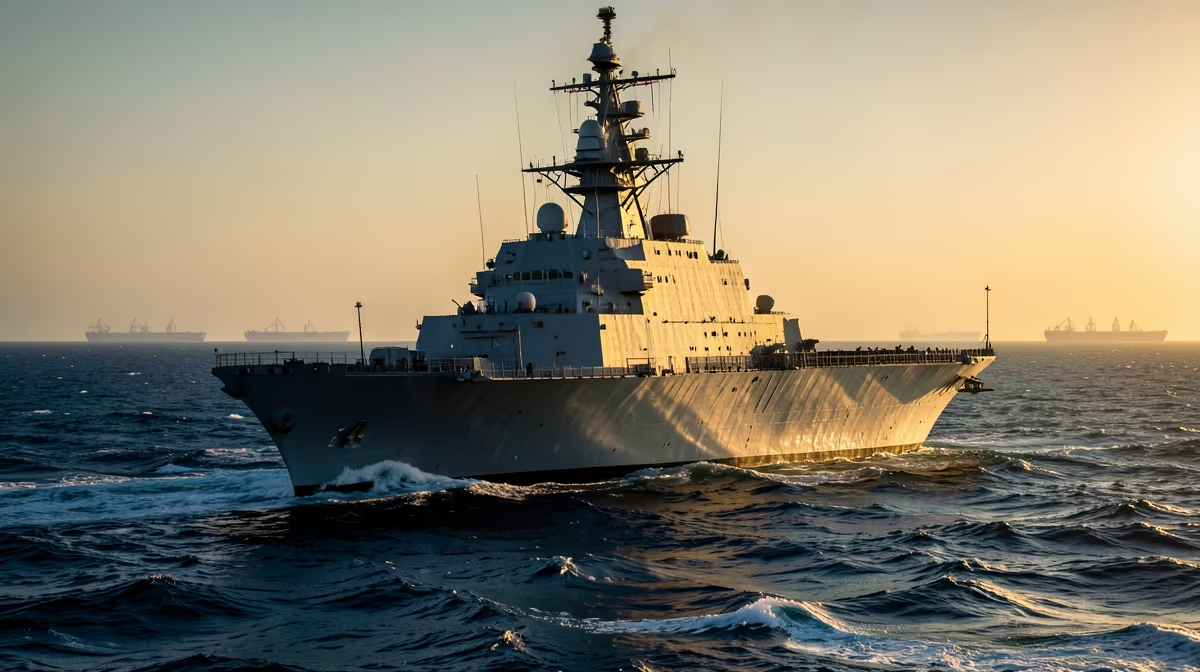
The silent depths of the Persian Gulf have become a high-stakes chessboard where the capture of a single underwater drone threatens to tip the balance of global peace. Beneath the waves of one of the world’s most volatile waterways, a technological seizure has ignited a diplomatic firestorm that now risks spilling into the open ocean. Global markets are closely monitoring the Strait of Hormuz conflict as tensions between Washington and Tehran continue to rise, following a series of maritime confrontations that have placed international defense analysts on high alert.
The seizure of a U.S. autonomous underwater vehicle by the IRGC, combined with the rejection of a strategic maritime deal, has pushed the world’s most vital energy chokepoint to its most precarious state in decades.
Maritime Posturing and the Seizure of Naval Assets
The tactical landscape in the Middle East shifted significantly this week when the Islamic Revolutionary Guard Corps (IRGC) announced the successful capture of a United States autonomous underwater vehicle (AUV). This incident, occurring within the narrow confines of the Strait of Hormuz, represents a sharp escalation in the direct military friction occurring at sea. The Iranian navy’s involvement in securing this high-tech asset underscores a growing capability to intercept and neutralize unmanned American surveillance technology in contested waters.
Beyond the immediate seizure, the IRGC has expanded its rhetoric to encompass a broader geographic theater. Commands have been issued directed at IRGC US warships operating as far out as the Indian Ocean, signaling that Tehran’s defensive perimeter is no longer confined to its immediate coastal zones. An Iranian general recently went public with a defiant stance, vowing to consolidate victory over the United States and Israel. This military posturing is viewed by regional analysts as an attempt to project strength and resolve during a period of intense international scrutiny.
The technological friction point of the AUV capture adds a new layer to the Iran US conflict. While surface-level encounters between fast-attack craft and destroyers have been common in the past, the targeting of autonomous systems suggests a shift toward a "shadow war" beneath the surface. This development forces a reassessment of naval security for all international forces operating in the region, as the IRGC continues to emphasize its military milestones and purported victories over Western adversaries.
Diplomatic Deadlock and the Rejection of the Hormuz Deal
While the waves of the Gulf remain turbulent, the corridors of power in Washington and Tehran are equally unsettled. The prospect of a de-escalation framework recently dimmed after President Donald Trump rejected a proposed deal aimed at reopening the Strait of Hormuz and easing maritime restrictions. This rejection has been framed by the current administration as part of a broader hardline strategy, viewing such offers through a lens of strict deterrence rather than genuine diplomatic outreach.
In the wake of this rejection, the Iranian leadership has presented a dual-track response. On one hand, an Iranian minister stated emphatically that negotiation remains the only viable path to ending the conflict. On the other, the military wing continues to issue threats of "consolidating victory." Despite the hardening rhetoric, the diplomatic door has not been completely slammed shut. Iran's foreign minister is reportedly keeping indirect talks with the United States open, suggesting a back-channel effort to test the parameters of a controlled de-escalation.
The structural deadlock over regional hegemony continues to thwart formal progress. Iranian officials face significant domestic pressure to maintain a posture of defiance, while the U.S. remains committed to a policy that avoids perceived concessions. This friction has created a scenario where official deals are publicly discarded, yet indirect diplomatic channels managed by foreign ministers are quietly utilized to prevent an accidental slide into all-out kinetic warfare.
Global Economic Fallout and Energy Corridors
The Strait of Hormuz conflict is not merely a regional security issue; it is a primary driver of global economic anxiety. As one of the world’s most vital energy transit chokepoints, the Strait serves as the artery through which a massive portion of the world's oil supplies must pass. Any disruption—or even the credible threat of one—introduces immediate volatility into petroleum markets and international supply chains.
The recent threats against IRGC US warships and the seizure of maritime assets directly imperil these energy corridors. Global consumers and international shipping companies are the first to feel the impact as insurance premiums for transit through the Gulf rise and energy prices react to the instability. Nations heavily reliant on Middle Eastern oil imports are finding their economic security tethered to the shifting moods of the IRGC and the policy decisions of the White House.
The Strait of Hormuz is one of the world's most vital energy transit chokepoints, through which a massive portion of global oil supplies passes.
The potential for a naval blockade, whether partial or symbolic, remains the "sword of Damocles" hanging over the global economy. Security analysts note that the current environment of brinkmanship creates a hair-trigger atmosphere where a single miscalculation by a naval commander could lead to a spike in global oil prices and broader economic instability worldwide.
Analytical Perspective: Brinkmanship and Root Causes
To understand the current escalation, one must look at the root cause: a structural deadlock over maritime security and regional influence. This is not a isolated incident but rather a manifestation of high-stakes brinkmanship between Tehran and Washington. The political angle is clear—the Iranian leadership seeks to consolidate domestic support by projecting an image of victory over the U.S. and Israel, while the Trump administration uses the rejection of deals to frame its negotiations through a philosophy of "maximum deterrence."
Geopolitical Implications
The Historical Parallel
Strategic Timeline of Recent Escalations
The following table outlines the sequence of events that have led to the current heightened state of alert in Middle East geopolitics.
| Event Sequence | Action Taken | Current Status |
|---|---|---|
| Deal Proposal | Iran offers terms to reopen and stabilize the Strait of Hormuz. | Rejected by the U.S. |
| Diplomatic Rejection | President Trump formally rejects the proposed deal. | Diplomatic stalemate. |
| Maritime Seizure | IRGC captures a U.S. autonomous underwater vehicle (AUV). | Asset remains in Iranian custody. |
| Military Rhetoric | IRGC issues threats to U.S. warships in the Indian Ocean. | Naval alert levels increased. |
| Back-channel Comms | Iran’s foreign minister maintains indirect talks with the U.S. | Channels remain functional but fragile. |
The Road Ahead: Potential Scenarios
As the situation evolves, the next 24 to 72 hours are expected to be critical. In the immediate term, tensions will remain elevated as the IRGC continues to tout the seizure of the U.S. underwater drone. Defense analysts anticipate further diplomatic maneuvering and potential retaliatory or defensive posturing by U.S. naval forces in the Strait of Hormuz and the Indian Ocean.
Expert Prediction
Best-Case vs. Worst-Case
Frequently Asked Questions
What is happening in the Strait of Hormuz conflict between Iran and the US?
Tensions have escalated sharply as the Iranian Revolutionary Guard Corps (IRGC) recently claimed to have seized a US autonomous underwater vehicle in the strategic waterway. Meanwhile, Iranian officials continue to issue defiant vows while also leaving the door open for indirect talks.
Why did Trump reject the recent Hormuz deal offered by Iran?
President Trump rejected Iran's proposed offer to reopen the vital Strait of Hormuz, maintaining a hardline stance against the regime. Consequently, Iranian ministers have stated that only genuine negotiation can ultimately resolve the ongoing conflict.
Who is affected by the escalating tensions in the Strait of Hormuz?
Global shipping, international trade, and energy markets are heavily impacted because a significant portion of the world's oil transit relies on the Strait of Hormuz. Additionally, military forces operating in the region face heightened risks due to active threats against warships.
What happens next in the Iran-US diplomatic standoff?
While Iran's foreign minister keeps indirect diplomatic talks open with the United States, military rhetoric remains intense on both sides. Future developments will likely depend on whether either nation is willing to compromise on maritime access and nuclear or regional policies.
What is the background of the current military posturing by Iran?
The recent confrontations build upon long-standing geopolitical animosity and maritime disputes in the Persian Gulf and surrounding waters. Iranian military leadership has increasingly emphasized consolidating victories over adversaries like the US and Israel.
What specific maritime asset did the IRGC claim to capture?
The IRGC specifically claimed to have captured a US autonomous underwater vehicle (AUV) operating within the Strait of Hormuz. This incident adds a new technological friction point to the already volatile maritime interactions between Iranian and American forces.
Conclusion
The current escalation in the Strait of Hormuz represents a dangerous intersection of military technological friction and diplomatic failure. With the IRGC’s seizure of an American underwater drone and the rejection of a vital maritime deal by the Trump administration, the standoff has moved beyond rhetoric into the realm of active asset capture. While Iranian leadership vows to consolidate its victories, the maintenance of indirect diplomatic channels offers a slim hope for de-escalation. The global community remains on edge, as the stability of the world's energy supply hinges on the next moves made in this high-stakes maritime game. Realistic next steps involve a period of intense naval posturing as both Washington and Tehran weigh the costs of a direct confrontation against the necessity of a negotiated settlement.
Sources
- Iran war live: General vows to ‘consolidate victory’ over the US and Israel — Al Jazeera
- Iranian minister says only negotiation can end conflict after Trump rejects Hormuz deal — BBC
- Iran's foreign minister keeps indirect talks with the U.S. open; Iranian navy claims capture of underwater drone — CNBC
- Iran's IRGC claims to have seized US autonomous underwater vehicle in Strait of Hormuz — The Jerusalem Post
- IRGC threatens US warships in Indian Ocean — The Telegraph
- Iran live updates: Trump rejects Iran offer to reopen Strait of Hormuz — ABC News - Breaking News, Latest News and Videos


.webp)

