
Utah Postal Worker Indicted After Mail Ballots Discovered in Trash
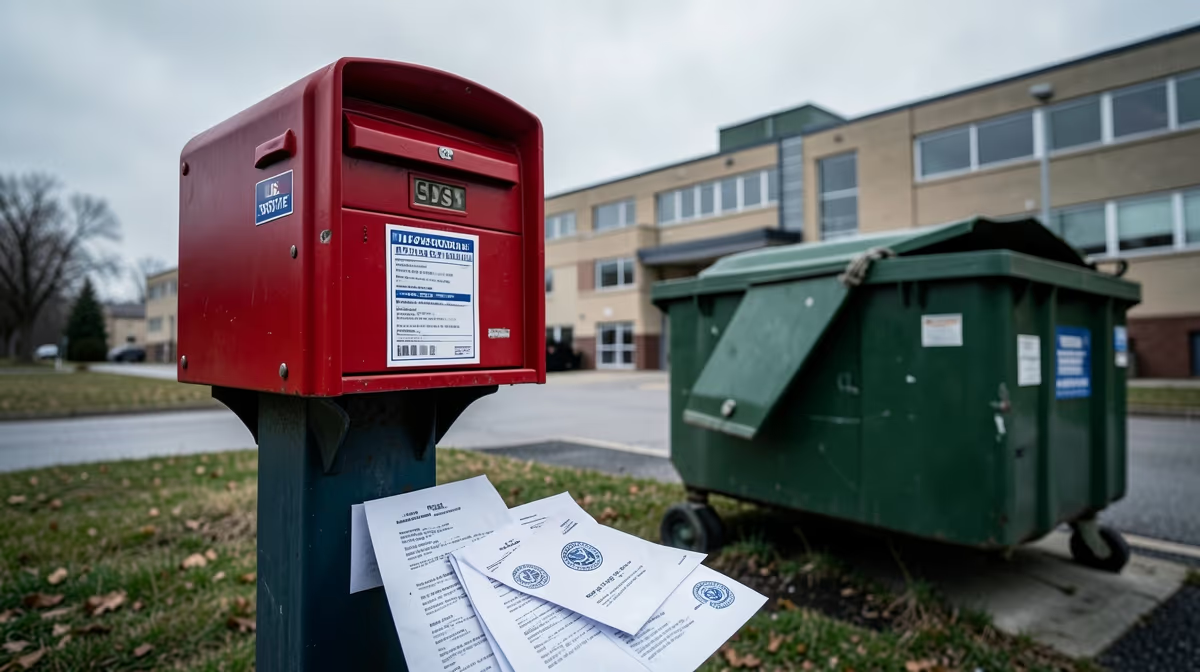
The sight of official election mail resting in a trash bin is more than a logistical failure; it is a direct challenge to the mechanisms of American democracy. Federal authorities have taken swift action as the Utah postal worker ballot dumping case unfolds, highlighting ongoing concerns about mail-in voting security and the reliability of the nation’s largest delivery infrastructure. The Department of Justice (DOJ) has formally moved forward with a federal indictment against a former United States Postal Service (USPS) employee, marking a significant moment in the intersection of federal law enforcement and election integrity.
The illegal disposal of approximately 300 mail-in ballots during a state primary has triggered a federal indictment, fueling a high-stakes national debate over USPS security and the safety of vote-by-mail systems.
Details of the Federal Indictment and DOJ Charges
The core of the federal case centers on the actions of a former postal employee in Utah who allegedly bypassed the fundamental duty of the USPS: the secure delivery of mail. According to the Department of Justice, the worker was officially indicted following an investigation into the disposal of election materials during a recent state primary election. Federal prosecutors have filed charges based on the discovery that hundreds of ballots were diverted from their intended path and discarded in the trash.
Scope of the Discarded Mail
The investigation, which involved the U.S. Postal Inspection Service, revealed a specific and concerning scale of interference. - Approximately 300 mail-in ballots were recovered from the trash. - The incident took place during the critical window of a Utah state primary election. - The former employee faces federal prosecution for interfering with the delivery of election mail.
While mail-in voting is a standard practice utilized by millions across the United States, the legal handling of these materials is governed by strict federal statutes. When these protocols are breached, it moves beyond an administrative error into the realm of federal criminal law. The DOJ’s swift indictment signals an intent to maintain a zero-tolerance policy regarding the mishandling of election-related logistics.
Impact on Election Integrity and USPS Security
When election mail or ballots are improperly discarded, it directly threatens the democratic process by potentially disenfranchising voters whose voices fail to be counted. The Utah case has quickly drawn national attention, serving as a case study for the vulnerabilities inherent in decentralized mail-in voting logistics. For the voters in the affected Utah jurisdiction, the immediate impact was the potential silencing of their participation in a state primary.
The Threat of Disenfranchisement
The primary victims in this incident are the local election officials and, most importantly, the individual citizens who relied on the postal service to transmit their votes. Each discarded ballot represents a missed opportunity for a citizen to influence the outcome of their local government. Beyond the local level, such incidents contribute to a broader erosion of public trust in the secure handling of mail-in voting systems, which are a cornerstone of modern electoral access.
| Key Metric | Data Point |
|---|---|
| Region Affected | Utah Jurisdiction |
| Election Cycle | State Primary Election |
| Number of Ballots | Approximately 300 |
| Leading Investigation Agency | U.S. Postal Inspection Service |
| Legal Venue | Federal Court System |
Analyzing the Root Causes of Operational Failure
The vulnerability of decentralized mail-in voting logistics, combined with individual operational misconduct within the USPS, creates systemic trust deficits during high-stakes election cycles. Analysts monitoring the situation suggest that while the act itself was performed by a single individual, the context suggests deeper pressures within the postal infrastructure.
The vulnerability of decentralized mail-in voting logistics combined with individual operational misconduct within the United States Postal Service creates systemic trust deficits during high-stakes election cycles.
Workforce and Operational Strains
Beyond the political theater that often follows such incidents, the case highlights acute operational strains and workforce retention challenges within regional postal facilities. These internal pressures could be a driving factor behind a rise in mail mishandling incidents across various service sectors. When employees are under-resourced or facilities are overextended, the risk of individual misconduct—or a total breakdown in protocol—increases. This hidden angle suggests that fixing election security may require more than just legal prosecution; it may necessitate a re-evaluation of the logistical health of regional postal hubs.
Political and Geopolitical Dimensions
The incident has quickly become a flashpoint in broader partisan debates over election integrity. Political factions have begun to weaponize administrative failures to either challenge or defend mail-in voting infrastructure and USPS reliability. Reports from legal watchdog groups like Democracy Docket indicate that the DOJ case is being discussed in the context of broader USPS court rulings and the ongoing push for specific voting agendas.
Weaponization of Administrative Failures
The political angle of the Utah ballot dumping case is significant. 1. Critics of mail-in voting utilize the incident as evidence of inherent flaws in the system. 2. Proponents of voting access argue that the swift indictment proves the system’s oversight mechanisms are working as intended. 3. Federal entities are caught in the middle, forced to balance the need for transparency with the need to maintain institutional stability.
On a geopolitical level, while this is a domestic issue, vulnerabilities in American electoral administration are closely monitored by international observers. The perceived stability and robustness of U.S. democratic institutions abroad can be impacted by how effectively the government responds to localized scandals like this one.
Economic Fallout and Institutional Damage
Institutional damages from this case directly impact public confidence in logistical operations. This loss of trust forces federal entities to allocate greater resources toward compliance, surveillance, and secure ballot tracking mechanisms. There is a tangible economic cost to ensuring election security, and each breach necessitates a re-investment in training and oversight to prevent recurrence.
Resource Allocation for Surveillance
As the Department of Justice continues its prosecution, the USPS may be forced to implement more rigorous surveillance of mail handling during election periods. This includes increased postal inspection audits and potentially more sophisticated tracking for election-specific mail. While necessary for security, these measures add layers of cost and complexity to an already strained federal service.
Looking Ahead: Legal and Social Predictions
As the case moves through the federal court system, the next 24 to 72 hours are expected to bring further details regarding the specific charges and the evidence collected by the U.S. Postal Inspection Service. Legal analysts expect heightened scrutiny on postal handling procedures and an increase in political debate surrounding the security of mail-in ballots.
Projected Scenarios
In the best-case scenario, the incident is handled as an isolated criminal offense by an individual employee. This leads to swift accountability, the recovery of affected ballots (where possible), and a reaffirmation of the robustness of mail-in voting security. However, the worst-case scenario involves the case being leveraged to intensify broader partisan battles, potentially eroding public trust in mail-in ballots on a national scale.
Experts predict that the outcome of this trial will set a precedent for how individual mail tampering is prosecuted in the future. The focus will likely remain on whether this was a singular act of negligence or a symptom of larger oversight gaps that need to be addressed before the next major election cycle.
Frequently Asked Questions
What did the Justice Department charge the Utah postal worker with?
The Justice Department charged a Utah postal worker after hundreds of mail-in ballots were allegedly discovered dumped in the trash during the state primary. Federal authorities indicted the former postal employee following an investigation into the discarded election materials.
How many mail-in ballots were thrown away in the Utah incident?
Reports indicate that approximately 300 mail-in ballots were allegedly disposed of in the trash by the postal worker. The discovery of these hundreds of ballots quickly prompted federal scrutiny and criminal charges.
Why is the Utah ballot dumping case significant?
Beyond the local criminal charges, the case has drawn broader national attention as political and legal observers debate its implications. The Justice Department has utilized the incident to address wider debates surrounding postal service operations and election security.
Who was affected by the discarded ballots in Utah?
Voters whose mail-in ballots were thrown away during the state primary were directly impacted, potentially having their votes silenced or delayed. The incident also impacts public trust in the secure handling of mail-in voting systems.
What happens next for the accused postal worker?
Following the indictment, the individual will move through the federal court system to face the charges brought by the Justice Department. Legal proceedings will determine the penalties and legal consequences for interfering with mail and election ballots.
When did the Utah postal worker incident occur?
The case came to light surrounding Utah's state primary election cycle, with federal indictments and announcements from the Department of Justice issued in September 2026. Authorities quickly stepped in to investigate how and why the mail-in ballots ended up in the trash.
Conclusion
The federal indictment of a Utah postal worker for discarding hundreds of mail-in ballots represents a critical test for the United States' election security infrastructure. While the investigation by the U.S. Postal Inspection Service and the subsequent charges by the Department of Justice demonstrate that oversight mechanisms are active, the incident has exposed vulnerabilities in the decentralized logistics of mail-in voting. Approximately 300 ballots were recovered, but the damage to public confidence and the potential disenfranchisement of voters remain central concerns. As the case moves through the federal court system, it will likely serve as a focal point for debates on USPS oversight and the ongoing protection of the democratic process. The legal proceedings will determine the ultimate accountability for this breach, while the broader impact will continue to shape policy and political discourse surrounding the integrity of future elections.
Sources
- Justice Department charges Utah postal worker for dumping mail ballots in trash during state primary — AP News
- Placerville postal worker sentenced for stealing medication from veterans — FOX40
- Former Postal Worker Indicted After Allegedly Disposing of Hundreds of Mail-In Ballots in Utah — Department of Justice (.gov)
- DOJ seizes on Utah ballot dumping case to attack USPS court rulings, push Trump’s anti-voting agenda — Democracy Docket
- Utah postal worker indicted for allegedly throwing away 300 mail-in ballots — East Idaho News


.webp)


