
French School Fires Spark Nationwide Unrest That Threatens the State
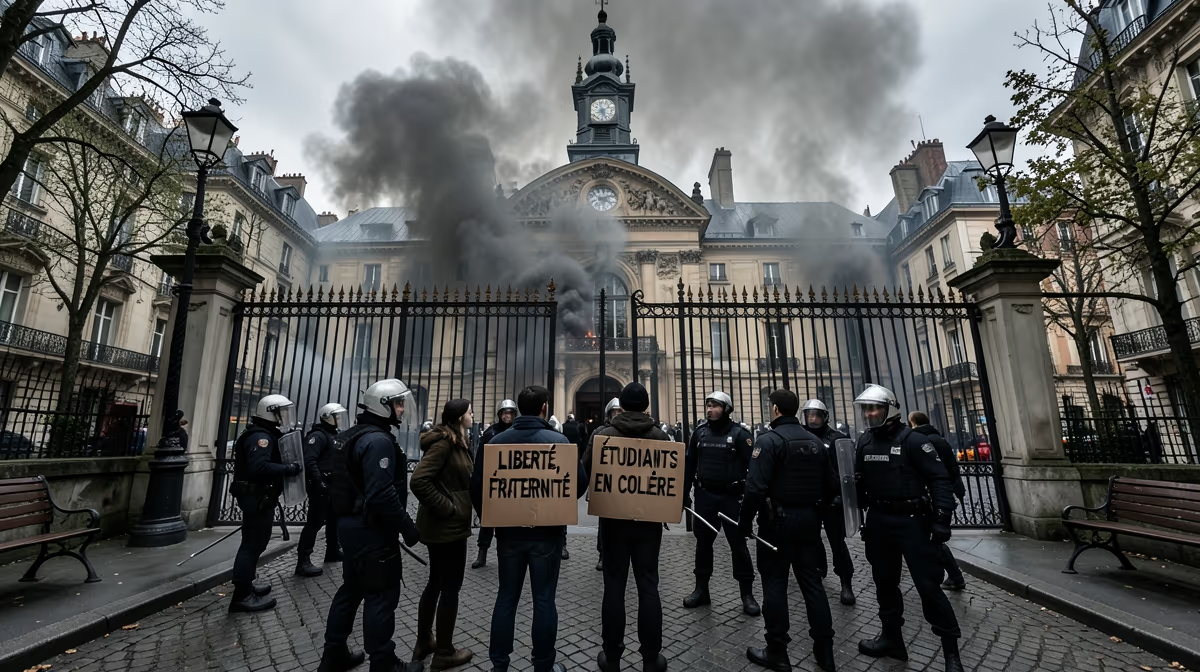
Plumes of acrid smoke rising above the gates of French educational institutions have become the starkest symbols of a national education system in a state of fracture. What began as localized grievances over building maintenance has rapidly transformed into a nationwide security crisis that challenges the very stability of the French public sector. Recent French school fires and protests have escalated tensions across the country as students and educators voice their mounting frustrations regarding the deteriorating state of their learning environments.
The escalation from facility neglect to extreme incidents like teacher assaults and arson reflects a deeper breakdown in the social contract between the state and marginalized urban youth communities.
The Escalation of Nationwide Unrest
The scale of the current civil unrest has reached a critical threshold, with high school students across France engaging in demonstrations that have frequently spiraled into violence. These protests are not merely confined to marches; they have been marked by fires set both inside and outside school buildings, turning educational hubs into zones of conflict. Reports indicate that the situation has intensified to alarming levels, with hundreds of individuals held by authorities and dozens wounded as clashes with law enforcement become increasingly frequent.
The nature of the violence has shocked the nation, involving incidents that go far beyond traditional student strikes. In some of the most severe reports, schools have been set alight, and in one dramatic escalation, a teacher was doused in petrol. These events have created an atmosphere of fear and volatility, as the Paris school riots update suggests that the unrest is spreading rapidly from the capital to other major urban centers. International media outlets, including the BBC, RFI, and CNN, have highlighted the severity of these confrontations, noting that the sheer volume of arrests underscores a significant challenge to public order.
Behind the Unrest: Understanding French School Fires and Protests
At the heart of this explosive anger are systemic infrastructure failures that have plagued the French education system for years. Protesters are vocalizing intense frustration over run-down buildings that many describe as unfit for purpose. These physical conditions, ranging from crumbling walls to inadequate heating and ventilation, have become the visible catalyst for student rage. However, the grievances extend beyond the physical structures to the very staffing of the institutions.
Teacher shortages in France have reached a breaking point, leaving many students without consistent instruction and increasing the burden on remaining staff. This chronic lack of personnel has created an environment where students feel their future is being compromised by a lack of state investment. The combination of deteriorating facilities and a depleted workforce has fostered a sense of abandonment among the youth, who view their schools as symbols of state neglect rather than opportunity.
The Root of Systemic Underfunding
Analysts point to decades of systemic underfunding as the primary driver of this crisis. The current friction is a direct result of fiscal austerity measures clashing with the escalating costs required to maintain a massive national public infrastructure. While the government has attempted to manage national budgets, the cumulative effect on public services has left high schools in a state of disrepair. This economic angle suggests that the protests are a symptom of a much larger struggle to balance the books while meeting the basic needs of the population.
The Political Response and Security Assessment
The severity of the student demonstration unrest France is currently witnessing has forced a high-level government response. The French Prime Minister has been compelled to hold emergency crisis meetings to address the mounting chaos and coordinate a strategy between the education ministry and law enforcement. This domestic challenge tests the administration's authority and its ability to maintain public order without further inflaming the grievances of the youth.
When peaceful demonstrations spiral into violent clashes and emergency government interventions, it signals a major breakdown in communication between citizens and state leaders, potentially sparking broader social and political instability.
The government currently faces a difficult balancing act. On one hand, there is an immediate need for strict security measures to curb arson and protect students and staff. On the other hand, the administration must address the underlying issues of school conditions to de-escalate the situation permanently. Failure to address the root causes risks further alienating a generation of students who already feel marginalized by the central government.
Impact on Public Safety and Infrastructure
The impact of these protests extends far beyond the school gates, affecting: - Education infrastructure: Significant property damage from fires and riots. - Public safety: Dozens of injuries among students, staff, and law enforcement. - Government stability: A mounting political crisis that requires constant emergency management. - Community relations: Strained trust between local communities and the state.
A Shifting Landscape: Historical and Geopolitical Context
France has a long and storied history of student-led protests and labor demonstrations. Historically, walkouts and street marches have been the primary tools used by citizens to pressure the government over education reforms and public funding. Analysts draw parallels between the current unrest and the 2005 French riots, which also saw widespread clashes between youth and the state.
While primarily a domestic crisis, the image of a major European Union power struggling with violent internal unrest has significant geopolitical implications. Widespread social instability in France draws intense international scrutiny, projecting an image of domestic vulnerability. The crisis exposes the fragility of the social contract in one of the world's leading economies, suggesting that the friction between fiscal constraints and public service expectations is a challenge that resonates across the continent.
Chronology of the Crisis
The development of this unrest followed a clear trajectory from grievance to open conflict.
| Phase | Development |
|---|---|
| Accumulation | Long-standing grievances over run-down buildings and teacher shortages build nationwide. |
| Escalation | Protests rapidly transform into violent clashes, arson at schools, and widespread arrests. |
| Emergency | The French Prime Minister convenes crisis meetings as the situation threatens public order. |
The Path Ahead: Future Outlook
The next 24 to 72 hours are expected to be critical for the stabilization of the country. Experts predict continued student protests and heightened security measures at high schools as the government attempts to regain control. There is a strong likelihood of further emergency policy announcements from the Prime Minister’s office as they seek to respond to the arson incidents and the demands of student unions.
Potential Scenarios
The expert prediction suggests that the government will walk a fine line between security and diplomacy.
- Best-Case Scenario: Emergency talks between government officials and student representatives lead to a concrete commitment to funding infrastructure repairs and hiring more teachers, resulting in a peaceful end to the demonstrations.
- Worst-Case Scenario: Clashes between protesters and police intensify, leading to more injuries, extensive property damage to national heritage buildings, and a broader societal unrest that could spread to other sectors of the economy.
The immediate focus remains on containment, but the long-term resolution will depend entirely on the state’s willingness to address the deteriorating conditions that sparked the first fires.
Frequently Asked Questions
What caused the fires to break out at French schools?
The fires erupted during nationwide student protests driven by extreme anger over severe teacher shortages and run-down school buildings. Students took to the streets to demand better educational conditions and infrastructure improvements.
Why do these student protests matter?
The protests matter because they have escalated into widespread civil unrest, leading to violent clashes with police and hundreds of arrests. The severity of the demonstrations prompted the French Prime Minister to hold an emergency crisis meeting.
Who is affected by the protests in France?
High school students, teachers, and school staff across the country are directly impacted by both the failing infrastructure and the resulting violent demonstrations. Dozens of individuals have been wounded as clashes between protesters and law enforcement intensified.
What happens next as the French student riots escalate?
Following the crisis meeting held by the French Prime Minister, authorities are working on urgent containment and security measures to address the nationwide unrest. Government officials face intense pressure to resolve the underlying grievances regarding school funding and teacher shortages.
What is the background behind the school protests in France?
The demonstrations stem from long-standing frustrations regarding deteriorating facilities and a lack of adequate staffing within the French educational system. Students organized walkouts and protests to draw national attention to these worsening academic conditions.
What specific violent incidents were reported during the French school riots?
Reports from the escalating riots include shocking incidents such as schools being set on fire and a teacher being doused in petrol. These extreme acts underscore the volatile nature of the nationwide student demonstrations.
Conclusion
The current wave of French school fires and protests represents a significant breakdown in the relationship between the French state and its youth. What began as a demand for better learning conditions has evolved into a nationwide security emergency, characterized by arson, violent clashes, and a high volume of arrests. While the French government has responded with emergency crisis meetings and increased police presence, the core issues of teacher shortages and crumbling infrastructure remain unresolved. The coming days will determine whether the administration can move beyond temporary containment toward a sustainable solution that addresses the systemic underfunding of the public education sector. Without significant intervention, the risk of broader social instability remains high, as the schools themselves have become the primary battlegrounds for France’s future.
Sources
- Fires break out at French schools as students protest nationwide — BBC
- French PM holds crisis meeting as student protests spread nationwide — RFI
- Teacher doused in petrol and schools set on fire as student riots in France dramatically escalate — The Independent
- French schools set alight by students in violent protests over teacher shortages and run-down buildings — Sky News
- Hundreds held, dozens wounded as protests over conditions in French schools escalate — Euronews.com
- French high school students set fires, clash with police in anger over school conditions — CNN


.webp)

