
Panama Earthquake Aftershocks Strike Over 200 Times as Danger Grows
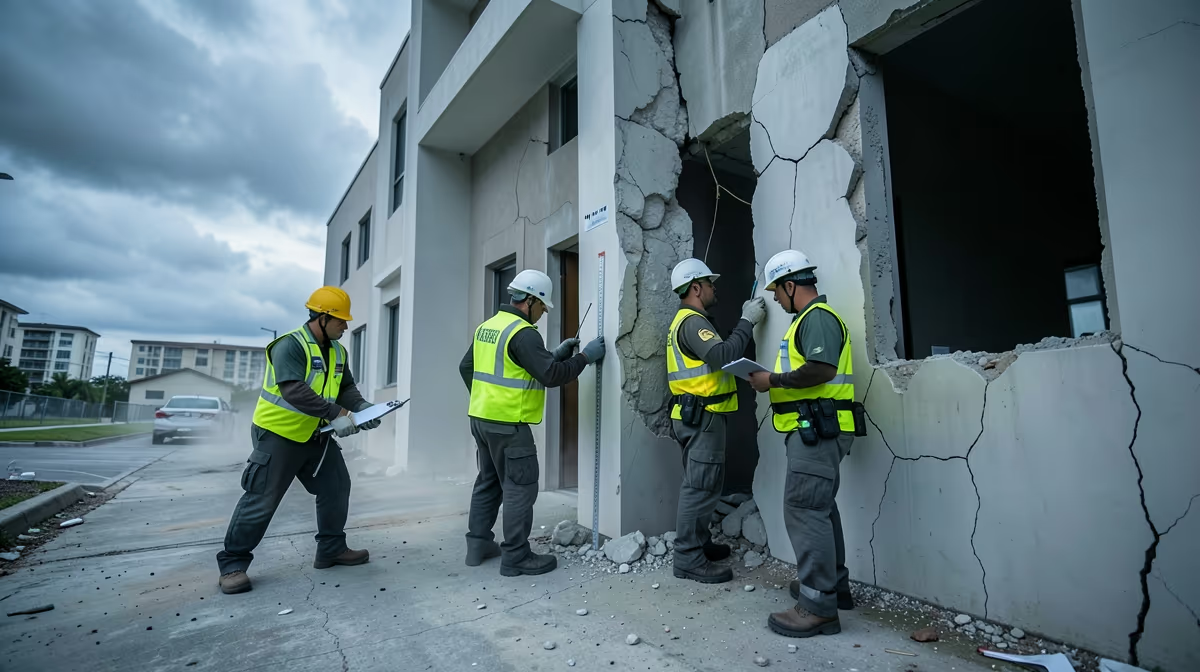
The ground across Panama refused to settle after a powerful 7.7-magnitude earthquake struck the country on a Friday, unleashing an uninterrupted sequence of secondary tremors. Within days, emergency monitoring networks tracked an alarming barrage of ongoing Panama earthquake aftershocks as structural engineers and local authorities rushed to assess compromised buildings.
A major 7.7-magnitude earthquake in Panama triggered more than 200 aftershocks, causing building damage and accelerating the nation's integration into the Google earthquake alert system.
The continuous seismic unrest has kept both civil defense authorities and residents on high alert across the affected areas. When tectonic plates suddenly slip past one another along active regional fault lines, they release massive amounts of energy. For a rupture of this scale, seismological mechanics dictate that the surrounding crust must adjust and settle, producing an extensive aftershock sequence that prolongs the immediate danger long after the initial shaking stops.
The Scale of the Seismic Rupture
The crisis began when the primary magnitude 7.7 earthquake hit, sending intense tremors through urban and rural centers alike, damaging buildings and threatening basic infrastructure. Rather than bringing relief, the cessation of the main shock marked only the start of an extended period of tectonic instability.
In the days that followed Friday's event, seismologists confirmed that Panama experienced over 200 aftershocks. This relentless succession of tremors has directly impacted communities near the epicenter and populations situated in neighborhoods with vulnerable, aging infrastructure.
The country recorded more than 200 aftershocks following the initial 7.7-magnitude earthquake as the earth's crust continued to settle along regional fault lines.
Each subsequent tremor carries the potential to exacerbate unseen structural damage. Emergency response teams and municipal inspectors face the ongoing challenge of determining whether cracked walls, shifted foundations, and weakened supports can withstand the recurring tremors, leaving thousands of residents anxious about the stability of their homes and workplaces.
Key Verified Facts and Damage Landscape
The physical toll of the disaster has prompted rapid damage evaluations across affected provinces. Regional teams have focused their initial inspections on structural integrity risks, working to avert building collapses during aftershocks.
- A major 7.7-magnitude earthquake struck Panama, damaging buildings across affected regions.
- Seismological stations documented over 200 secondary aftershocks following the primary Friday tremor.
- The continuous seismic activity has prompted local authorities and emergency teams to remain mobilized for ongoing structural evaluations.
- Regional response protocols have incorporated comparative recovery lessons from other Latin American seismic events, including rapid damage evaluations conducted in Venezuela.
- In direct response to the disaster, Panama officially joined the Google earthquake alert system to enhance automated public safety communications.
The structural evaluation process remains critical because repeated low-to-moderate shaking can progressively degrade the load-bearing capacity of buildings already weakened by the primary 7.7-magnitude shock.
Technological Integration and Early Warning Upgrades
Faced with a prolonged seismic crisis, national authorities took immediate steps to bolster public communication networks. Panama formally joined the Google earthquake alert system in the direct aftermath of the disaster, aiming to provide immediate notifications to citizens' mobile devices when seismic waves are detected.
The Role of Automated Alerts
Automated early-warning systems leverage distributed sensor networks and mobile operating systems to detect early seismic activity, transmitting critical seconds of warning to residents before secondary, more destructive surface waves reach their locations. For a country enduring hundreds of aftershocks, rapid alerts offer actionable windows for people to evacuate vulnerable structures or take immediate cover.
Public Infrastructure and Private Tech Networks
Panama's swift adoption of the Google system underscores an evolving trend in regional disaster management: the integration of private technological platforms into sovereign emergency response architectures. While traditional seismic warning sirens require extensive ground-based physical arrays, mobile-based notification frameworks utilize existing consumer communications infrastructure to scale public warnings rapidly across wide geographic zones.
Chronology of Regional Response
The seismic crisis developed rapidly from the initial shock to international technological integration, as reflected in official event monitoring.
| Date / Phase | Event Development |
|---|---|
| Friday, October 9, 2026 | A powerful 7.7-magnitude earthquake strikes Panama, inflicting structural damage on buildings. |
| Subsequent Days | Panama records over 200 aftershocks, straining local emergency services and prolonging public alarm. |
| Mid-October 2026 | National authorities officially join Google's earthquake alert system to improve future warning capabilities. |
This sequence mirrors historical recovery models, such as the framework established during the 1976 Friuli earthquake response, which prioritized rapid damage assessments followed immediately by systematic structural repairs to facilitate safe returns.
Political, Economic, and Regional Dimensions
The 7.7-magnitude quake and its hundreds of aftershocks have exposed broader economic and administrative vulnerabilities. Local commerce has suffered direct disruptions, forcing the immediate allocation of municipal and national emergency funds toward inspection and preliminary recovery programs.
From a governance perspective, the ongoing seismic activity tests national emergency management agencies. Disaster preparedness policies, infrastructure building codes, and municipal communication lines are under intense public scrutiny as communities demand swift assurances regarding structural safety.
Geopolitically, major natural disasters within key transit and regional hubs inevitably attract international attention. Coordinating rapid cross-border humanitarian lessons—such as those analyzed in post-disaster assessments in Venezuela—highlights how Latin American emergency agencies share technical protocols for damage appraisal and community return strategies during prolonged seismic sequences.
Projected Outlook and Safety Trajectories
The path ahead for Panama depends on seismic decay rates and the speed of municipal engineering inspections. Over the next 24 hours, regional authorities and emergency response teams are set to maintain heightened vigilance, tracking remaining aftershocks while continuing structural integrity assessments on damaged buildings.
Over the next 72 hours, operational priorities are expected to shift deeper into recovery and repair logistics. As technical teams clear public spaces and residential units, local agencies will continue integrating tools like the Google earthquake alert network into ongoing public safety frameworks. Seismological analysts expect heightened vigilance and an accelerated adoption of automated alert technologies across the broader region following these consecutive seismic events.
Best-Case Assessment
In the best-case operational scenario, the aftershocks will gradually decrease in frequency and intensity without inflicting additional structural failures. Rapid damage evaluations will conclude successfully, allowing necessary repairs to proceed swiftly so displaced residents can safely reoccupy their homes.
Worst-Case Assessment
In the worst-case operational scenario, a powerful, higher-magnitude aftershock could strike already compromised structures, triggering secondary building collapses. Such an event would place immense strain on local emergency personnel, disrupt transport networks, and severely prolong long-term recovery timelines.
Frequently Asked Questions
What caused the recent seismic activity in Panama?
Panama was struck by a powerful 7.7-magnitude earthquake that caused noticeable damage to buildings. Following the initial major shock, the region suffered over 200 aftershocks.
How many aftershocks followed the Panama earthquake?
More than 200 aftershocks were recorded following the initial 7.7-magnitude earthquake. This high volume of seismic activity has kept residents and emergency responders on high alert.
Why does the recent Panama earthquake matter for residents?
The earthquake and its numerous aftershocks have caused structural damage to buildings, raising safety concerns for the local population. In response to these events, Panama has taken steps to join the Google earthquake alert system to improve future warning capabilities.
Who is affected by the 7.7-magnitude earthquake in Panama?
Communities across the affected regions of Panama have experienced shaking and building damage from both the main earthquake and the subsequent aftershocks. Residents are dealing with the ongoing threat of seismic activity as monitoring continues.
What happens next for Panama following the major earthquake?
Authorities and communities are focusing on damage assessments, building repairs, and enhancing early warning systems. By integrating into advanced alert networks like Google's earthquake system, the region aims to better prepare for future seismic threats.
Did Panama integrate any new technology after the disaster?
Yes, following the major earthquake, Panama officially joined the Google earthquake alert system. This integration helps provide quicker notifications to residents when seismic activity is detected.
Conclusion
Panama's experience following Friday's 7.7-magnitude earthquake demonstrates the persistent danger that major geological events present long after the initial tremor subsides. With more than 200 aftershocks recorded across the country, emergency response teams remain actively deployed to evaluate building safety and mitigate secondary hazards. The government's decision to integrate the Google earthquake alert system represents a concrete operational shift toward modernized early-warning infrastructure. Moving forward, the priority remains focused on completing rapid structural assessments, executing critical building repairs, and maintaining technical monitoring until regional fault lines fully restabilize.
Sources
- Panama joins Google earthquake alert system after major quake — upi
- De la Evaluación Rápida de Daños a las Reparaciones Rápidas y el Retorno: Lecciones de la Respuesta al Terremoto de Venezuela (14 de octubre 2026) [Presentación del webinar] — ReliefWeb
- Terremoto Friuli: 1976-2016 — cor.europa.eu
- Panama suffers over 200 aftershocks after Friday's 7.7-magnitude earthquake — Reuters
- Powerful magnitude 7.7 earthquake hits Panama, damaging buildings — BBC
- TOP5 07/28/2026: Terremoto en Japón de magnitud 7.1 — KKTV


