
Putin Kaliningrad Warning Sparks Major Fears Across the West
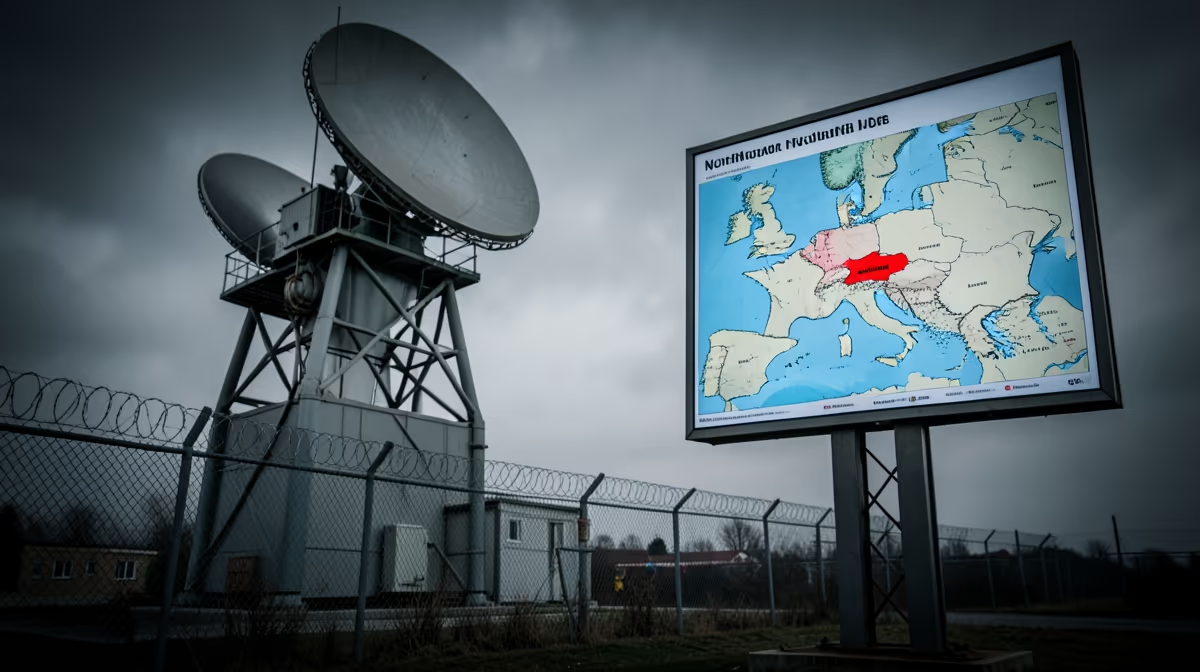
The strategic map of Northern Europe has been fundamentally redrawn by a single rhetorical shift from the Kremlin, placing a small Baltic enclave at the center of global security concerns. The isolation of a strip of land between two NATO members now serves as the potential tripwire for a global military confrontation that could bypass conventional limits. In a recent statement regarding European security, the Putin Kaliningrad warning has heightened concerns across the international community, signaling a hardening of Russia's territorial red lines.
This development follows months of intensifying friction between Moscow and Western capitals, specifically focusing on the geographic vulnerability of the Kaliningrad exclave. As the conflict in Ukraine continues to reshape international alliances, the Kremlin has moved to elevate the status of this military outpost from a regional stronghold to a central pillar of its nuclear deterrence strategy. The explicit nature of the threat—using "all weapons" in the arsenal—suggests a departure from previous diplomatic posturing and moves toward a state of maximum military readiness.
The one sentence a reader must not miss: Vladimir Putin has explicitly signaled that any perceived threat to the sovereignty of the Kaliningrad enclave could trigger a response utilizing the full extent of Russia's military arsenal, including its nuclear deterrent.
The Nature of the Deterrence Strategy
The warning issued by Russian President Vladimir Putin is clear: Moscow is prepared to use every weapon at its disposal to protect the exclave of Kaliningrad. This declaration was not limited to conventional military assets but extended to the entirety of the Russian arsenal, a phrase widely understood by global affairs analysts to include tactical and strategic nuclear options. The timing of this rhetoric coincides with significant Ukrainian strikes on Russian territory, which Putin admitted have taken a toll, even as he eyes a shift toward a new global order.
According to verified reports from international outlets such as CNN and the BBC, the Russian leadership is no longer distinguishing between threats to the mainland and threats to its detached territories. By stating that Russia will use all weapons if any of its territory is attacked, the Kremlin is attempting to create a shield of "maximum military response" over Kaliningrad. This hardline stance underscores the growing volatility in the region as NATO and Russian forces remain locked in a tense standoff along the eastern flank.
Strategic Importance of the Baltic Enclave
Kaliningrad holds a unique and sensitive position in European geopolitics. Geographically situated between Poland and Lithuania along the Baltic Sea, it is entirely separated from the Russian mainland. This isolation makes it both a strategic military asset and a significant vulnerability. Originally the German city of Königsberg, it was annexed by the Soviet Union following World War II and remained a Russian territory after the Soviet collapse.
- It serves as a heavily militarized outpost in the heart of Europe.
- It provides Russia with a year-round ice-free port on the Baltic Sea.
- Its proximity to NATO members makes it a perennial flashpoint for logistical and military friction.
Analyzing the Root Causes of Escalation
The root cause of this sudden spike in rhetoric lies in the geographic isolation of Kaliningrad. Sandwiched between NATO members, the exclave is highly dependent on transit routes through "unfriendly" nations for supplies, energy, and military sustainment. Any disruption to these corridors is viewed by Moscow not merely as a trade issue but as an existential threat to its sovereignty.
Political analysts suggest that President Vladimir Putin is using this robust rhetoric to consolidate domestic support. By framing the defense of Kaliningrad as a non-negotiable priority, he signals unwavering resolve to domestic hardliners and seeks to deter Western or regional provocations. This political angle is paired with a geopolitical strategy designed to deepen the militarization of the Baltic region, effectively forcing NATO to reconsider its defensive posture in the Baltic states.
The Hidden Logistics of Defense
Behind the public nuclear warnings, there is a hidden layer of military planning. Analysts believe military planners may be covertly testing the resilience of alternative maritime and air supply corridors. The goal is to ensure that Kaliningrad remains fully sustained even in the event of a total land blockade by its neighbors. This preparation indicates that the Kremlin is bracing for a long-term period of isolation and heightened readiness.
Economic Friction and the Regional Impact
The persistent geopolitical friction surrounding Kaliningrad has significant economic consequences. Transit restrictions and sanctions impacting the exclave have elevated regional trade risks, driving up logistical costs for both Russia and its European neighbors. This has forced Moscow to seek alternative supply chains, often at a higher cost, further straining the regional economy.
For residents of Kaliningrad and citizens in neighboring Poland and Lithuania, the threat of escalation is not merely theoretical. The militarization of the region impacts everyday life, from shipping delays to the constant presence of high-alert military forces. The economic angle of this standoff is a driving force behind the political rhetoric, as the Russian government attempts to bypass the financial pressure exerted by Western sanctions.
Historical Parallels: From Berlin to the Baltic
Military historians and analysts have drawn a striking historical parallel between the current situation in Kaliningrad and the 1948-1949 Berlin Blockade. In that instance, a Western enclave located deep inside Soviet-controlled territory became the focal point of a major geopolitical standoff that nearly triggered a direct conflict. Today, the roles are somewhat reversed, with a Russian enclave deep inside NATO-aligned territory serving as the focal point of tension.
| Phase | Development |
|---|---|
| Tensions Rise | Regional transit restrictions and escalating tensions surround the security of Russian exclaves in the Baltic. |
| Direct Warning | Putin publicly warns that Russia is prepared to use all available weapons to protect its territory, specifically highlighting Kaliningrad. |
| Allied Response | NATO and Western allies evaluate defensive postures in the Baltic states in response to heightened nuclear and territorial rhetoric. |
The Diplomatic Landscape and Rules of Engagement
The rhetoric regarding Kaliningrad does not exist in a vacuum. It is deeply intertwined with the ongoing Russia-Ukraine war and broader international diplomacy. While Putin issues warnings to the West, he has also engaged in diplomatic maneuvers with other global powers. Reports indicate that Putin has praised Indian Prime Minister Narendra Modi, stating that he has "good ideas" for ending the Ukraine war. This suggests that while Moscow is preparing for escalation with NATO, it is simultaneously looking for diplomatic exits or alternative alliances.
However, the tone from Ukraine is significantly more alarmist. President Volodymyr Zelenskyy has accused the Russian leadership of telling its military leaders to abandon the conventional rules of war. This accusation, combined with the "all weapons" warning, suggests a breakdown in the traditional norms of engagement that have governed European security for decades.
Putin warns the West that Russia is ready to use every weapon to protect Kaliningrad, highlighting the extreme measures Moscow is willing to consider to maintain its Baltic foothold.
Security Assessment and Future Outlook
The immediate future of the Baltic region remains highly uncertain. Western military planners and diplomats are expected to reassess regional defense strategies in the coming days. Intelligence sharing among NATO allies is likely to increase, with a specific focus on monitoring Russian troop movements and the deployment of advanced weaponry near the Kaliningrad border.
Short-term Predictions
In the next 24 to 72 hours, the international community can expect:
- Continued diplomatic and media fallout as Western leaders formulate official responses to Putin's warnings.
- A heightened security posture among NATO members bordering Kaliningrad, particularly Poland and Lithuania.
- Increased military monitoring of transit corridors and Baltic Sea maritime routes.
Expert Risk Evaluation
Analysts expect a further hardening of diplomatic lines between Russia and Western nations. The "best-case scenario" involves the rhetoric remaining contained to diplomatic posturing without triggering direct military incidents. However, the "worst-case scenario" involves a miscalculation stemming from these explicit warnings, leading to rapid military escalation and a severe deterioration of all remaining diplomatic channels.
Frequently Asked Questions
What did Vladimir Putin warn the West regarding Kaliningrad?
Russian President Vladimir Putin warned the West that Moscow is fully prepared to use all available weapons in its arsenal to protect the exclave of Kaliningrad if its territory is attacked. This stark warning underscores rising tensions between Russia and NATO allies over critical geopolitical corridors.
Why is the warning about Kaliningrad significant?
Kaliningrad is a heavily militarized Russian exclave geographically isolated between Poland and Lithuania on the Baltic sea. Any direct conflict or perceived threat to this territory carries a severe risk of escalating into a broader confrontation between Russia and Western nations.
Who is affected by Putin's recent threats to use all weapons?
Neighboring European countries, particularly Baltic states and NATO members bordering or close to Kaliningrad, are directly affected by the heightened security concerns. Additionally, the ongoing conflict in Ukraine continues to be influenced by shifting nuclear and conventional deterrence postures.
What happens next in the standoff over Kaliningrad?
Western military planners and diplomats are likely to reassess regional defense strategies and monitor Russian troop movements near the Baltic exclave. Intelligence sharing and NATO's eastern flank defenses are expected to remain on high alert in response to Moscow's rhetoric.
What is the background of Russia's threats concerning territorial defense?
The recent statements build on existing Russian military doctrines that permit the use of all types of weaponry, including nuclear options, if the state's territorial integrity and sovereignty face existential threats. These pronouncements frequently coincide with heightened hostilities and diplomatic friction in the Ukraine war.
Did Putin make any other notable statements regarding the Ukraine war recently?
Alongside warnings about territorial defense, reports indicate ongoing friction involving military tactics, while Ukrainian leadership has accused Russian forces of abandoning conventional rules of engagement. Meanwhile, international diplomatic maneuvers continue as various global leaders propose ideas aimed at resolving the conflict.
Conclusion
The Putin Kaliningrad warning represents a critical juncture in the ongoing confrontation between Russia and the West. By explicitly tying the defense of this isolated exclave to the use of "all weapons," the Kremlin has signaled that its territorial integrity is a non-negotiable priority that supersedes traditional rules of engagement. As NATO members evaluate their defensive postures and diplomatic channels remain strained, the risk of miscalculation in the Baltic region has reached a new peak. The coming days will be defined by how Western leaders respond to this nuclear-tinged rhetoric and whether diplomatic maneuvers, such as those proposed by international leaders, can provide a path toward de-escalation. For now, the world remains on high alert as the strategic importance of Kaliningrad continues to reshape the landscape of international security.
Sources
- Ukraine war latest: Putin admits toll of Ukrainian strikes - as he eyes new world order — Sky News
- Putin says Russia will use ‘all weapons’ in its arsenal if any of its territory is attacked — NBC News
- Putin warns West that Russia is prepared to use ‘all weapons’ to protect Kaliningrad — CNN
- Putin warns West that Russia is ready to use every weapon to protect Kaliningrad — BBC
- Vladimir Putin Praises PM Modi, Says He Has "Good Ideas" For Ending Ukraine War — NDTV
- Putin has told military leaders to abandon rules of war, Zelenskyy says — Financial Times


.webp)

