
Russia Nuclear Warning to NATO Sparks Immediate High Alert in Baltic
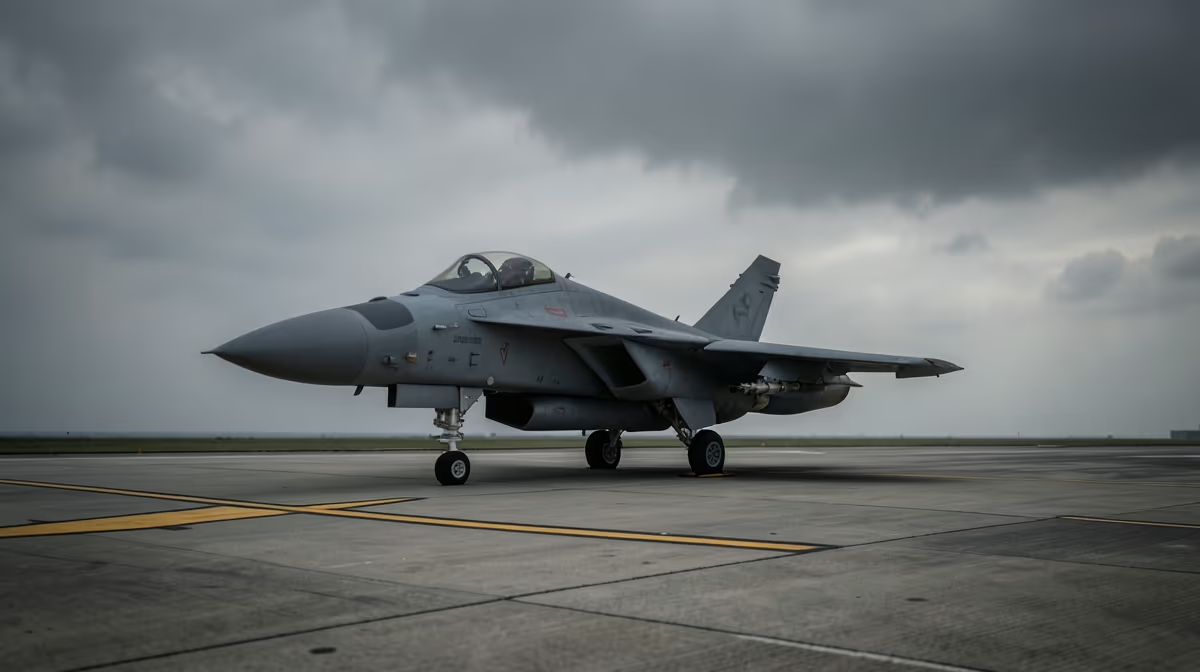
The strategic stability of the Baltic region hangs in a delicate balance as a series of aggressive military maneuvers and rhetorical escalations redefine the security landscape of Eastern Europe. As geopolitical instability deepens across Europe, Russia sends nuclear warning to NATO, heightening fears of a wider conflict and forcing a rapid reassessment of defense readiness across the alliance’s eastern flank.
The issuance of explicit nuclear threats by Moscow, coupled with precision strikes on digital infrastructure in Kyiv, marks a critical turning point where the war of attrition moves beyond conventional battlefields into the realm of strategic intimidation.
Escalation in the Baltic: A Nuclear Ultimatum
The current crisis reached a fever pitch following a direct nuclear warning issued by Russia to NATO leadership. This development is not an isolated incident but the culmination of escalating strategic friction and aggressive posturing in the Baltic region. For years, long-standing security mistrust has simmered between Moscow and the alliance, but the shift toward explicit nuclear rhetoric represents a significant departure from standard diplomatic friction.
The warning comes at a time when the Baltic Sea has become a theater for high-stakes military signaling. NATO analysts suggest that this posturing is driven by a desire to test the resolve of the alliance, particularly regarding its commitment to frontline states. The rhetoric has been categorized by NATO officials as irresponsible, yet it has succeeded in placing the entire European security architecture on high alert. This escalation raises immediate concerns about a direct military miscalculation, where a single error in judgment by either side could trigger a confrontation between nuclear-armed powers.
The Kinetic Front: Strikes on Kyiv and Airspace Probes
Parallel to the rhetorical threats, the conflict on the ground in Ukraine has intensified with direct implications for NATO member states. Russian strikes recently targeted critical infrastructure in Kyiv, specifically focusing on data centers. These attacks resulted in at least three confirmed fatalities and caused significant damage to the city's digital framework.
Targeting Digital Resilience
The strikes on data centers represent what experts call a hidden angle of the conflict: a persistent war of attrition targeting digital and logistical resilience. By striking these facilities, Moscow is attempting to exhaust Western intelligence and logistical pipelines that are crucial for maintaining Ukraine's defense and communication capabilities. This hybrid approach—combining physical destruction with the threat of nuclear escalation—aims to create a sense of pervasive insecurity across both digital and physical domains.
NATO Airspace Responses
In immediate response to the strikes in Kyiv and the increased volatility near alliance borders, NATO was forced to scramble defense aircraft in Poland and Romania. These maneuvers were conducted to monitor airspace and brace for potential confrontations as Russian military probes continue to test the responsiveness of NATO defenses. The scramble of aircraft in these specific regions underscores the vulnerability of the eastern flank and the necessity of constant air-policing operations to prevent unauthorized incursions or accidental clashes.
NATO’s Defensive Posture: Defending ‘Every Inch’
NATO leadership has remained publicly resolute in the face of these provocations. Dismissing the nuclear threats as intimidation tactics, officials have reaffirmed the alliance’s unwavering commitment to collective defense. The governing principle of this response is the protection of "every inch of NATO territory," a phrase that has become a mantra for the alliance's military and political heads.
We will defend every inch of NATO territory.
This commitment is being tested as Poland actively braces for a potential confrontation. The Polish government and military are on high alert, anticipating further probes against their defenses. The alliance’s strategy is currently focused on deterrence, utilizing rotational forces and heightened air patrols to signal that any aggression against a member state would meet a unified and overwhelming response.
Strategic Analysis: The Mechanics of Miscalculation
The root cause of the current standoff lies in the deep-seated strategic friction between Russia's regional ambitions and NATO's defensive expansion. Geopolitical analysts point to a heightened risk of miscalculation along the eastern flank, particularly involving frontline states like Poland and Romania. As Russian military assets continue to probe alliance readiness, the margin for error becomes increasingly slim.
Historical Echoes: Able Archer 83
Current events have drawn striking parallels to the Cold War-era Able Archer 83 exercise. During that period, routine military maneuvers combined with heightened rhetoric nearly triggered a catastrophic misinterpretation of intentions. Analysts fear that the current environment—characterized by nuclear warnings and active strikes near NATO borders—creates a similar "fog of war" where defensive movements could be mistaken for offensive preparations.
The War of Attrition
Beneath the headline-grabbing nuclear warnings lies a calculated effort to strain the alliance’s resources. The necessity of maintaining constant air-policing and high-readiness postures imposes a heavy burden on European nations. This strategy of exhaustion is designed to test the political will of Western capitals, where domestic pressure is mounting to respond effectively to provocative airspace violations and infrastructure strikes.
Economic and Political Consequences
The escalating tensions have reverberated through the global economy and European political spheres. There is a palpable increase in market anxiety as the conflict in Ukraine spills over into broader conventional and hybrid threats.
- Defense Spending: European nations are seeing a surge in defense expenditures as the necessity for modernizing air defense systems and maintaining high-readiness forces becomes undeniable.
- Critical Infrastructure: The targeting of data centers has highlighted the vulnerability of civilian and military digital infrastructure, leading to calls for increased investment in cyber resilience.
- Political Pressure: Leaders in Warsaw, Bucharest, and other European capitals are facing intense pressure to secure their borders while avoiding a direct path to total war.
Timeline of the Current Crisis
| Date | Event | Location |
|---|---|---|
| Sept 29, 2026 | Poland braces for potential confrontation as probes intensify. | Poland/Eastern Flank |
| Sept 29, 2026 | Heightened rhetoric from Moscow prompts European security warnings. | Baltic Region |
| Sept 30, 2026 | Russian strikes hit Kyiv data centers; 3 deaths confirmed. | Kyiv, Ukraine |
| Sept 30, 2026 | NATO scrambles aircraft to monitor airspace. | Poland and Romania |
| Sept 30, 2026 | Official nuclear warning issued by Russia to NATO. | International |
The Path Forward: Monitoring and Deterrence
The next 24 to 72 hours are expected to be characterized by continued high tensions and posturing. NATO members in Eastern Europe will likely intensify security monitoring, especially in the airspace over Poland and Romania. Formal diplomatic condemnations of Moscow’s rhetoric are expected to follow, though the effectiveness of these channels remains under immense strain.
Experts predict that while military alliances will maintain heightened defensive readiness, the goal remains the prevention of a direct clash. The best-case scenario involves the rhetoric remaining confined to posturing, with successful diplomatic containment preventing a military miscalculation. However, the worst-case scenario looms: a situation where continued escalation triggers an accidental clash along the eastern flank, deepening the security crisis and leading to a further breakdown in communication.
Frequently Asked Questions
What happened between Russia and NATO in the Baltic region?
Russia recently issued a nuclear warning to NATO as tensions escalated significantly in the Baltic region. The rhetoric prompted strong condemnation from NATO officials who criticized Moscow's escalating stance.
Why does the recent Russian nuclear warning matter?
The warning highlights growing friction and the heightened risk of direct confrontation between nuclear-armed powers in Europe. Such escalation raises immediate concerns about security stability along NATO's eastern flank.
Who is affected by the rising tensions in the Baltic?
European nations, particularly border countries like Poland and Romania, are directly affected as they brace for potential confrontations. NATO has responded by scrambling aircraft and reinforcing its defensive posture to monitor the situation.
What happens next as NATO responds to the threats?
NATO leadership has firmly stated that the alliance will defend every inch of its territory despite Moscow's warnings. Member states will likely continue increasing vigilance and military readiness in the region.
What is the background of Russia's recent escalation with NATO?
The latest friction follows a series of Russian strikes in Ukraine alongside ongoing provocations that test NATO defenses near its borders. NATO has consistently condemned Moscow's repeated use of provocative nuclear rhetoric.
Which specific incidents accompanied the nuclear warning?
Alongside the nuclear rhetoric, Russian strikes targeted data centers in Kyiv and caused casualties, prompting emergency responses from neighboring NATO countries. In response to the broader regional threats, NATO scrambled aircraft in Poland and Romania.
Conclusion
The escalation of tensions in the Baltic region, marked by Russia's nuclear warning and strikes against digital infrastructure in Kyiv, represents a profound challenge to European security. The scrambling of NATO aircraft in Poland and Romania serves as a physical manifestation of the alliance's commitment to collective defense, yet the risk of miscalculation remains at its highest point in decades. While NATO leadership dismisses the nuclear rhetoric as a tactic of intimidation, the reality of military probes and kinetic strikes near alliance borders ensures that the region will remain on high alert. Moving forward, the focus will remain on maintaining deterrence and reinforcing the eastern flank, as diplomatic channels struggle to de-escalate a situation defined by deep-seated mistrust and aggressive posturing.
Sources
- Russia sends nuclear warning to NATO as tensions rise in the Baltic — Reuters
- Russia targets data centers in Kyiv as NATO condemns Moscow’s ‘irresponsible nuclear rhetoric’ — cnbc.com
- Poland braces for potential confrontation as Russia tests NATO defenses — PBS
- 'We will defend every inch of NATO territory’: Rutte dismisses Russia’s nuclear threat — Anadolu Ajansı
- Europe on edge from threats of Russia's growing escalation. Can NATO defend itself? : Sources & Methods — NPR
- Russian strikes kill 3 in Kyiv, prompt NATO to scramble aircraft in Poland, Romania — ABC News - Breaking News, Latest News and Videos


.webp)

