
Seoul Warns Ukraine Prisoner Row Triggers Major Diplomatic Escalation
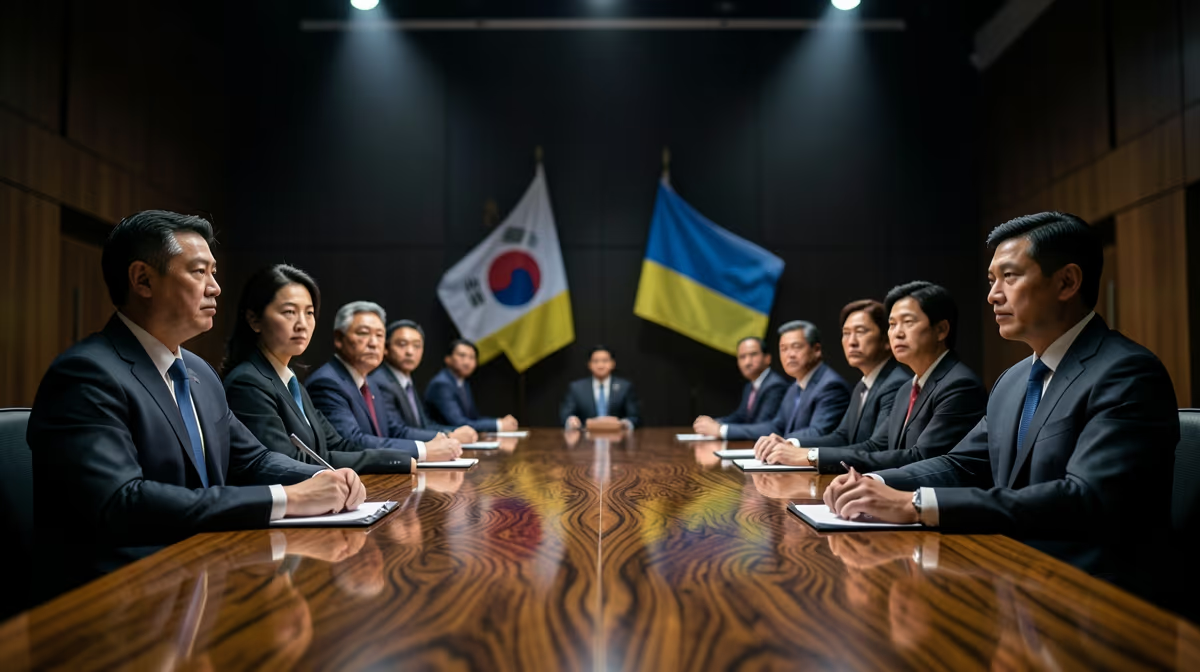
A rare and sharp diplomatic fissure has opened between Seoul and Kyiv, threatening to disrupt the cooperative alignment maintained since the early days of the conflict in Eastern Europe. South Korean President Lee Jae Myung has issued a stern ultimatum, declaring that Seoul warns Ukraine prisoner of war handling must be addressed with a formal apology or face unspecified further action.
The diplomatic row over North Korean prisoners of war represents a critical intersection where East Asian security dynamics directly collide with the European conflict, forcing South Korea to assert its sovereign interests against an ally.
The friction centers on the transfer of North Korean personnel, a development that has transformed from a localized military issue into a high-stakes geopolitical standoff. As geopolitical tensions mount, Seoul warns Ukraine prisoner of war developments could spark fresh diplomatic fallout, potentially altering the level of cooperation between the two nations. The South Korean government has raised strong objections to how these individuals were handled, signaling that the administration of President Lee Jae Myung is prepared to implement punitive measures if diplomatic reparations are not made.
The Standoff Over North Korean Personnel
The root cause of this escalation stems from a specific diplomatic dispute over the handling and transfer of captured North Korean personnel within the Ukrainian theater of operations. South Korean leadership has moved to demand full accountability, insisting that the protocols surrounding these individuals involve South Korean interests that Kyiv has allegedly overlooked.
The Demand for Accountability
President Lee Jae Myung has been explicit in his requirements, calling for an official apology from the Ukrainian government. The warning of "further action" suggests a range of diplomatic or economic responses that could follow if Kyiv remains silent. This demand is not merely a formality but is viewed by Seoul as a necessary correction to a situation involving the transfer of North Koreans, which South Korea views with extreme sensitivity.
- Seoul is demanding an official apology regarding the transfer of North Koreans.
- Failure to comply may lead to unspecified diplomatic or political measures.
- The dispute has drawn immediate coverage from global outlets including the BBC, Reuters, and CNBC.
Geopolitical Intersections: East Asia Meets Eastern Europe
The row highlights the complex interplay between East Asian security dynamics and the ongoing conflict in Ukraine. For the first time in the current conflict, South Korea finds itself directly entangled in the diplomatic fallout of North Korean involvement on the front lines and the subsequent handling of foreign transfers.
Beyond the immediate prisoner dispute, analysts suggest that Seoul's stern reaction may partly aim to deter any perception in Washington or other regional capitals that South Korea can be sidelined in decisions regarding captured North Korean combatants. By taking a hard line with Kyiv, President Lee is asserting that South Korea remains a primary stakeholder in any matter involving North Korean personnel, regardless of the geographic location of their capture.
Historical and Regional Context
The situation mirrors Cold War-era proxy conflicts where regional powers demanded strict diplomatic protocols regarding defectors and prisoners of war to avoid broader escalation. In this instance, the "clown show" mockery from North Korean official Kim Yo-jong adds another layer of complexity. As South Korea pressures Ukraine, Pyongyang has utilized the friction to deride the diplomatic efforts of the Lee administration, further complicating the regional security narrative.
| Date | Key Event |
|---|---|
| Late September 2026 | Growing scrutiny over North Korean personnel transfers and regional security ties. |
| September 30, 2026 | U.S. Republican committee chair calls for scrutiny of Seoul's ties to China. |
| October 2, 2026 | President Lee Jae Myung demands an apology from Ukraine and warns of "measures." |
| October 2, 2026 | Kim Yo-jong mocks the diplomatic situation as a "clown show." |
Domestic Pressures and Foreign Policy Posturing
The political angle of this dispute is inseparable from the internal dynamics within South Korea. President Lee Jae Myung is currently utilizing a firm stance on foreign policy and military prisoner issues to project strength domestically. This move comes at a time when his administration faces significant domestic pressures, including controversial moves to strip power from prosecutors who previously indicted him.
Projecting Strength Amid Reform
By adopting a hardline foreign policy stance against Ukraine, President Lee may be seeking to unify domestic support and demonstrate that his administration is capable of defending national interests on the global stage. This occurs as he simultaneously manages regional ties and faces scrutiny regarding South Korea's relationship with China, a topic recently raised by a Republican committee chair in the United States. The intersection of domestic prosecutorial reform and international diplomatic brinkmanship suggests a multi-front strategy to maintain political authority.
Economic and Security Implications
Persistent diplomatic friction between Seoul and Kyiv risks complicating more than just political ties. There are significant concerns regarding the economic angle of this row, particularly as it relates to South Korea’s industrial and defense capacities.
- Humanitarian aid programs could face bureaucratic delays or re-evaluations.
- Future reconstruction agreements involving South Korean firms may be stalled.
- Defense supply chain cooperation, which has seen South Korean equipment play an indirect role in global security, could be impacted by a prolonged standoff.
South Korea’s industrial strength is a key asset that Ukraine may find difficult to replace, yet the demand for an apology suggests that Seoul is willing to risk these cooperative ventures to maintain its diplomatic principles.
Anticipated Outcomes and Diplomatic Risks
The next 24 to 72 hours are expected to be critical for the trajectory of South Korea-Ukraine relations. International observers are monitoring whether Ukraine will issue the requested clarification or if Seoul will begin to outline specific punitive steps.
Short-Term Predictions
In the next 24 hours, South Korea is expected to continue its pressure through official diplomatic channels, weighing potential punitive measures while waiting for a response from Kyiv. Within 72 hours, if no apology is forthcoming, Seoul may outline specific diplomatic or economic steps, which could include a downgrade in bilateral engagement or the suspension of certain cooperative frameworks.
Expert Forecast
analysts would likely expect South Korea to maintain diplomatic pressure and consider targeted retaliatory measures unless Kyiv offers a formal clarification or apology regarding the prisoner transfer.
The best-case scenario involves a swift diplomatic clarification or backchannel communication that resolves the prisoner-of-war dispute, preventing further military escalation of tensions between the two capitals. Conversely, the worst-case scenario would see South Korea implementing harsher punitive measures or diplomatic downgrades, straining bilateral ties further amid broader geopolitical friction.
A Shifting Security Landscape
The warning from Seoul serves as a reminder that the war in Ukraine is not an isolated European event but a catalyst for shifting alliances and rivalries across the globe. The involvement of North Korean personnel has effectively merged two disparate security theaters, making South Korea a direct participant in the diplomatic management of the conflict's fallout.
As President Lee Jae Myung calls for military tension easing on the Korean peninsula, his administration’s simultaneous hardline approach toward Kyiv demonstrates a nuanced, if risky, geopolitical conflict management strategy. The international community remains alert as the South Korean leadership weighs its response and calls for accountability, while related geopolitical currents involving regional powers like China and North Korea continue to shift.
Frequently Asked Questions
Why has South Korea warned of further action against Ukraine?
South Korea's President Lee has warned of measures and demanded an apology from Ukraine over a prisoner-of-war dispute involving the transfer of North Koreans. The tensions stem from how the situation was handled regarding these detained individuals.
What is South Korea demanding from Ukraine in the prisoner-of-war row?
Seoul is explicitly demanding an official apology from Ukraine regarding the prisoner-of-war controversy. Failure to issue an apology could lead to further diplomatic or political actions from South Korea.
Who is involved in the diplomatic dispute between South Korea and Ukraine?
The primary figures involved are South Korean President Lee and Ukrainian officials, centering around the handling of transferred North Korean prisoners. This has created an unexpected diplomatic friction point between the two nations.
What happens next if Ukraine does not apologize to Seoul?
President Lee has threatened 'further action' and additional measures against Ukraine if the demand for an apology is not met. The exact nature of these upcoming measures remains dependent on Kyiv's diplomatic response.
What is the background behind the South Korea-Ukraine prisoner dispute?
The dispute arises from the transfer and handling of North Koreans captured or involved in the ongoing conflict zones. South Korea took strong exception to how Ukraine managed these individuals, triggering the current crisis.
How are international media covering the South Korea-Ukraine row?
Major international news agencies like BBC, Reuters, and CNBC have closely tracked President Lee's stern warnings and demands for an apology. The coverage highlights the growing complexity of international relations and alliances amid the ongoing war.
Conclusion
The diplomatic standoff between Seoul and Kyiv marks a significant turning point in the international relations surrounding the conflict in Ukraine. By demanding a formal apology over the handling of North Korean prisoners of war, President Lee Jae Myung has signaled that South Korea's sovereign interests will not be secondary to broader coalition goals. Whether this rift is mended through swift diplomacy or leads to a sustained cooling of relations depends entirely on Ukraine's response in the coming days. As South Korea navigates its own internal political reforms and regional threats from Pyongyang, its willingness to challenge a global ally underscores the deepening complexity of the modern geopolitical landscape. The confirmed facts remain: Seoul has issued an ultimatum, North Korea is monitoring with mockery, and the global community is waiting for Kyiv’s next move.
Sources
- Seoul warns 'further action' if Ukraine does not apologise over prisoner-of-war row — BBC
- South Korea's Lee threatens action against Ukraine over transfer of North Koreans — Reuters
- South Korean President Lee warns of 'measures' against Ukraine over prisoner row, demands apology — CNBC
- Breaking: President Lee Jae Myung Calls for Military Tension Easing – Kim Yo-jong Mocks 'Clown Show' — 조선일보
- Republican committee chair calls for scrutiny of Seoul's China ties — Reuters
- Korea’s President Strips Power From Prosecutors Who Indicted Him — Bloomberg.com


.webp)

