
Trump Secret Service Oval Office Proposal Sparks Security Debate
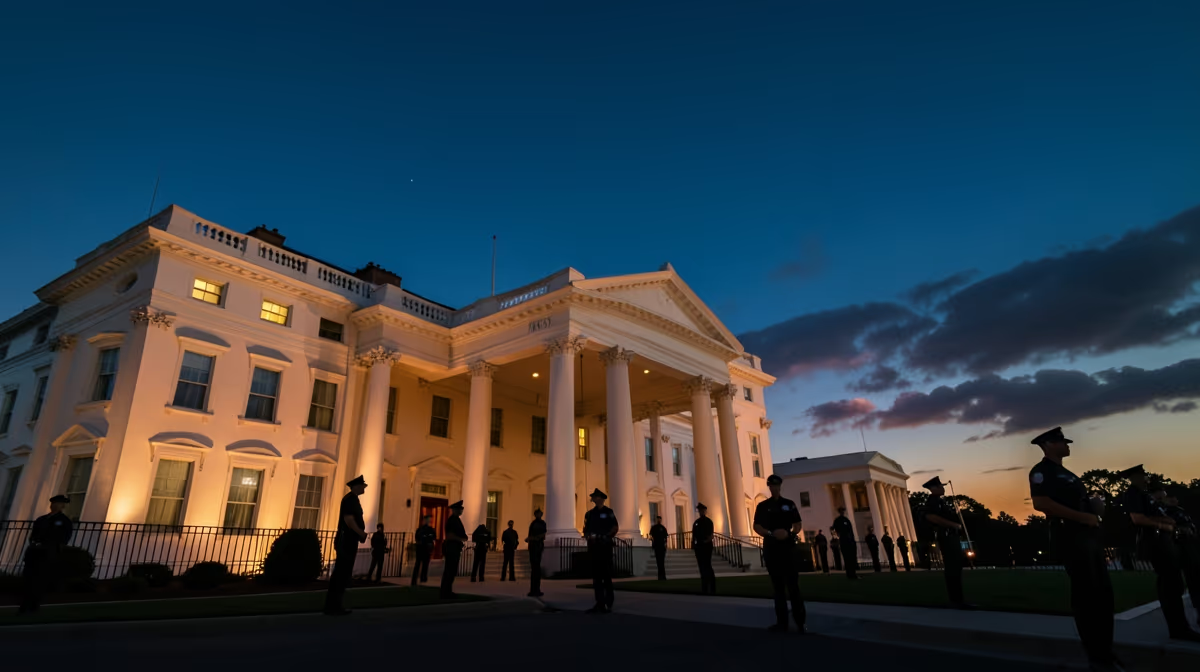
The symbolic heart of American executive power, the Oval Office, has become the center of an extraordinary debate between architectural preservation and modern presidential security. Revelations from the administration suggest that the Trump Secret Service Oval Office security protocols reached a point where the agency proposed a total structural removal of the historic workspace to address emerging threat assessments.
The proposal to 'take down' the Oval Office represents a rare instance where modern security demands stood in direct opposition to the preservation of the most iconic symbol of the American presidency.
While the White House frequently undergoes cosmetic updates and interior redesigns during administrative transitions, the suggestion of a complete teardown is a departure from standard logistical adjustments. This disclosure surfaced during a period of intense public engagements, where the intersection of physical security, historical heritage, and executive communication has come under renewed scrutiny.
The Secret Service Proposal: A Structural Reimagining
The rationale behind such a drastic proposal, while not fully detailed in public briefings, typically centers on the modernization of security apparatuses that older structures cannot easily accommodate. The Secret Service is tasked with maintaining a protective envelope that evolves alongside technological threats, and analysts suggest that the intersection of modern threat assessments and 1909-era architecture often creates significant logistical friction. Despite the agency’s recommendation, Trump stated that he ultimately rejected the plan, opting to preserve the office as it currently stands.
Administrative Rejection and Security Rationale
- Trump claimed he rejected the Secret Service's proposed plan to tear down the historic room.
- The agency's proposal involved a complete 'take down' of the workspace for security enhancements.
- Historical White House workspaces are subject to continuous threat management assessments.
Historical Context and Architectural Significance
Any proposal to alter the structure of the office sparks significant public interest among historians, government officials, and the general public. These stakeholders view the White House as a vital cultural symbol and a national landmark. The tension between making the building a fortress and keeping it a preserved piece of history is a recurring theme in presidential logistics.
| Milestone | Detail |
|---|---|
| Historical Origin | The Oval Office has served as the official presidential workspace since 1909. |
| Structural Integrity | Major structural changes are rare due to the room's status as a national landmark. |
| Reported Proposal | Secret Service suggested a total teardown for modernized security infrastructure. |
| Executive Decision | Rejection of the 'take down' plan to preserve historical continuity. |
Tensions in the Media and Public Relations
You haven’t asked me one f-cking positive question.
This fiery exchange with a reporter was part of a media cycle that also included reports on the president's physical schedule. For instance, following the announcement of a new steel plant in late September 2026, reports indicated that the president fell asleep shortly after the event, leading to further media scrutiny of his public engagements and stamina. These events, taken together, reflect a busy and contentious news cycle where personal, political, and security narratives are constantly overlapping.
A Legacy of Reconstruction: The 1948 Parallel
The Analyst perspective suggests that the current situation mirrors the root cause of the Truman era: the intersection of executive security protocols and symbolic architecture. Today, the clash is less about structural decay and more about the evolution of threats that the original 1909 design did not anticipate. Publicly airing internal disagreements between the executive office and security agencies like the Secret Service may reflect broader negotiations over physical access and institutional control within the West Wing.
Geopolitical and Domestic Signaling
Domestically, the administration is also managing the optics of its final phase. Trump addressed the possibility of issuing pardons to administration officials before leaving office, a move that carries significant political weight. The narrative of the Secret Service wanting to "take down" the office serves as a focal point in broader political messaging, highlighting a sense of perpetual siege or heightened security necessity that aligns with the administration's overall rhetoric.
Economic and Logistical Considerations
- Significant federal funding would be required for a total reconstruction.
- Logistical disruptions would affect the daily operations of the West Wing.
- The proposal remains unexecuted following the executive rejection.
Predicting the Political Fallout
However, a more difficult scenario involves heightened tensions between the administration and security agencies. The public disclosure of internal security recommendations can cause prolonged confusion and distract from core governance. Whether the Secret Service will issue an official clarification regarding the reported proposal remains unconfirmed, but the incident has already added a new layer of complexity to the understanding of presidential security infrastructure.
Frequently Asked Questions
Why did Donald Trump claim the Secret Service wants to take down the Oval Office?
Donald Trump stated that the Secret Service proposed a plan to tear down or reconstruct the Oval Office. According to reports from outlets like The Washington Post and USA Today, Trump claimed he ultimately rejected the suggestion.
What did Trump say about the Secret Service plan for the Oval Office?
Trump revealed that the agency suggested taking down the iconic presidential office, a proposal he chose not to move forward with. Media coverage highlighted his remarks regarding the security-driven recommendation during a public appearance.
Why would the Secret Service want to modify the Oval Office?
While specific security motivations were not fully detailed in the immediate public reports, proposals by agencies like the Secret Service typically center around upgrading physical security and modernizing protective infrastructure for the president.
What happens next regarding the Oval Office renovation plans?
Since Trump rejected the Secret Service's proposal, no immediate demolition or major structural overhaul of the Oval Office is expected to take place. The iconic room will remain as it currently stands.
What is the background behind Trump's recent comments on White House security?
The remarks emerged as part of a wider series of controversial statements and media interactions made by Trump during recent news cycles. White House and presidential security protocols frequently involve coordination and sometimes tension between officials and protective details.
Which news sources reported on Trump's claims about the Oval Office?
Major news organizations including The Washington Post and USA Today covered Trump's statements about rejecting the Secret Service's plan. These reports provided details on his unexpected remarks regarding the architectural future of the presidential office.
Conclusion
The revelation that the Secret Service recommended the structural removal of the Oval Office highlights the complex relationship between modern security needs and historical preservation. While Donald Trump has rejected the proposal, the discussion itself underscores the evolving nature of threat management in the 21st century. As the administration continues to navigate a busy news cycle involving foreign policy tensions and domestic administrative decisions, the status of the Oval Office remains a potent symbol of institutional continuity. Moving forward, the focus will likely remain on whether security agencies will adapt their protocols within the existing historical framework or if future administrations will face similar recommendations for radical architectural change.
Sources
- Trump says Secret Service wants him to ‘take down’ Oval Office — The Washington Post
- Trump Explodes on Reporter: ‘You Haven’t Asked Me One F-cking Positive Question’ — Rolling Stone
- Tearing down the Oval Office? Trump says he rejected Secret Service plan — USA Today
- Trump says he’d consider issuing pardons to administration officials before he leaves office — NBC News
- Trump threatens to 'blow up' Iran as talks stall — politico.com
- Trump, 80, Promptly Falls Asleep After Announcing New Steel Plant — The New Republic


.webp)

