
Trump Warns Iran of Fresh Strikes Over FlyDubai Incident
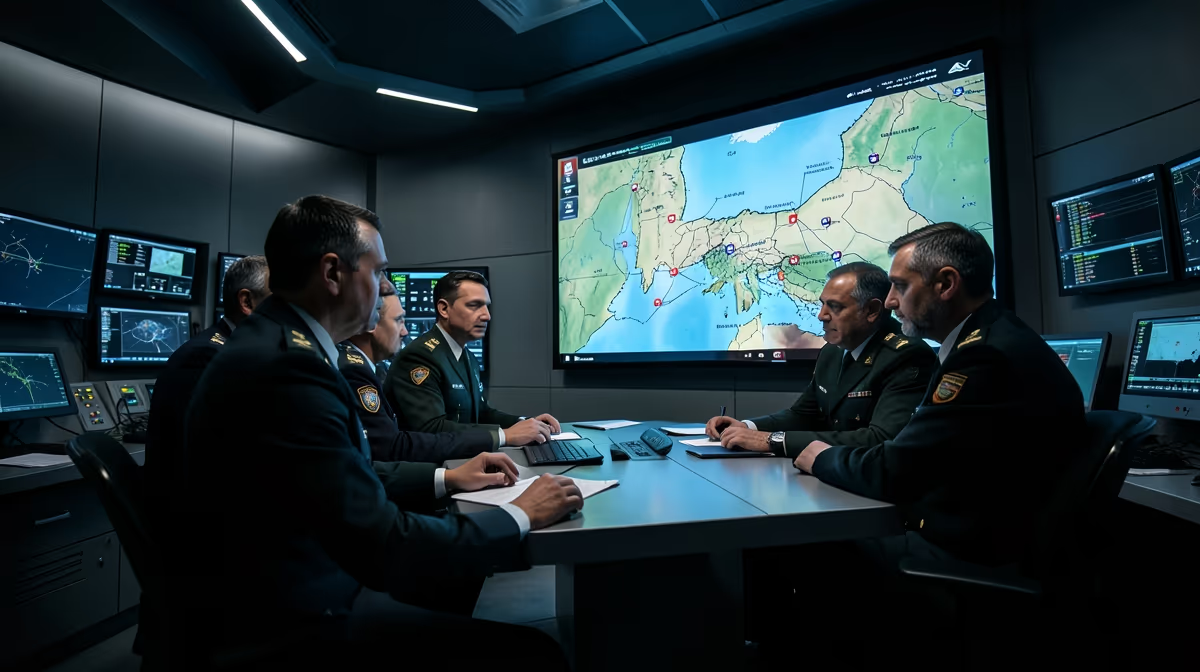
The high-altitude silence over the Persian Gulf has been replaced by the low hum of strategic planning at Camp David as the world awaits the next move in a rapidly escalating geopolitical standoff. President Trump warns Iran of fresh military strikes if Tehran is found to be involved in the recent FlyDubai plane incident, a development that has effectively placed regional security on a knife-edge.
This warning, issued directly by the President, serves as a stark signal of a shifting U.S. posture toward Middle Eastern security. The situation has intensified following reports from Fox News and CBS News regarding high-level strategy sessions where senior administration officials convened to weigh military options. As investigators work to determine the root cause of the aviation incident, the administration's rhetoric suggests a zero-tolerance policy for any state-sponsored interference with commercial aviation.
The central pivot of this crisis rests on whether intelligence can conclusively link Tehran to the FlyDubai incident, an outcome that would likely trigger immediate U.S. retaliatory strikes and potentially a wider regional conflict.
The Camp David Deliberations: A Strategy for War
The secluded cabins of Camp David have historically served as the backdrop for peace accords, but recent live updates suggest they are currently serving a more martial purpose. Senior Trump administration officials have held intensive meetings at the presidential retreat to discuss the escalating situation regarding Iran. These discussions are focused on the "Iran war" situation, reflecting the gravity with which Washington is treating the current climate of hostility.
The presence of top-tier leadership at Camp David indicates that the administration is not merely considering diplomatic rebukes but is actively preparing for potential military engagement. The focus of these talks is reportedly the coordination of defense policy and the assessment of military positioning in the Middle East. While the specifics of the deliberations remain shielded by national security protocols, the timing—occurring simultaneously with the FlyDubai investigation—points to a coordinated effort to prepare for any contingency.
These high-level meetings also reflect internal deliberations regarding the scale of a potential response. Analysts suggest that the strategy sessions likely involve a debate between pursuing limited, precision retaliatory strikes or a more comprehensive military campaign aimed at neutralizing Iranian capabilities. The outcome of these talks will dictate the tempo of U.S. operations in the coming days, as the administration balances the need for deterrence against the risks of a broader regional escalation.
The FlyDubai Incident: A New Flashpoint in the Middle East
The catalyst for this sudden surge in tensions is a concerning incident involving a FlyDubai aircraft. While details surrounding the specific nature of the event are still emerging, the administration’s reaction has been swift and definitive. The warning issued to Tehran highlights a "strict posture" toward any Iranian involvement, signaling that commercial aviation security has become a non-negotiable red line for the United States.
Historically, incidents involving civilian aviation in contested airspace have served as the most dangerous triggers for international conflict. The administration is currently evaluating intelligence to determine if there was malicious state involvement or if the incident was a result of non-state actors or technical failure. However, the President’s public warning suggests that the U.S. is already treating the possibility of Iranian interference with the highest level of suspicion.
- International observers are closely monitoring the investigation into the FlyDubai aircraft.
- Any proven provocation by Tehran is expected to be met with a "robust response."
- Current intelligence gathering is focused on verifying electronic or physical interference with the flight path.
The emphasis on "fresh strikes" indicates that the U.S. is prepared to move beyond sanctions and diplomatic isolation, returning to a policy of direct military deterrence. This posture aims to prevent Tehran from leveraging regional instability to disrupt international travel and commerce.
Economic and Geopolitical Fallout: Energy Markets and Aviation Security
The threat of open warfare in the Middle East has sent ripples through the global economy, specifically targeting the energy and aviation sectors. Global oil markets are notoriously sensitive to instability in the Persian Gulf, and any escalation of military threats risks driving up prices and triggering volatility in international trade. As a primary transit point for global energy supplies, the security of the region is inextricably linked to global economic stability.
For the aviation industry, the FlyDubai incident represents a severe security challenge. International airlines operating in the Middle East are forced to reassess flight paths and security protocols, potentially leading to increased costs and travel disruptions. The fear of being caught in the crossfire of a state-level military conflict is a significant deterrent for commercial carriers, who must prioritize passenger safety above all else.
| Impact Area | Consequences of Escalation |
|---|---|
| Global Oil Markets | Increased price volatility and supply chain disruptions. |
| International Aviation | Heightened security risks and rerouted flight paths in the Middle East. |
| Regional Stability | Risk of drawing in allies and adversaries into a wider conflict. |
| Trade Stocks | Potential declines in aviation and energy-related equities. |
The geopolitical angle is equally complex. The warning forces international stakeholders, including regional allies and adversaries, to assess their own risks. Nations dependent on the stability of the Persian Gulf for trade are now faced with the possibility of a disrupted maritime and aerial corridor, which could necessitate an international diplomatic intervention to prevent a full-scale war.
Domestic Challenges: Labor Cuts and Populist Economic Maneuvers
While the administration focuses on Middle Eastern security, it faces a turbulent domestic landscape marked by economic shifts and unconventional political tactics. In Ohio, a significant "gut punch" occurred just days before a scheduled Trump rally, as nearly 1,400 workers were laid off at a truck factory. This development highlights the domestic pressure on the administration to address labor market vulnerabilities even as it pivots toward international defense.
In an apparent effort to bolster domestic support and provide relief to seniors, the administration is offering $90 payments to 20 million Medicare recipients. This move is seen as a populist economic maneuver, potentially aimed at consolidating a key voting demographic amid the rising geopolitical tensions. Simultaneously, the President has engaged in unconventional political communication, such as sharing Senator Tom Cotton’s phone number as part of a push to make Daylight Saving Time permanent.
These domestic actions create a complex backdrop for the Iran crisis. The administration is essentially operating on two fronts: projecting decisive leadership on the global stage while managing labor unrest and pursuing specific legislative and populist goals at home. The contrast between high-level war talks at Camp David and the granular focus on Medicare payments and Daylight Saving Time illustrates a multi-faceted approach to governance during a period of national and international stress.
Historical Parallels and Strategic Risks
The current tension draws an unavoidable historical parallel to the 1988 shooting down of Iran Air Flight 655 by the USS Vincennes. That tragedy severely escalated U.S.-Iran tensions and remains a point of deep-seated friction in the Persian Gulf. The memory of such incidents underscores the extreme danger inherent in military standoffs involving commercial aviation.
Senior administration officials are likely aware that any miscalculation or unintended escalation could lead to a repeat of historical tragedies. This risk is a central component of the "hidden angle" of the Camp David talks, where internal divisions may exist over the efficacy of retaliatory strikes versus the necessity of de-escalation. The administration must balance the political need to project strength with the strategic reality that a wider conflict could have catastrophic consequences for regional and global security.
The current environment requires a delicate balance between aggressive deterrence and the prevention of an accidental regional war.
The root cause of this friction remains the long-standing volatility between Washington and Tehran, characterized by decades of economic sanctions and military standoffs. Each new incident, like the FlyDubai event, adds a dangerous layer to a relationship already defined by mutual distrust and high-stakes brinkmanship.
Future Outlook: The Next 72 Hours
The next 24 to 72 hours are viewed by experts as critical for the trajectory of this conflict. Continued monitoring of the FlyDubai investigation and official statements from both the U.S. and Iranian leadership will determine if the situation moves toward de-escalation or open hostility. Senior officials remain in a state of high readiness, awaiting the final intelligence assessments from the Camp David deliberations.
Potential Scenarios
The international community, including regional residents and global market participants, remains on high alert. The expert prediction for this period suggests heightened diplomatic tensions and a close observation of military positioning. The coming days will reveal whether the threat of force successfully serves as a deterrent or if it marks the beginning of a new chapter of military conflict in the Middle East.
Frequently Asked Questions
What did Donald Trump warn Iran about regarding the FlyDubai plane incident?
Donald Trump issued a stern warning to Iran, threatening fresh military strikes if Tehran is found to be involved in the FlyDubai plane incident. The threat escalates tensions between the US and Iran following the concerning aviation incident.
Why is the warning about the FlyDubai plane incident significant?
This warning is significant because it highlights the heightened risk of direct military escalation and conflict between the United States and Iran. It places intense scrutiny on Tehran's potential role in regional security breaches.
Who is affected by the escalating tensions between Trump and Iran?
Regional stability in the Middle East is heavily impacted, putting international travelers, commercial airlines like FlyDubai, and military personnel in the region at heightened risk. Citizens and officials in both the US and Iran are also affected by the shifting geopolitical climate.
What happens next regarding the US response to Iran?
Senior Trump administration officials have reportedly met at Camp David to discuss potential military actions and strategy regarding Iran. Further developments depend on the official findings and intelligence gathered concerning the FlyDubai plane incident.
What is the background of the tensions involving Trump and Iran?
The ongoing friction stems from a history of volatile diplomatic and military relations between the United States and Iran, marked by previous strikes and continuous threats. The latest incident involving a commercial flight adds a dangerous new dimension to these hostilities.
What specific detail emerged from recent meetings about the Iran situation?
Recent live updates indicate that senior Trump administration officials held high-level discussions specifically to address the Iran war situation at Camp David. These meetings underscore the seriousness with which the administration is treating potential escalations.
Conclusion
The warning from President Trump regarding fresh strikes against Iran marks a critical juncture in U.S.-Middle East policy. Triggered by the FlyDubai plane incident, this development has moved the strategic focus of the administration to Camp David, where the possibility of military action is being actively debated. While domestic challenges—including factory layoffs in Ohio and populist economic measures like Medicare payments—continue to demand attention, the looming threat of regional conflict remains the primary concern for global observers. The next few days will be decisive, as the international community waits to see if the investigation into the FlyDubai incident provides a path to de-escalation or a justification for military engagement. For now, the administration maintains a firm stance, signaling that any provocation involving commercial aviation will be met with a robust and immediate response.
Sources
- Trump warns Iran of fresh strikes if Tehran involved in FlyDubai plane incident — Fox News
- A billionaire is one of Trump’s loudest critics. Will Democrats send him to the White House? — The Guardian
- Live Updates: Senior Trump administration officials met to discuss Iran war at Camp David — cbsnews.com
- Trump apparently shares Tom Cotton’s phone number in push to make Daylight Saving Time permanent — Politico
- Trump offering $90 payments to 20 million Medicare recipients — TheDailyNewsOnline.com
- A gut punch in Ohio: Nearly 1,400 laid off at truck factory just days before Trump rally — AP News


.webp)