
USS Theodore Roosevelt Deployment Triggers Major Middle East Pivot
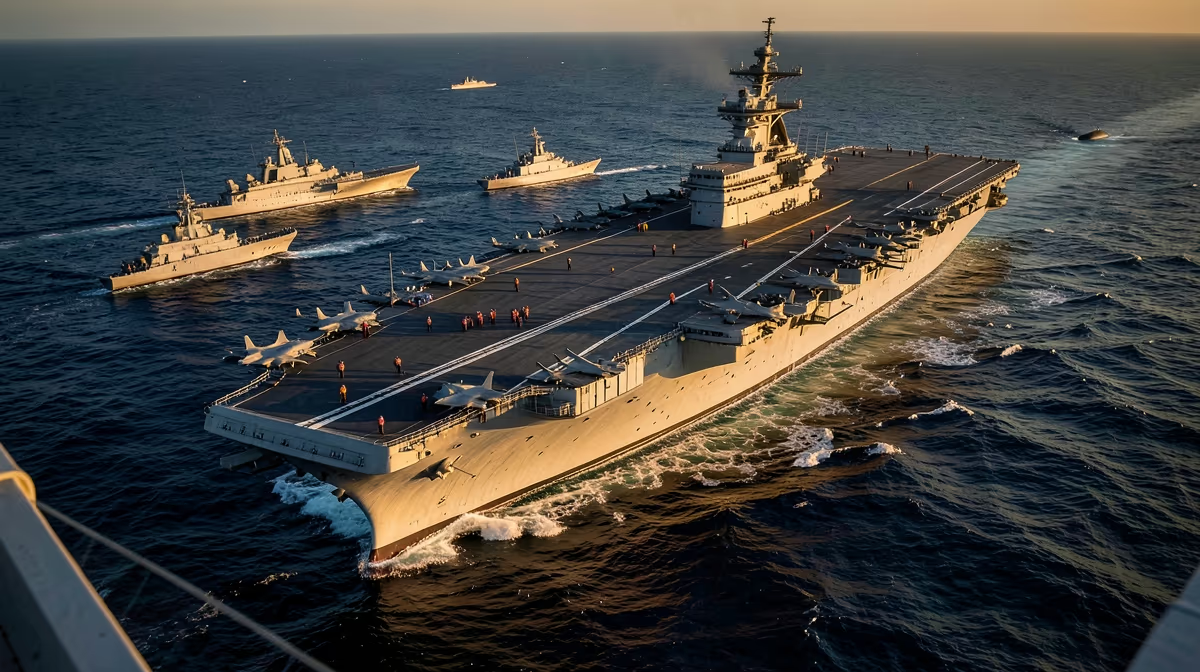
The silent churn of the Pacific Ocean now carries a massive weight of steel and diplomatic intent toward one of the world's most volatile maritime corridors. As the USS Theodore Roosevelt deployment moves into its next phase, the shift in naval positioning reveals a calculated response to a geopolitical environment where diplomatic channels have reached a frustrating impasse. This movement represents more than a simple change of scenery for thousands of sailors; it is a critical calibration of American power projection intended to sustain a persistent presence in a region defined by ongoing friction with Iran.
According to verified reports from the U.S. Naval Institute (USNI) and Stars and Stripes, the USS Theodore Roosevelt has departed from San Diego, signaling the start of a mission that will eventually place it in the heart of the Middle East theater. This deployment occurs as the U.S. Navy maintains a high operational tempo across multiple theaters, with other major assets like the USS Abraham Lincoln recently noted operating near Hawaii. The movement of these massive carrier strike groups is a logistical feat that underscores the strategic calculus of the Department of Defense as it navigates a stalemate in U.S.-Iran talks and sustained regional operations.
The deployment of the USS Theodore Roosevelt to the Middle East ensures a continuous U.S. naval presence by relieving the USS George Washington, serving as both a strategic deterrent and a logistical necessity amidst stalled diplomatic talks with Iran.
The Strategic Logic of Carrier Rotation
The primary objective of the current transit is the relief of the USS George Washington. In the complex world of naval strategy, maintaining a "carrier gap-free" presence in high-tension areas is a priority for military planners. By sending the USS Theodore Roosevelt to the Middle East, the U.S. Navy ensures that there is no vacuum of power as the George Washington concludes its current tour. This rotational model is a cornerstone of American overseas presence, designed to provide regional commanders with a versatile platform capable of everything from high-end combat operations to humanitarian assistance and maritime security.
The move follows a series of preparatory maneuvers. Before heading toward its final destination in the Middle East, the USS Theodore Roosevelt transited through the Pacific. This path allows the carrier strike group to maintain readiness and offer a visible deterrent in multiple regions before arriving at the focal point of current Iranian tensions. The presence of the USS Abraham Lincoln near Hawaii further illustrates the layering of naval assets across the Pacific-to-Middle-East pipeline, ensuring that the Navy can respond to contingencies even as its primary strike groups are in transit.
Diplomatic Stalemates and Naval Deterrence
The timing of this deployment is inextricably linked to the current state of international relations. Reports from The Jerusalem Post and The Hill indicate that diplomatic talks between the United States and Iran have reached a significant stalemate. As negotiations falter, the military's role as a deterrent becomes more pronounced. Analysts suggest that the sustained naval presence is intended to signal the ongoing commitment of the U.S. administration to maintain a strong military posture in the region, regardless of domestic political debates over foreign entanglements.
- The deployment is a direct response to sustained tensions and a diplomatic deadlock.
- It serves as a visual and tactical reminder of U.S. capabilities during periods of negotiation failure.
- The carrier provides a platform for rapid response should regional frictions escalate beyond the current status quo.
The movement of a carrier strike group is often interpreted as a "hard power" counterweight to "soft power" failures. When diplomatic efforts stall, the physical presence of a 100,000-ton aircraft carrier in the Arabian Sea or the Persian Gulf provides a layer of stability for regional allies and a warning to adversaries. For Iran, the arrival of the USS Theodore Roosevelt signifies that the U.S. is not prepared to reduce its security footprint, even as the focus of global attention occasionally shifts toward other theaters of conflict.
The Economic and Geopolitical Impact
Beyond the immediate tactical advantages, the USS Theodore Roosevelt deployment has significant implications for global economic stability. The Middle East remains a primary hub for international shipping and energy exports. The Navy's presence in these waters is a fundamental component of safeguarding critical maritime trade routes and energy supply corridors. Any disruption to these lanes—whether through state-sponsored interference or regional instability—can have an immediate and dramatic impact on global fuel prices and the stability of international markets.
| Operational Element | Strategic Impact |
|---|---|
| Persistent Presence | Continuous deterrence against regional escalation |
| Trade Route Security | Protection of global shipping and energy corridors |
| Regional Posture | Reassurance of security commitments to Middle East allies |
| Diplomatic Signaling | Counterbalance to stalled negotiations with Iran |
For international shipping industries and nations dependent on Middle Eastern oil, the U.S. Navy acts as a guarantor of the "freedom of navigation." This mission is particularly relevant given the history of friction in the region's narrow waterways. By maintaining a carrier strike group in the area, the U.S. provides a stabilizing force that prevents localized conflicts from spiraling into global economic crises. This affects everyone from the crew members on commercial tankers to citizens concerned with the price of fuel at the pump.
Analyzing the Toll on Fleet Readiness
While the strategic benefits are clear, some observers point to a "hidden angle" regarding the strain on the U.S. Navy's overall fleet. The rapid rotation of carrier strike groups, such as the USS Theodore Roosevelt relieving the USS George Washington, highlights the intense pressure on the Navy's available assets. Maintaining a persistent high-tempo posture across multiple global theaters simultaneously—ranging from the Pacific to the Middle East—takes a toll on both the mechanical readiness of the ships and the operational endurance of the personnel.
Historical parallels can be drawn to the continuous rotational deployments seen throughout the 2010s and 2020s, where heightened friction with Iran necessitated a near-constant carrier presence. This sustained requirement forces the Navy into a rigorous cycle of maintenance, training, and deployment that leaves little room for error. The move of the Roosevelt, while necessary for regional deterrence, is a reminder of the logistical and human costs associated with being a global security provider.
Future Outlook and Potential Scenarios
Looking ahead, the next 24 to 72 hours will see the USS Theodore Roosevelt continue its transit toward the Middle East area of operations. Naval positioning adjustments will likely proceed as planned, with international observers monitoring the movement for any signs of tactical shifts. Analysts expect that the arrival of the carrier will lead to a smooth official assumption of duties from the USS George Washington, integrating the Roosevelt into existing regional command structures.
Predicting Regional Responses
Expert predictions suggest that the best-case scenario involves a routine rotation that maintains the current level of deterrence without triggering a fresh escalation of hostilities. In this view, the carrier's arrival is a stabilizing "status quo" move. However, the worst-case scenario involves heightened friction during the transition period. A change in carrier groups can sometimes be viewed by adversaries as a window of opportunity, potentially leading to increased tactical posturing or further stalling of diplomatic resolutions as Iran gauges the resolve of the incoming force.
The Path Ahead
- The USS Theodore Roosevelt will officially assume duties in the Middle East, replacing the USS George Washington.
- The crew will begin active patrols of key waterways, including the Arabian Sea and areas near the Strait of Hormuz.
- Military and diplomatic observers will watch for any shifts in Iranian naval activity or rhetoric in response to the new arrival.
Frequently Asked Questions
Why is the USS Theodore Roosevelt deploying to the Middle East?
The USS Theodore Roosevelt is deploying to the Middle East amid continuing operations related to Iran and a stalemate in recent talks. The deployment is part of the U.S. Navy's ongoing strategy to maintain a strong regional presence.
Which aircraft carrier is the USS Theodore Roosevelt replacing?
The USS Theodore Roosevelt is deploying to the Middle East to relieve the USS George Washington. This routine rotation ensures continuous carrier strike group presence in the region.
Where did the USS Theodore Roosevelt deploy from?
The aircraft carrier recently departed from San Diego before heading toward the Pacific and onward to the Middle East. Meanwhile, other naval assets like the USS Abraham Lincoln have been operating near Hawaii.
What is the background of the USS Theodore Roosevelt's current deployment?
The deployment follows heightened tensions and stalled diplomatic talks between the United States and Iran. The U.S. Navy continues to sustain robust operations and deterrence efforts throughout the area.
How does this deployment affect regional security in the Middle East?
By maintaining an active carrier strike group in the region, the U.S. aims to deter potential escalations and reassure regional allies. It demonstrates the military's ongoing commitment to maritime security amidst ongoing geopolitical friction.
What happens next as the carrier group arrives in the area of operations?
Upon arrival, the USS Theodore Roosevelt will officially assume duties from the USS George Washington and integrate into regional command structures. The crew will carry out assigned security missions and patrol key waterways.
Conclusion
The deployment of the USS Theodore Roosevelt represents a critical juncture in U.S. naval strategy, bridging the gap between high-level diplomacy and operational reality. As the carrier makes its way to relieve the USS George Washington, the mission remains clear: maintain a continuous and credible deterrent in a region where the margin for error is razor-thin. While the logistical strain on the fleet and the stalemate in U.S.-Iran talks present ongoing challenges, the movement of this strike group ensures that American power projection remains a constant variable in the Middle Eastern security equation. In the coming weeks, the arrival of the Roosevelt will mark the next chapter in a long-standing naval commitment to regional stability and the protection of global maritime interests.
Sources
- USS Theodore Roosevelt Deploys From San Diego, USS Abraham Lincoln Near Hawaii — news.usni.org
- Navy sends Roosevelt to Middle East amid continuing Iran war — stripes.com
- USS Roosevelt set to deploy to Middle East as Iran, US talks reach stalemate — The Jerusalem Post
- US aircraft carrier deploys to Middle East to relieve USS George Washington — The Hill
- U.S. Aircraft Carrier USS Theodore Roosevelt Heads to Middle East as Navy Sustains Iran Operations — Army Recognition
- USS Theodore Roosevelt arrives in Pacific ahead of anticipated Middle East deployment — Yahoo


.webp)

