
Claude for Manufacturing Debuts as Anthropic Targets Global Industry
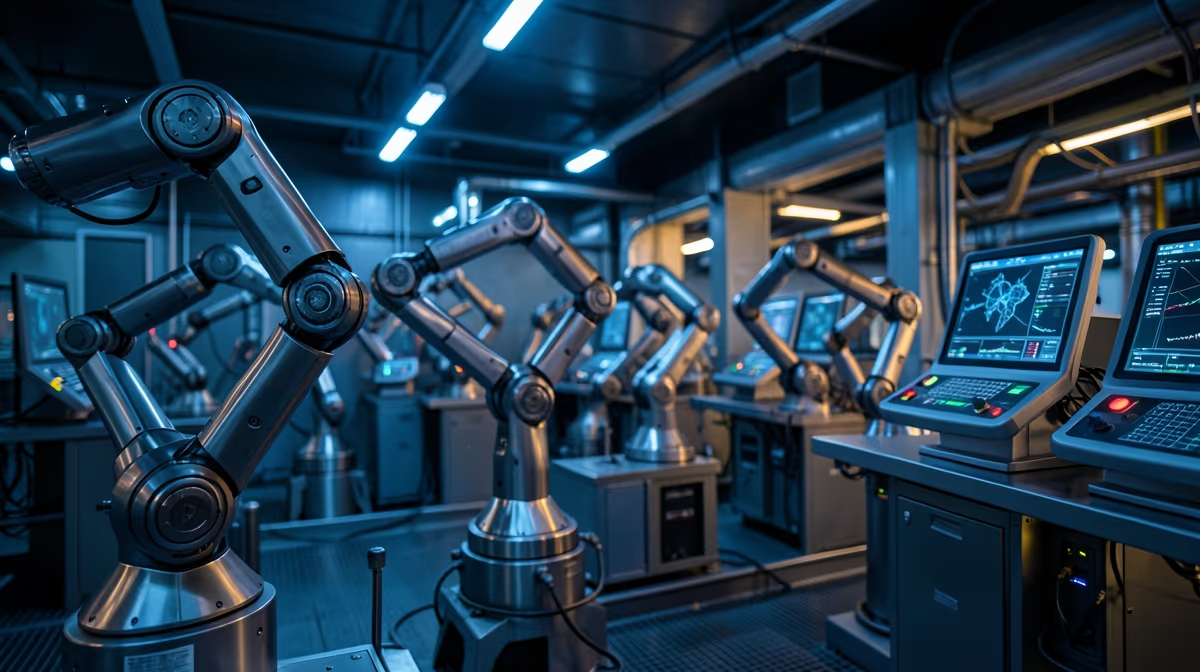
When physical factory floors begin speaking the language of generative neural networks, the boundary between software intelligence and heavy machinery effectively evaporates. Anthropic has officially announced Claude for Manufacturing, a new suite of industrial AI tools designed to revolutionize factory operations and supply chain management through advanced AI automation. This targeted rollout marks a decisive pivot from broad, conversational text models toward domain-specific vertical solutions capable of directly influencing physical production environments. Rather than relying on generalized chat capabilities, industrial enterprises are now presented with dedicated AI mechanisms structured to handle technical workflows, supply chain coordination, and physical product engineering.
By moving beyond generic consumer interfaces, artificial intelligence developers are addressing the rigorous demands of enterprise supply chains. The launch of Claude for Manufacturing reflects a broader industry movement where foundational model creators seek deep integration into specialized vertical markets. Manufacturing companies, industrial engineers, factory operators, and enterprise strategists are re-evaluating how automated intelligence can streamline production planning, accelerate technical prototyping, and optimize physical goods manufacturing.
By deploying specialized vertical tools directly to factory floors, Anthropic is pivoting foundational AI from conversational software to the core operational engine of modern industrial manufacturing.
The Industrial Shift: Anthropic’s Vertical Expansion
The official introduction of Claude for Manufacturing, initially reported by Manufacturing Dive, highlights a fundamental reorientation in enterprise software deployment. As foundational AI architectures mature, developer focus has migrated toward high-value, specialized vertical sectors. Manufacturing represents one of the most operationally complex and economically crucial verticals globally, characterized by rigid production timelines, intricate supply chains, and strict quality assurance demands.
This strategic expansion is driven by the necessity for AI developers to establish sustainable enterprise revenue streams. Generic model deployments face increasing commodity pressure, whereas domain-tailored offerings deliver tangible operational efficiencies. The adoption pattern mirror historical technology transitions, drawing direct parallels to the enterprise resource planning (ERP) systems and computer-aided design (CAD) software revolutions of the late 20th century. Just as ERP and CAD tools digitized legacy paper systems and manual drafting tables, domain-specific AI platforms aim to digitize and automate decision-making hierarchies across production floors.
Key Product Releases and Technical Capabilities
The arrival of Claude for Manufacturing is part of a broader wave of product releases from Anthropic designed to embed machine intelligence across enterprise operations. On November 10, the company rolled out Claude Meetings, a tool designed to transcribe and analyze workplace discussions, automatically converting verbal team dialogue into structured plans, operational tasks, and execution tracking.
Concurrently, Anthropic introduced its advanced model iterations, Claude Fable 5.2 and Claude Mythos 5.2, expanding the computational baseline supporting these enterprise tools. Among the most notable technical advances is the platform's capacity to assist in engineering tasks, where Claude can design electronic prototypes from start to finish. This feature bridges the gap between digital instructions and physical hardware creation, allowing engineers to accelerate prototyping cycles significantly. Demonstrating the model's analytical baseline, recent evaluations reported by Morningstar even examined conversational interactions with Claude regarding long-term financial structures, revealing alignment with traditional Boglehead investing principles.
| Date | Product Release / Milestone | Operational Scope |
|---|---|---|
| November 10, 2026 | Claude Meetings | Converts workplace discussions into structured tasks and operational plans |
| November 10, 2026 | Claude Fable 5.2 & Mythos 5.2 | Next-generation foundational model updates |
| November 10, 2026 | Electronic Prototyping Capabilities | End-to-end automated design of electronic hardware prototypes |
| November 12, 2026 | Claude for Manufacturing | Specialized industrial AI suite for factory floors and supply chains |
| November 12, 2026 | Public Market Trading Announcement | IPO confirmation set for trading on Thursday, November 19 |
Corporate Liquidity and the Upcoming IPO
The commercial timing of these product announcements coincides directly with major corporate liquidity milestones for Anthropic. As reported by Yahoo Finance, the maker of Claude is scheduled to begin public trading on Thursday, November 19. The alignment between specialized product releases and corporate liquidity events illustrates a deliberate strategy to demonstrate multi-sector commercialization prior to entering public capital markets.
Public investors and technology analysts are evaluating how effectively enterprise software monetization can be sustained through vertical AI tools. By demonstrating actionable utility in industrial settings—where operational downtime carries severe financial costs—Anthropic aims to establish a clear commercial value proposition. Enterprise leaders are closely tracking these corporate developments to assess long-term vendor stability, platform support, and product roadmap continuity before committing core manufacturing infrastructure to third-party AI frameworks.
Specialized AI tools must demonstrate seamless operational reliability in factory environments where downtime carries substantial financial consequences.
Political, Geopolitical, and Intellectual Property Dynamics
The deployment of automated intelligence onto factory floors carries significant political and regulatory implications. Scaling industrial automation triggers increased regulatory scrutiny surrounding potential labor displacement, worker retraining programs, and supply chain resilience. Governance bodies globally are examining how real-time factory floor AI adoption affects regional employment structures and industrial labor standards.
Geopolitical Hardware Competition
From a geopolitical perspective, applying advanced AI to physical manufacturing and electronic hardware design heightens international technological competition. Nations vying for industrial supremacy view automated electronic prototyping and smart manufacturing infrastructure as critical strategic assets. Systems capable of designing electronic hardware from concept to completion intersect directly with national security priorities regarding semiconductor workflows and domestic production autonomy.
Intellectual Property and Data Management
A critical, less discussed dimension of this technological shift involves intellectual property management across international supply chains. Integrating physical manufacturing tools and transcription platforms like Claude Meetings into engineering environments alters how trade secrets and industrial blueprints are processed:
- Digital handling of proprietary engineering schematics during automated prototyping cycles
- Transcription and retention of internal operational discussions containing proprietary process knowledge
- Managing cross-border data flows when multinational supply networks utilize centralized AI models
- Securing proprietary trade secrets within complex, multi-tiered enterprise supply chains
Integration Scenarios and Operational Outlook
In the immediate 24-hour horizon following the announcement, industrial stakeholders and technology executives are examining the practical scope and functional architecture of Claude for Manufacturing. Over the next 72 hours, operational analysts expect detailed commentary to emerge regarding how these specialized tools integrate with legacy enterprise systems, supply networks, and shop-floor hardware interfaces.
Operational analysts expect manufacturing enterprises to benchmark Claude for Manufacturing against existing enterprise software platforms. Success will be determined by how efficiently the platform executes workflow automation and technical prototyping without disrupting active production schedules.
- Best-Case Scenario: Seamless technical integration allows manufacturing enterprises to optimize supply chain workflows, reduce prototyping cycle times, and improve overall operational throughput across assembly facilities.
- Worst-Case Scenario: Complex legacy integration hurdles or enterprise concerns regarding industrial data security slow initial adoption rates, leading to extended evaluation periods among target industrial clients.
Frequently Asked Questions
What is Claude for Manufacturing?
Claude for Manufacturing is a specialized offering from Anthropic designed to bring advanced AI capabilities to the manufacturing sector. It builds on the company's expanding suite of enterprise tools to help industrial organizations streamline factory operations and supply chain management.
Why is the launch of Claude for Manufacturing important?
This launch marks Anthropic's strategic expansion into industry-specific vertical solutions, helping manufacturers leverage generative AI for complex operational tasks. It addresses unique industrial needs alongside other recent releases like Claude Meetings and electronic prototyping tools.
Who is affected by Anthropic's new manufacturing tool?
Manufacturing enterprises, operations managers, industrial engineers, and enterprise strategists stand to be most affected by this rollout. These professionals can utilize the AI to optimize workflows, analyze operational data, and improve overall production productivity.
What happens next following the rollout of Claude for Manufacturing?
As adoption grows, companies in the industrial sector are expected to integrate these specialized AI workflows deeper into their supply chains and production lines. Meanwhile, Anthropic continues to scale its enterprise ecosystem amidst major corporate milestones, such as its upcoming IPO.
What is the background of Anthropic's recent product expansions?
The introduction of Claude for Manufacturing follows a busy period of product development for Anthropic, including the release of Claude Meetings and advanced prototyping capabilities. These developments highlight the company's push to diversify its AI applications across different workplace environments.
What specific capability does Claude offer for technical prototyping?
Alongside its industrial solutions, Anthropic's technology has demonstrated the ability to design electronic prototypes from start to finish. This capability showcases the model's expanding utility in technical design and engineering tasks.
Conclusion
Anthropic's release of Claude for Manufacturing represents a key milestone in the transition of artificial intelligence from conversational interfaces to specialized vertical industrial tools. Supported by concurrent launches including Claude Meetings, electronic prototyping capabilities, and updated foundational models, the platform targets core operational challenges across manufacturing supply chains and technical engineering workflows. As the company prepares for its public trading debut on Thursday, November 19, the industrial sector will actively benchmark these specialized tools against existing enterprise systems to determine the real-world efficiency gains of automated AI deployments on the factory floor.
Sources
- Anthropic launches ‘Claude for Manufacturing’ — Manufacturing Dive
- Anthropic launches Claude Meetings to turn workplace discussions into plans and tasks — TechCrunch
- Introducing Claude Fable 5.2 and Claude Mythos 5.2 — Anthropic
- Claude can design electronic prototypes from start to finish — Anthropic
- Anthropic IPO: Claude maker to begin trading on Thursday, Nov. 19 — Yahoo Finance
- Is Claude a Boglehead? A Conversation With AI Revealed Surprisingly Familiar Investing Principles — Morningstar


