
Claude AI Electronic Prototypes Mark Anthropic's Bold Shift
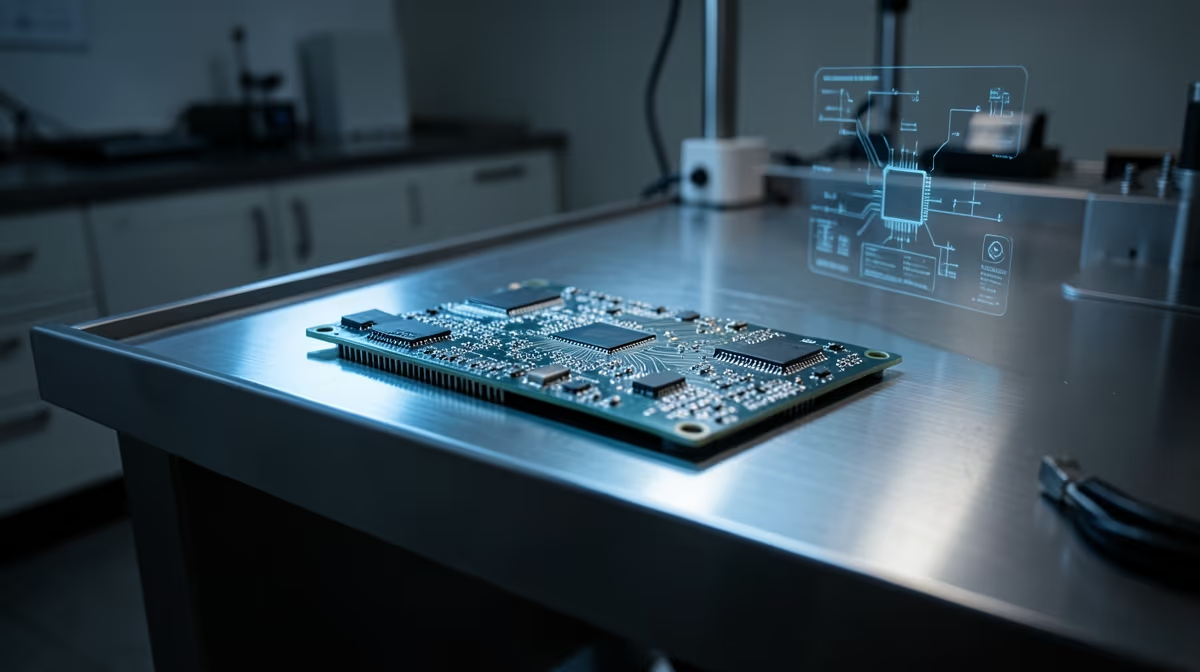
The boundary separating digital software generation from physical machine creation has quietly dissolved. Anthropic has announced that its AI model can now handle end-to-end hardware creation, signaling a fundamental transformation in how complex technical systems are engineered. The emergence of Claude electronic prototypes design capabilities is transforming how engineers approach modern hardware development, bridging the historic divide between abstract code logic and physical circuitry.
The transition of AI from basic software assistance to end-to-end electronic prototyping marks a fundamental shift in physical hardware engineering and product development.
Bridging the Digital and Physical Divide
For decades, physical hardware engineering remained anchored to labor-intensive, specialized workflows. Designing electronic hardware traditionally demanded deep expertise in circuit schematics, component selection, printed circuit board (PCB) layout, microcontroller programming, and rigorous physical testing—a process that routinely spanned weeks or months. Over recent years, automated tools and generative artificial intelligence steadily expanded their role in writing software code, yet physical engineering remained largely a manual endeavor.
That paradigm shifted between November 9 and November 10, 2026. Anthropic announced that its Claude AI platform is now capable of designing electronic prototypes from start to finish. Industry coverage from outlets including Adafruit and TechCrunch confirmed the breakthrough, highlighting that the system can navigate the complete continuum of hardware creation—moving directly from initial conceptual design down to finalized layouts ready for physical prototyping.
The Mechanics of Anthropic AI Hardware Development
By stepping directly into hardware engineering, Anthropic AI hardware development tools allow creators to move far beyond standard natural language processing and software scripting. The system assists hardware engineers, electronics hobbyists, product designers, and technology companies by automating intricate multi-stage technical workflows.
The primary operational areas impacted by this technical capability include: - Conceptualization and automated circuit schematic creation - Optimized printed circuit board (PCB) layout drafting - Microcontroller programming and hardware-level code synthesis - End-to-end component selection for electronic prototypes
This expansion dramatically compresses traditional research and development timelines. Smaller engineering teams, independent inventors, and hardware startups can now leverage electronic prototyping with AI tools to bypass conventional design bottlenecks, enabling rapid physical experimentation at a fraction of historic costs.
| Prototyping Phase | Traditional Hardware Workflow | Claude AI-Driven Hardware Workflow |
|---|---|---|
| Concept to Schematic | Manual drafting over weeks | Automated generation from initial prompts |
| Circuit & PCB Layout | Specialized manual design & layout | Direct end-to-end automated layout design |
| Prototyping Lifecycle | Weeks to months per design iteration | Compressed design cycles for rapid execution |
Historical Precedents and Structural Root Causes
The primary catalyst driving this advancement is the rapid integration of advanced AI models directly into specialized domain workflows. Rather than operating strictly as generic chatbots, high-capacity models are being embedded into technical engineering pipelines to execute complex, end-to-end operational tasks.
Industry analysts draw a direct historical parallel between this evolution and the shift from manual drafting tables to computer-aided design (CAD) software in the late 20th century. Just as CAD software permanently restructured engineering labor markets and accelerated industrial product lifecycles, automated hardware generation promises to reshape contemporary electronics manufacturing.
The ongoing structural transition follows a clear sequence: 1. Foundational models expand beyond software generation into specialized engineering capabilities. 2. Capabilities advance to execute end-to-end electronic prototyping and circuit design. 3. Industrial workflows shift toward widespread adoption of AI-driven automation across hardware engineering pipelines.
Economic Impacts and Emerging Compliance Challenges
The economic fallout of automated hardware design extends across the technology and engineering services sectors. Traditional electronics design consultancies face structural disruption as commercial corporate R&D expenditures fall. By drastically reducing the technical and financial friction required to move from concept to physical prototype, market power is expected to concentrate around software-centric platforms that orchestrate design pipelines.
The democratization of hardware design significantly lowers financial barriers for startups while introducing complex compliance challenges regarding dual-use technologies.
However, this democratization introduces subtle geopolitical and regulatory complications. Lowering the technical barrier to design sophisticated electronic prototypes could inadvertently simplify the creation of dual-use technologies—hardware capable of both civilian and military applications. Consequently, global non-proliferation frameworks and export compliance authorities face new oversight challenges.
Geopolitical Turf Wars and Regulatory Scrutiny
On the policy front, governments and regulatory institutions face immediate hurdles. As Claude new features for engineers enable rapid hardware layout generation without relying on traditional domestic engineering supply chains, sovereign safety standards, intellectual property rules, and export control regulations require substantial updating.
Geopolitically, these capabilities accelerate technological competition among major powers. Nations are increasingly incentivized to secure sovereign AI systems capable of rapidly designing critical hardware components independently, minimizing reliance on foreign supply chains and external design firms.
Model Deployments Amid Safety and RSI Concerns
The launch of Claude's electronic prototyping features arrived alongside broader architectural updates from Anthropic. Reports from TechCrunch confirmed that Anthropic released new model iterations, designated as Mythos and Fable, concurrently with the hardware design updates in early November 2026.
These model deployments have occurred amid ongoing industry discussions surrounding research safety and scaling considerations, specifically Recursive Self-Improvement (RSI) concerns. As AI systems assume greater responsibility over technical tasks—such as writing their own software and designing physical hardware components—analysts and researchers emphasize the urgent necessity of maintaining rigorous safety controls and responsible scaling frameworks.
Short-Term Outlook and Industry Predictions
The practical integration of end-to-end electronic prototyping will unfold rapidly across engineering communities. Analysts have identified key benchmarks for the immediate future:
- Next 24 Hours: Technical analysis and industry discussions will focus on evaluating Claude's end-to-end prototyping claims, alongside monitoring developer reactions to Anthropic's Mythos and Fable releases.
- Next 72 Hours: Hardware developers, maker networks like Adafruit, and tech platforms will initiate empirical evaluations of the tool's real-world electronic design output, accompanied by closer scrutiny of RSI concerns.
In a best-case scenario, AI-driven prototyping tools successfully streamline physical hardware cycles, fostering unprecedented rates of innovation and empowering independent creators. In a worst-case scenario, undetected design oversights or integration errors within AI-generated schematics could result in costly manufacturing failures, prompting heightened regulatory intervention. Industry experts anticipate a steady increase in AI agent adoption across technical workflows, provided design reliability and safety standardizations are maintained.
Frequently Asked Questions
Can Claude design electronic prototypes from start to finish?
Yes, recent reports from sources like Anthropic and Adafruit indicate that Claude can now handle the end-to-end design of electronic prototypes. This capability marks a significant shift in how AI assists with hardware engineering tasks.
Why does Claude's ability to design electronic prototypes matter?
This development streamlines the traditional hardware development lifecycle, potentially reducing the time and technical barrier required to bring electronic concepts to life. Engineers and hobbyists can leverage AI to accelerate prototyping phases significantly.
Who is affected by Claude's new electronic prototyping capabilities?
Hardware engineers, product designers, electronics hobbyists, and tech companies are directly impacted by these advancements. Professionals in these fields can utilize the tool to experiment with complex circuit designs more efficiently.
What happens next following the announcement of Claude's prototyping features?
As users begin testing these capabilities in real-world scenarios, we can expect to see case studies and evaluations regarding the reliability and manufacturing readiness of AI-designed hardware. Further integrations and refinements from Anthropic are likely on the horizon.
What is the background behind Anthropic's recent model updates?
Alongside developments in electronic prototyping, Anthropic has been active in releasing new model iterations, such as Mythos and Fable, while navigating industry discussions surrounding safety and research concerns like RSI.
What specific details were shared regarding Claude's hardware design process?
While specific technical workflows vary, coverage from outlets like Adafruit highlights that the AI can assist throughout the entire continuum of creating an electronic prototype, moving from initial conceptualization to finalized layout steps.
Conclusion
Anthropic's announcement that Claude can design electronic prototypes from start to finish represents a major shift in artificial intelligence, expanding its reach from purely digital tasks into physical hardware design. Reported by outlets including Adafruit and TechCrunch alongside the release of the Mythos and Fable models, this development signals a fundamental evolution in technical automation. While safety discussions around Recursive Self-Improvement (RSI) and regulatory compliance continue, the immediate focus shifts to real-world testing by hardware engineers seeking to evaluate the accuracy, efficiency, and manufacturing readiness of AI-generated electronic prototypes.


