
Claude Duet Agent Arrives to Redefine How AI Handles Real-World Work
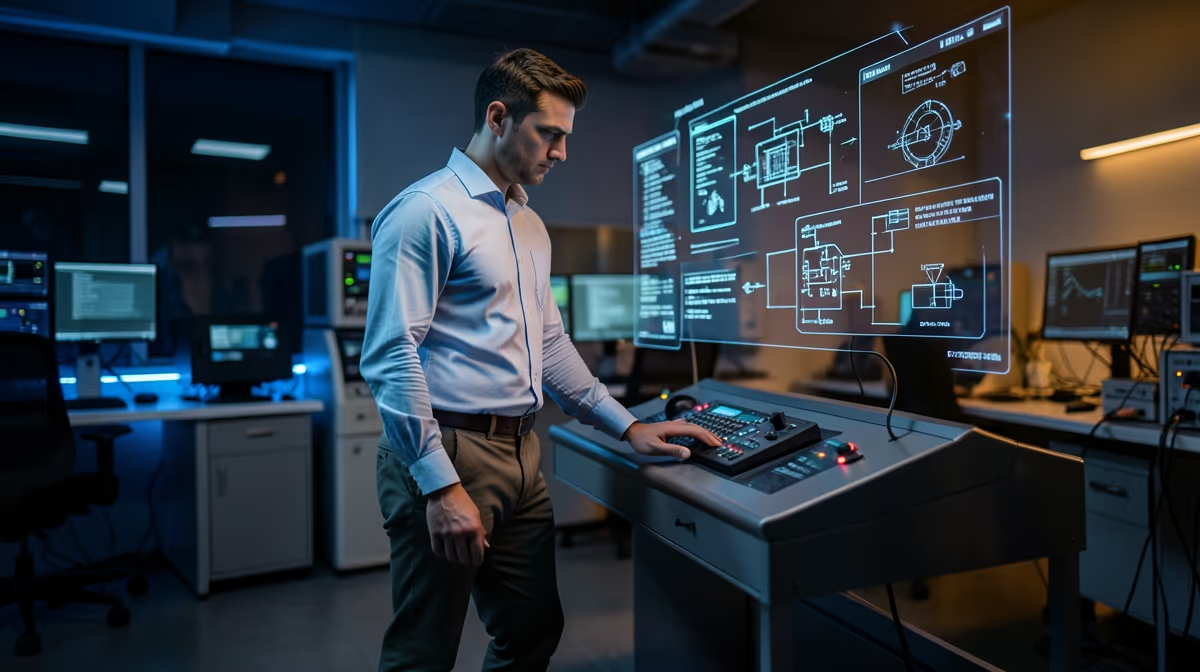
Artificial intelligence is officially breaking out of standard web browser windows and entering physical systems and complex daily workflows. With the latest Claude Duet agent update, Anthropic has rolled out enhanced autonomous agent capabilities that early technology reviewers and software engineers in the US describe as a bit neurotic, yet surprisingly capable of solving intricate operational problems.
The transition of generative AI from text-based browser prompts to physical hardware integration represents a fundamental shift toward real-world autonomous automation.
What Makes the New Claude Duet Agent Different?
For years, digital assistants have operated within strict boundaries, serving primarily as conversational text generators confined to chat screens. The deployment of Claude's Duet agent signals a broader evolution toward agentic workflows, where language models take direct actions, interact with external tools, and handle multi-step technical processes.
Initial reports from technology publications like The Verge highlight a distinct personality profile for the new agent architecture. Reviewers describe the tool as exhibiting erratic or overly anxious behaviors in certain operational environments—leading to its characterization as "neurotic"—while simultaneously demonstrating high utility when executing complex problem-solving routines.
Early testers describe the tool as possessing a unique blend of erratic behavior paired with surprisingly practical utility.
This duality is reshaping personal and developer productivity workflows. Early adopters, tech enthusiasts, and software engineering teams are finding that despite occasional over-analysis or quirky execution patterns, the agent handles high-friction tasks with impressive accuracy. By enabling automated tool use and complex reasoning, the system allows users to offload repetitive tasks and streamline enterprise automation routines.
Bridging Software and Steel: The $3 Arduino Experiment
The potential of agentic AI extends far beyond purely digital applications. A striking example of this expanding boundary occurred when an innovative AI developer successfully connected Claude directly to physical hardware to diagnose and repair a 1994 Jeep Cherokee.
As reported by TechRadar, the developer interfaced the language model with the classic vehicle using a modest $3 Arduino microcontroller. By bridging modern generative reasoning with low-cost physical microcontrollers, the setup allowed Claude to analyze real-world diagnostic signals and guide the physical repair of legacy mechanical components.
This experiment highlights a growing trend in micro-hardware integration. Low-cost electronic components like Arduinos are increasingly serving as physical hardware bridges, linking centralized artificial intelligence models with un-networked industrial and consumer machinery.
Analytic assessments draw a direct historical parallel between this movement and the early days of the microcomputer revolution during the late 1970s and 1980s. During that era, hobbyists and early engineers began interfacing general-purpose computing chips with custom mechanical and electrical systems, paving the way for modern industrial automation. Today, developers are repeating that pattern by plugging advanced large language models into physical assets.
Ecosystem Expansion: Models, Crypto Predictions, and Hardware Integration
The rollout of the Duet agent arrives alongside broader model iterations within Anthropic's developer ecosystem. The platform recently introduced Claude Fable 5.2 and Claude Mythos 5.2, expanding the suite of specialized language models available for diverse technical and creative implementations.
These expanding multimodal workflows are being applied across varied analytical disciplines. Beyond hardware engineering and mechanical troubleshooting, financial analysts and tech enthusiasts are leveraging Claude's forecasting capabilities to evaluate market trends. Recent financial reports from Yahoo Finance indicate that users are deploying the model to generate long-term valuation predictions for major cryptocurrency assets, including projected price models for Bitcoin and Ethereum reaching toward 2030.
This multi-industry adoption underscores how rapidly agent architectures are diversifying. Whether managing code integration, analyzing financial datasets, or interacting with microcontroller circuits, the model ecosystem is moving rapidly toward specialized, domain-specific execution.
Cloud Dependencies and Operational Vulnerabilities
Despite these technological strides, the reliance of advanced AI agents on centralized cloud infrastructure introduces distinct operational vulnerabilities. The risks associated with continuous digital dependencies were laid bare during a recent major infrastructure disruption.
In mid-November 2026, a global technological outage affecting Microsoft cloud systems dragged into a second consecutive day. As reported by SNJ Today, the widespread disruption cascaded across connected digital platforms, causing temporary outages for Claude and halting automated workflows for relying enterprise users.
| Timeframe | Event & Impact |
|---|---|
| November 2026 | Anthropic introduces Claude Fable 5.2, Claude Mythos 5.2, and new agent hardware capabilities. |
| Mid-November 2026 | Global Microsoft outage drags into a second day, causing temporary service disruptions for Claude. |
| Current Assessment | Industry analysts evaluate agent reliability and utility against cloud infrastructure vulnerabilities. |
This intersection of cloud downtime and agent availability emphasizes the delicate balance between high-utility software integration and infrastructure reliability. When autonomous agents are integrated directly into critical developer pipelines or physical diagnostic operations, platform downtime can immediately paralyze localized workflows.
Regulatory Scrutiny and Geopolitical Dimensions
As AI agents acquire the ability to interface with physical machinery and execute real-world tasks, regulatory and political scrutiny is intensifying across the technology sector.
From a regulatory perspective, oversight bodies are closely examining issues related to agent autonomy, system error rates, and corporate liability. When a software agent is empowered to direct physical repairs or manage machinery—such as interfacing with automotive hardware or industrial systems—questions arise regarding accountability if erratic or "neurotic" agent behaviors lead to hardware damage or operational failure.
On an economic and geopolitical level, the trend highlights questions around technological sovereignty. International industries and developer ecosystems remain heavily reliant on US-based AI platforms and cloud hosting providers. As nations evaluate the integration of autonomous agents into local physical infrastructure, supply chain dependencies on centralized cloud networks become a central strategic consideration.
The Operational Outlook: 24 to 72 Hours and Beyond
As platform operators restore infrastructure stability, industry observers and developers are closely tracking the continuous evolution of agentic technology.
Over the next 24 hours, user communities, developers, and tech analysts are expected to maintain active discussions focused on troubleshooting, evaluating Duet agent features, and assessing the residual operational impacts of recent infrastructure outages. Over the next 72 hours, attention will likely shift toward broader assessments of agentic capabilities, refined hardware integration protocols, and long-term platform stability following Microsoft's system recovery.
Industry analysts emphasize that evaluating AI agent utility requires balancing rapid innovation against system reliability challenges:
- Best-Case Scenario: Claude's Duet agent demonstrates exceptional reliability across complex creative, analytical, and technical tasks, inspiring a robust ecosystem of hardware-integrated developer projects and driving resilient cloud operations.
- Worst-Case Scenario: Persistent cloud infrastructure disruptions combined with erratic or overly neurotic agent execution patterns create friction for early adopters, leading to temporary skepticism surrounding physical AI agent capabilities.
Ultimately, key ecosystem players—including Anthropic, software developers, and technology analysts at outlets like TechRadar and The Verge—will continue to test the boundaries of what autonomous agents can achieve when software intelligence directly interfaces with the physical world.
Frequently Asked Questions
What is Claude's Duet agent?
Claude's Duet agent is an AI tool described by reviewers as a little neurotic yet surprisingly helpful. It has been tested in various creative capacities, including assisting developers with hardware troubleshooting.
How can Claude's Duet agent be used in real-world projects?
AI developers have integrated Claude into unique setups, such as using it alongside a $3 Arduino to fix a 1994 Jeep Cherokee. This demonstrates the agent's growing capability to plug into external hardware and solve hands-on problems.
Why is Claude's Duet agent gaining attention?
The agent is capturing interest for its quirky yet effective problem-solving skills in everyday tech scenarios. Its ability to navigate complex, physical-world repair tasks highlights the expanding practical utility of modern AI models.
Who is affected by the recent developments around Claude?
AI developers, automotive hobbyists, and everyday users interacting with Anthropic's ecosystem are most impacted by these new agent capabilities. Additionally, broader technical disruptions, such as recent global outages involving Microsoft, have temporarily affected service availability for users.
What happens next for Anthropic's Claude models?
As Anthropic continues to roll out updates like Claude Fable 5.2 and Claude Mythos 5.2, users can expect further refinements in agent behavior and integration. Developers will likely continue pushing the boundaries of what these agents can control in physical and digital environments.
What was a specific recent technical challenge involving Claude?
Alongside new feature releases, Claude experienced temporary downtime as part of a widespread global outage affecting Microsoft systems. This service interruption temporarily halted workflows for developers relying on the platform.
Conclusion
The deployment of Anthropic's Claude Duet agent marks an important milestone in the transition of artificial intelligence from conversational chat interfaces to practical, real-world execution. Verified developments demonstrate that despite quirky or erratic behavioral patterns, the agent offers practical utility across software workflows and low-cost hardware projects, as evidenced by successful diagnostic integrations with microcontrollers like the Arduino.
However, recent service disruptions caused by broader cloud infrastructure outages underscore the ongoing tension between agentic innovation and system stability. Moving forward, the focus for developers, analysts, and enterprise users will remain on refining agent reliability, establishing clear liability frameworks for hardware interactions, and ensuring resilient infrastructure as autonomous software continues to interface with the physical world.
Sources
- Claude’s Duet agent is a little neurotic and surprisingly helpful — The Verge
- 'What else can you plug your agent into?': one AI developer got Claude to fix his 1994 Jeep Cherokee with the help of a $3 Arduino — TechRadar
- Introducing Claude Fable 5.2 and Claude Mythos 5.2 — Anthropic
- Claude AI Predicts What Bitcoin and Ethereum Could Be Worth by 2030 — Yahoo Finance
- Claude Goes Down as Microsoft’s Global Outage Drags Into a Second Day — SNJ Today
- Claude Giroux Pregame Media vs PIT — NHL.com


