
Drone Warfare Strategy Shift Reveals a New UK Defense Reality
Introduction
The battlefield of the twenty-first century is undergoing a transformation as silent, uncrewed systems redefine the limits of aerial engagement. As global conflicts shift, the integration of drone warfare into modern military strategy has become a top priority for the UK government, alongside the deployment of advanced weaponry like the Storm Shadow missile.
What Happened
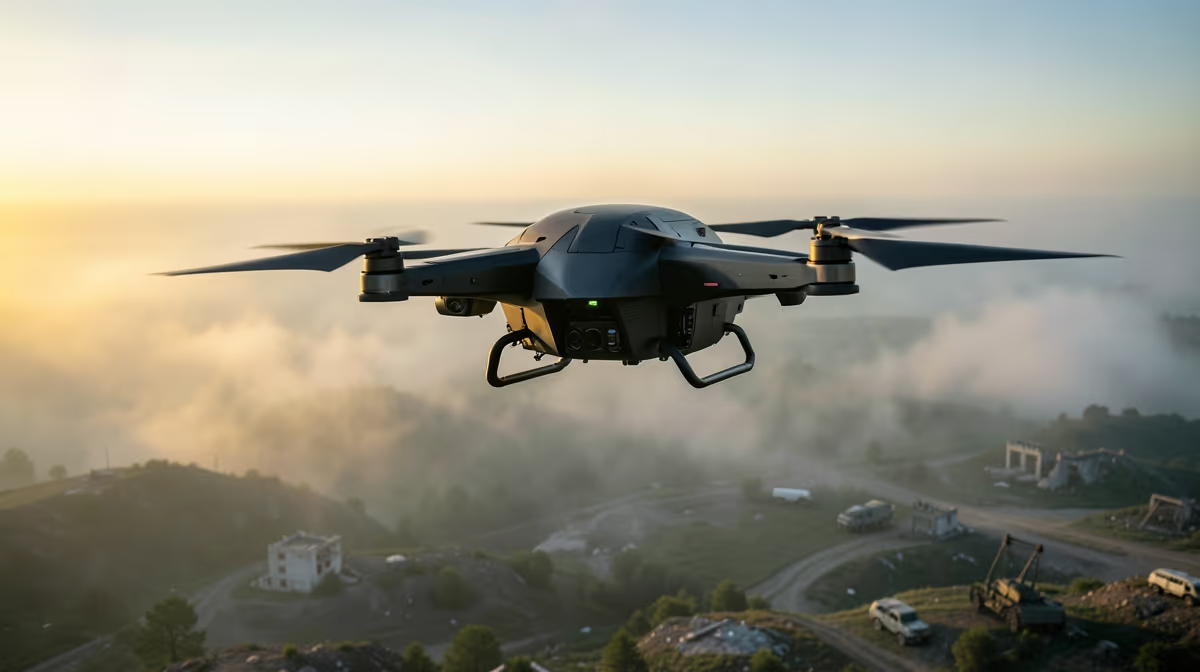
The United Kingdom is accelerating the integration of advanced drone technology into its armed forces as the Ministry of Defence prioritizes autonomous systems to counter emerging global threats and maintain parity with adversarial capabilities. In response to lessons learned from conflicts in Ukraine and the Middle East, the British military is shifting its procurement strategy to favor mass-produced, expendable uncrewed aerial systems. This shift moves the focus from a reliance on a small number of expensive, high-end drones to a loyal wingman approach, where cheaper autonomous platforms operate alongside traditional piloted aircraft to overwhelm enemy defenses.
Investment remains a central pillar of the UK Defence Drone Strategy, which aims to deploy integrated drone networks capable of intelligence gathering, precision strikes, and electronic warfare. By fostering partnerships between the military and the private sector, the government hopes to reduce long-term operational costs and shorten the development lifecycle of new aerial technologies. International military observers note that Britain's drone doctrine is evolving toward high-intensity, peer-to-peer combat scenarios. However, analysts emphasize that successfully implementing these systems requires significant upgrades to cybersecurity, signal jamming resistance, and the training of personnel to manage complex autonomous swarms in contested environments.
Key Facts
Drone warfare involves the use of uncrewed aerial vehicles to carry out military surveillance or strikes. Unlike traditional aircraft, these machines are operated remotely by teams at ground stations, allowing for persistent intelligence gathering without putting a human pilot at risk. The UK Ministry of Defence operates established systems like the Reaper and the newer Protector fleet, which are equipped with high-tech cameras and, in some cases, guided missiles.
The UK Ministry of Defence officially launched its Defence Drone Strategy in early 2024 to prioritize the rapid acquisition of uncrewed systems. A key component of this plan is the commitment to testing loyal wingman autonomous drone concepts. These efforts are designed to complement the current fleet with low-cost, expendable drone swarms. The technological shift is supported by partnerships with industry leaders, including BAE Systems and QinetiQ, to ensure these systems can operate effectively in modern, contested environments.
Why It Matters
The use of drones changes the fundamental nature of combat by allowing military action to take place without direct risk to the personnel operating the craft. This capability provides a strategic advantage in dangerous areas, allowing the military to observe targets for long periods and conduct precision missions when necessary. However, this evolution raises significant legal and ethical questions regarding how decisions are made in warfare and how transparency is maintained when the operator is thousands of miles away from the target.
The shift in procurement strategy is also an economic imperative. By moving toward expendable platforms, the Ministry of Defence aims to maintain operational relevance while managing costs in an era of fiscal constraint. These systems are intended to project power and gather critical battlefield data, but their proliferation also necessitates a broader reassessment of how global security is maintained against both state and non-state actors.
Expert Analysis
The root cause of this technological transition is a strategic imperative to maintain global power projection capabilities while simultaneously minimizing domestic political risk and personnel casualties. Militaries are moving away from high-visibility troop deployments toward low-profile, asymmetric conflict engagement, a trend that may serve to circumvent parliamentary oversight and address public anti-war sentiment.
Economically, there is a heavy reliance on the Integrated Review procurement cycle, which prioritizes domestic defense-industrial partnerships like Team Tempest and the Future Combat Air System over traditional manned platform maintenance. This represents a historical parallel to the 1920s British Air Policing doctrine in the Middle East, which utilized superior aerial technology to control territories with minimal British infantry presence. Modern military innovation is now focused on maintaining relevance in the US-led intelligence and strike architecture while developing indigenous loitering munition capabilities to counter technological parity from adversaries. A notable, if less discussed, aspect of this shift is the potential for internal security surveillance, where drone platforms repurposed for border control and domestic counter-terrorism could blur the lines between military and police operations.
Political And Geopolitical Implications
The political landscape is shaped by the need to navigate ethical oversight of automated strikes and supply chain security for critical drone components. Geopolitically, the focus is on maintaining a strategic pivot that keeps the UK aligned with international intelligence architectures while addressing the rapid normalization of autonomous systems in peer-to-peer combat.
The development of drone capabilities in the UK is heavily influenced by international experiences. Since the first widespread deployment of Predator and Reaper systems in Afghanistan during 2007, and the 2015 targeted strike against a UK national in Syria that ignited debate on the legality of extrajudicial aerial action, the regulatory framework has lagged behind the technological pace. Today, the focus is on integrating AI and autonomous swarms, a goal that demands a delicate balance between rapid technological adoption and rigorous adherence to international humanitarian law.
What Happens Next
In the next 24 hours, the UK Ministry of Defence is expected to issue statements regarding the integration of new long-range drone technology into current training cycles. Within 72 hours, the UK Parliament is anticipated to engage in debates regarding the ethical oversight of automated drone strikes and the security of the domestic supply chain for drone components.
Looking further ahead, experts predict that the UK will prioritize the development of loitering munitions to reduce risk to personnel while maintaining tactical precision in contested environments. A best-case scenario involves the successful deployment of non-lethal, high-precision surveillance drones that significantly enhance border security and reduce collateral damage. Conversely, a worst-case scenario entails a high-profile technical failure or a cybersecurity breach within the domestic drone supply chain, which could lead to a temporary but significant halt in military modernization efforts.
Frequently Asked Questions
How are drones used in modern warfare?
Drones are primarily used for intelligence, surveillance, reconnaissance, and targeted precision strikes. They allow militaries to project power and gather critical battlefield data while keeping human operators at a safe distance from active combat zones.
What are the ethical concerns surrounding drone warfare?
The primary concerns involve the risk of civilian casualties and the psychological trauma inflicted on populations living under constant surveillance. Critics also argue that the ease of using remote weapons lowers the threshold for military intervention and undermines international accountability.
Are drones legal under international law?
The legality of drone strikes depends on compliance with the principles of distinction, proportionality, and military necessity. While the use of drones itself is not illegal, individual strikes can be classified as war crimes if they fail to distinguish between combatants and non-combatants.
How does drone technology affect global security?
It makes advanced military capabilities accessible to a wider range of state and non-state actors. This proliferation creates new challenges in conflict escalation and makes it more difficult for traditional powers to maintain air superiority and regional stability.
What is the role of AI in future drone warfare?
Artificial intelligence is being integrated to enable autonomous target identification and swarm capabilities without direct human intervention. This shift raises legal and moral questions regarding responsibility for autonomous battlefield decisions.
How can countries defend against enemy drone attacks?
Defensive measures include electronic warfare tools like signal jamming, as well as physical interceptors such as laser weapons and traditional anti-aircraft missiles. Militaries are investing in multi-layered strategies to protect infrastructure from low-cost drone threats.
Conclusion
The rapid integration of autonomous drones and precision-guided systems marks a turning point in British defense strategy. While the Ministry of Defence pursues a more agile, cost-effective force through the deployment of loyal wingman concepts and swarm technology, the path forward remains tethered to complex challenges in cybersecurity, ethical governance, and industrial supply chain security. As the UK refines its approach to high-intensity combat, the balance between technological innovation and international accountability will define its future role in global security. Moving forward, parliament and military leadership must navigate these advancements while ensuring that the pursuit of military parity does not outpace the essential oversight required for modern warfare.


