
Ivory Coast Faces a Silent Transformation That Could Reshape Global Markets
Introduction
A quiet, structural evolution is reshaping the West African landscape as a regional powerhouse recalibrates its economic and diplomatic strategies for a new era. The current landscape of Ivory Coast is witnessing a significant transformation as the nation navigates a complex geopolitical shift within the broader context of West Africa development. By balancing its status as the global epicentre of the cocoa industry with modernizing infrastructure and regional security initiatives, the country is carving out a role as a central anchor for stability and commerce.
What Happened
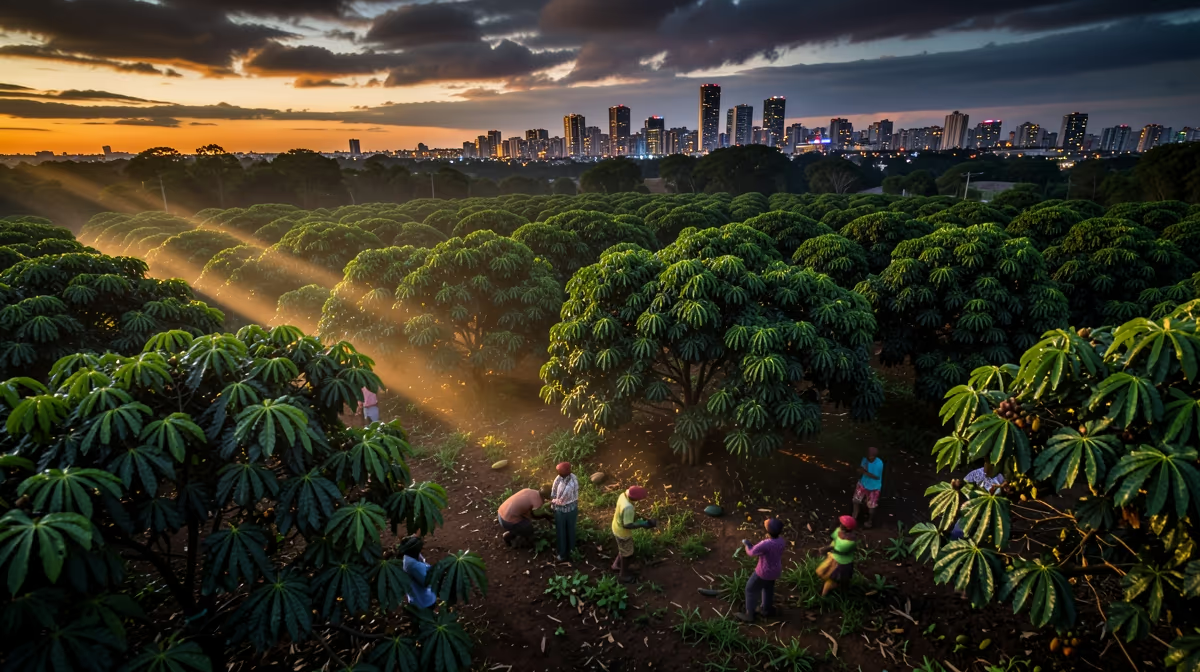
The Ivorian government announced on Tuesday a significant expansion of its national cocoa infrastructure, aiming to solidify the West African nation's position as the world's leading producer while addressing sustainability concerns. Minister of Agriculture Kobenan Kouassi Adjoumani unveiled the strategy in Abidjan, focusing on the rehabilitation of aging plantations and the implementation of digital traceability systems. These initiatives are designed to meet upcoming European Union deforestation regulations, which require strict proof that imported cocoa is not sourced from protected forest areas.
The plan involves a multi-million dollar investment aimed at supporting smallholder farmers with higher-yield crop varieties and improved access to agricultural financing. Officials hope this move will curb illegal cultivation and encourage agroforestry practices among the country's hundreds of thousands of independent farmers. According to Minister Kobenan Kouassi Adjoumani, our objective is to ensure that Ivorian cocoa remains the gold standard for quality and ethical production in a changing global landscape. While production volume remains strong, climate-related challenges and volatile global market prices continue to pose risks, prompting the government to remain committed to its long-term objective of processing a larger share of raw cocoa beans domestically to add value to the local economy before export.
Key Facts
Ivory Coast is the world's leading producer and exporter of cocoa beans, a role that defines its international economic profile. The country maintains two capital cities: Yamoussoukro serves as the political and administrative capital, while Abidjan acts as the primary economic hub. The nation’s official language is French, though it is culturally diverse with over 60 native languages spoken across its territory. Over the last decade, the country has experienced significant GDP growth, fueled by intentional investment in agriculture and major infrastructure projects. This upward trajectory was further solidified by the successful hosting of the 2023 Africa Cup of Nations, which bolstered the country’s international profile and showcased its capacity for large-scale event management.
Why It Matters
The stability of Ivory Coast is of paramount importance because the nation provides a substantial portion of the world's cocoa supply. Changes in its political or economic climate directly influence the global chocolate industry and the livelihoods of millions of small-scale farmers who rely on this sector for income. Furthermore, the nation serves as a critical economic anchor and a mediator for regional peace, making its internal security vital for the stability of all West African nations. The 28 million residents of the country, international cocoa trading companies, and global consumers are all directly affected by the success or failure of these new agricultural and fiscal policies.
Expert Analysis
The current challenges facing the nation are rooted in the structural fragility of a mono-export agricultural economy, combined with lingering ethnic-regional tensions that date back to post-colonial power consolidation. While the country has moved past the civil conflicts of the early 2000s, the economic angle remains a concern; over-dependence on cocoa exports renders the state vulnerable to climate instability and global market price fluctuations. This necessitates a transition toward value-added industrialization.
Furthermore, a significant hidden factor is the massive influx of undocumented labor from neighboring Sahelian states for the cocoa sector. This creates demographic and land-ownership friction points that are often ignored in formal policy discourse but remain a silent pressure on social cohesion. The transition away from the current presidential era also creates a potential power vacuum, which could intensify elite competition within the ruling RHDP and the influence of opposition loyalists. Historically, the 2010-2011 post-election crisis serves as a benchmark for the risk of institutional breakdown, which policymakers are now working to avoid through rigorous infrastructure and social reconciliation efforts.
Political And Geopolitical Implications
Ivory Coast functions as the anchor for the CFA franc zone, making it a critical buffer against the encroachment of the Sahelian security crisis. The government is currently prioritizing its diplomatic ties, aiming to transform its regional reputation into a beacon of progress and sustainable development. By hosting major international events and engaging with ECOWAS leadership, the country is positioning itself as a central hub for business and culture. The ongoing efforts to improve regional security and foster trade across the African continent remain a high priority for the administration of Alassane Ouattara, as the nation seeks to maintain its trajectory of growth while navigating the persistent security pressures of its neighbors.
What Happens Next
In the next 24 hours, stakeholders should expect an increased focus on infrastructure project monitoring and regional diplomatic coordination with ECOWAS counterparts regarding border security. Within the next 72 hours, there is potential for policy announcements concerning fiscal adjustments or agricultural export regulations following recent regional trade summits. Looking further ahead, experts predict the country will maintain a trajectory of moderate economic growth while navigating regional security pressures, requiring a delicate balance between public spending and fiscal consolidation. The best-case scenario involves the successful implementation of key infrastructure projects, leading to sustained GDP growth and increased regional economic integration. Conversely, the worst-case scenario involves unforeseen supply chain disruptions in the cocoa sector combined with heightened regional instability, which could trigger economic contraction and increased domestic social tension.
Frequently Asked Questions
What is the capital city of Ivory Coast?
The official capital of Ivory Coast is Yamoussoukro, which became the political and administrative center in 1983. However, Abidjan remains the country's largest city, economic hub, and the location of many government offices and foreign embassies.
Is it called Ivory Coast or Côte d'Ivoire?
Both names are used, but the government officially prefers the French name, Côte d'Ivoire, for all international purposes. While English speakers often use Ivory Coast, the country requested that the French name be used exclusively in international diplomacy to avoid confusion.
What is the main language spoken in Ivory Coast?
French is the official language and is used in government, education, and media. In addition to French, there are over 60 indigenous languages spoken throughout the country, with Dioula being the most widely used trade language.
What is the primary industry in Ivory Coast?
The economy is heavily reliant on agriculture, with the country being the world's leading producer and exporter of cocoa beans. Other significant agricultural exports include coffee, cashews, palm oil, and cotton.
Is Ivory Coast safe for tourists?
Ivory Coast is generally safe for travelers, provided they exercise standard travel precautions. Visitors should stay informed about the local political situation and avoid traveling to remote border areas.
What currency is used in Ivory Coast?
The currency used is the West African CFA franc (XOF). This currency is pegged to the Euro and is shared by several other countries in the West African Economic and Monetary Union.
Conclusion
Ivory Coast is at a critical juncture, attempting to modernize its foundational agricultural industry while managing the complexities of a shifting regional geopolitical environment. Through the implementation of digital traceability for cocoa and a focus on domestic processing, the nation aims to secure its economic future against both global market volatility and stringent international environmental regulations. While challenges remain, particularly regarding the sustainability of its mono-export model and the pressures of regional security, the government's current path suggests a commitment to long-term stability and economic integration. The coming months will be defined by the effectiveness of these agricultural reforms and the nation’s ability to maintain its role as an anchor of peace in West Africa.
" }


