
Lisa Cook Supreme Court Speculation Signals Major Judicial Shift
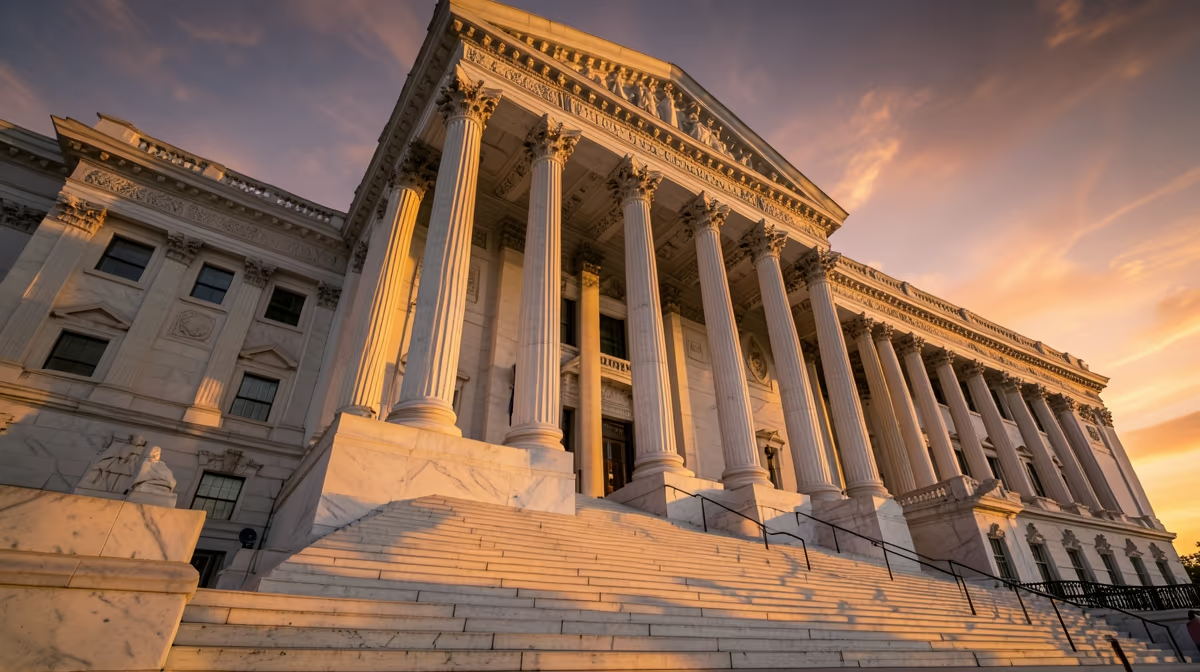
Could a career economist with a focus on innovation and labor markets potentially reshape the highest levels of the American judiciary? The debate surrounding a potential Lisa Cook Supreme Court nomination continues to shape discussions among legal analysts monitoring US Supreme Court trends, even as the focus remains on her current service at the Federal Reserve.
The Evolution of Federal Appointments
Lisa Cook, a prominent economist and current member of the Federal Reserve Board of Governors, has frequently been cited by legal analysts and political observers as a potential candidate for a future Supreme Court vacancy, though she currently remains focused on her role at the central bank. Speculation regarding her judicial potential emerged following her historic confirmation to the Federal Reserve in 2022, where she became the first Black woman to serve on the Board of Governors. Observers note that her extensive academic background, legal literacy, and experience in complex regulatory policy have fueled discussions about her suitability for high-level government appointments beyond monetary policy.
While Cook has dedicated her professional life to economics and academia—having held faculty positions at Michigan State University and served as a senior economist at the Council of Economic Advisers—her supporters argue that her analytical rigor and diverse background would bring a unique perspective to the federal judiciary. Proponents of her potential nomination often point to the precedent of academics serving on the Supreme Court, highlighting her ability to interpret the intersection of economic policy and social impact.
Core Professional Background
Lisa Cook is a sitting member of the Federal Reserve Board of Governors and made history as the first Black woman to hold this position. She holds a Ph.D. in economics from the University of California, Berkeley, and previously served as a professor of economics and international relations at Michigan State University. Her academic research focuses extensively on economic history, innovation, and racial disparities in the labor market. Unlike many traditional nominees for the Supreme Court, her career has been defined by macroeconomics rather than judicial practice. She is not a lawyer or a judge, which presents a fundamental departure from the standard background required for those seeking a lifetime appointment on the federal bench.
Significance of Interdisciplinary Expertise
The appointment of a Supreme Court Justice affects the interpretation of laws for generations, influencing civil rights, economic regulations, and individual liberties. Because Lisa Cook is an economist rather than a career judge, her potential nomination would signal a shift toward valuing interdisciplinary expertise on the bench. This could fundamentally alter how the Court approaches complex economic cases and anti-discrimination law. All U.S. citizens are affected by Supreme Court rulings, specifically regarding economic regulation, labor rights, and civil rights protections that shape daily life. As the Supreme Court consists of nine justices appointed for life, the inclusion of individuals with diverse professional backgrounds, such as economists or those with deep academic roots, could provide a broader scope of experience to the court's decision-making process.
Analytical Perspectives on Judicial Strategy
The root cause of this discourse lies in the strategic effort by the Democratic Party to reshape the Federal Reserve and the judiciary with technocratic expertise that aligns with progressive economic theories on racial and wealth inequality. This represents a litmus test for the Senate's polarization, effectively using Federal Reserve Governor positions as a potential pipeline or credentialing platform for future high-court considerations to ensure long-term influence on administrative law.
The economic angle focuses on inclusive economics, which posits that reducing racial disparities in employment and income leads to stronger macroeconomic growth, challenging traditional inflation-first monetary policies. Furthermore, there is a clear shift toward appointing individuals with deep academic backgrounds in labor economics to judiciary-adjacent roles. This creates a shadow oversight mechanism for interpreting economic regulations. Historically, this echoes the appointment of Thurgood Marshall, which signified a fundamental shift in the court's role toward addressing structural social and economic disenfranchisement.
Geopolitical and Policy Considerations
On a global stage, these appointments enhance US soft power through institutional representation that mirrors domestic diversity initiatives, aiming to bolster the international legitimacy of US financial policy in a multipolar world. Within the U.S. political landscape, the nomination discourse serves as a barometer for the Senate’s confirmation process. While legal scholar Lawrence Lessig has noted that the profile of the next generation of nominees will likely favor individuals with deep interdisciplinary backgrounds, there remain no official overtures or formal vetting processes indicating that Cook is actively being considered for a Supreme Court seat. The White House has not issued any statements regarding her candidacy for the high court, and Cook has continued to lead initiatives at the Federal Reserve centered on labor markets and economic inclusion.
Predicting the Near-Term Landscape
In the next 24 hours, market watchers expect renewed speculation regarding potential Supreme Court vacancies as political pundits analyze Cook's regulatory background and legislative experience. Looking toward the next 72 hours, confirmation hearings for other federal judicial nominees will likely draw comparisons to Cook's path, fueling debate over the ideological balance of the courts. Analysts suggest that Cook will continue to serve as a pivotal figure in economic policy rather than moving to the judiciary in the immediate future, though her name will remain in the periphery of progressive lists for future high-court openings. The best-case scenario involves increased bipartisan recognition of academic expertise in federal appointments, while the worst-case scenario entails an intensification of partisan gridlock where qualified nominees face prolonged confirmation delays due to broader ideological battles over the composition of the Supreme Court.
Frequently Asked Questions
Was Lisa Cook considered for the Supreme Court?
Lisa Cook has not been a formal nominee or primary shortlist candidate for a seat on the United States Supreme Court. While she is a prominent economist and served on the Federal Reserve Board of Governors, her professional background is focused on macroeconomics and economic policy rather than judicial or legal practice.
What is Lisa Cook's current role in the US government?
Lisa Cook currently serves as a member of the Board of Governors of the Federal Reserve System. She was confirmed by the U.S. Senate in May 2022, making her the first Black woman to serve on the Federal Reserve Board.
Is Lisa Cook a lawyer or a judge?
Lisa Cook is not a lawyer or a judge; she is a distinguished economist and academic. Her expertise lies in economic history, innovation, and international economics, which distinguishes her from the judicial background typically required for Supreme Court justices.
Why do people associate Lisa Cook with federal appointments?
People often associate Lisa Cook with federal appointments because of her high-profile confirmation to the Federal Reserve Board of Governors. Her nomination was a historic moment in the Biden administration, leading to public interest in her qualifications and professional trajectory.
What is Lisa Cook's background in economics?
Lisa Cook holds a Ph.D. in economics from the University of California, Berkeley, and has served as a professor at Michigan State University. She is well-regarded for her research on economic growth, innovation, and the economic impact of institutional factors.
Are there any Supreme Court justices with backgrounds in economics?
While most Supreme Court justices have traditional legal backgrounds, some justices have studied economics or integrated economic theory into their jurisprudence. However, it is rare for someone without a law degree or prior judicial experience to be considered for the Supreme Court, as the role requires specific legal qualifications.
Conclusion
The conversation surrounding a potential Lisa Cook Supreme Court nomination remains a speculative exercise rooted in the broader ambition to inject technocratic and diverse academic expertise into high-level federal positions. While Cook is currently a sitting member of the Federal Reserve Board of Governors with no formal path toward a judicial appointment, her background as an economist specializing in labor and innovation makes her a compelling figure in discussions regarding the future of administrative and economic law. As political analysts continue to monitor the intersection of economic policy and the judiciary, Cook remains a central, albeit focused, figure in the Biden administration's institutional strategy. Future developments will likely depend on the broader, evolving standards for judicial qualifications and the ongoing demand for interdisciplinary expertise on the federal bench.


.webp)

.webp)

