
Tupolev Tu-160 Modernization Signals a Major Shift in Aerial Defense
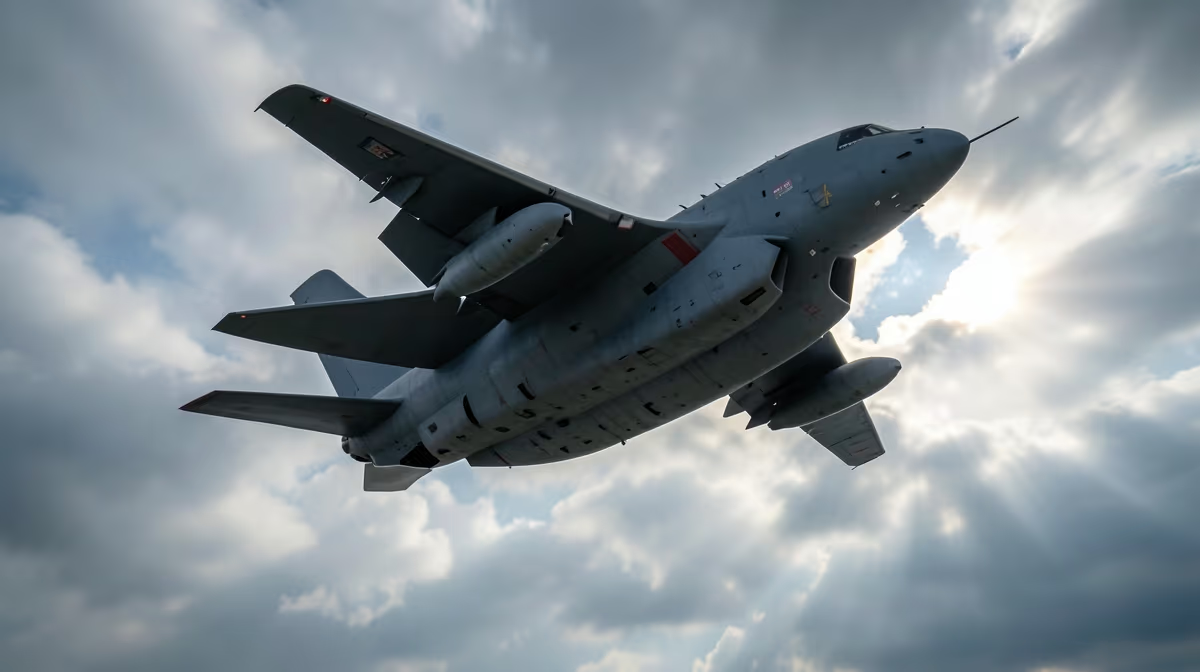
A piercing silhouette slices through the high-altitude silence, representing the pinnacle of Soviet-era aeronautical engineering that remains a fixture in modern global security dialogues. The Tupolev Tu-160 remains a cornerstone of modern military aviation. As global defense posture dynamics shift, understanding the capabilities of this supersonic platform is essential for tracking developments in aerospace military technology, as it continues to function as a primary pillar of Russian long-range nuclear deterrence.
The Legacy of the White Swan
The Tupolev Tu-160, known by the NATO reporting name Blackjack and affectionately dubbed White Swan by Russian crews, remains the largest and heaviest combat aircraft currently in operation globally. Since its introduction during the final years of the Cold War, the supersonic variable-sweep wing heavy strategic bomber continues to serve as a cornerstone of the Russian Aerospace Forces long-range aviation capabilities, drawing persistent monitoring from U.S. and Canadian air defense sectors under the jurisdiction of NORAD.
Designed by the Tupolev Design Bureau in the 1970s, the aircraft was engineered to penetrate sophisticated air defense networks at supersonic speeds. It features a variable-sweep wing configuration that allows it to optimize flight performance across a wide range of speeds and altitudes. The aircraft is capable of carrying a diverse payload of conventional and nuclear-tipped cruise missiles, maintaining a strategic deterrent posture that has forced the U.S. and its allies to consistently modernize their own interceptor and radar arrays.
Technical Evolution and Operational Reality
While the aircraft does not possess stealth characteristics comparable to the U.S. B-2 Spirit or the developmental B-21 Raider, its immense speed—reaching Mach 2.05—and its massive stand-off weapon capacity remain a primary concern for the U.S. Department of Defense. In recent years, the Russian government has pushed forward with a modernization program designated the Tu-160M. This updated variant incorporates advanced avionics, upgraded engines, and improved electronic warfare suites, significantly extending the operational lifespan and combat efficacy of the airframe.
This modernization reflects Moscow's intent to maintain a credible aerial nuclear triad well into the 2030s and beyond. Strategic bombers of this class are frequently detected conducting long-range patrols over international waters, prompting routine scrambles of U.S. and Canadian fighter jets to escort the aircraft as they approach the edges of Air Defense Identification Zones. This cycle of interception reflects the Cold War-era Bear bomber intercept cycles, where strategic signaling is prioritized over tactical engagement to maintain a stable, albeit tense, nuclear deterrence.
Strategic and Economic Drivers
The root cause of the continued reliance on this platform is a symbolic and kinetic manifestation of Russia's commitment to maintaining a credible nuclear triad capable of penetrating North American air defense identification zones. Politically, the deployment and development of the Tu-160 act as a domestic propaganda tool to reinforce the Great Power status narrative while signaling defiance against NATO's eastward expansion.
Economically, the high cost of maintaining and upgrading the Blackjack fleet creates a significant drain on the Russian defense budget, potentially hindering investments in non-strategic asymmetric warfare capabilities. Furthermore, the focus on the external capabilities of these bombers often masks the rapid, localized development of advanced electronic warfare suites and long-range cruise missile integration designed to neutralize U.S. Aegis-equipped naval assets. This operational tempo effectively creates a war of attrition, requiring the U.S. to divert significant intelligence and intercept resources to monitor these long-range patrol flights.
Anticipating Global Responses
The operational presence of these bombers triggers predictable diplomatic and military responses. In the next 24 hours, stakeholders expect increased monitoring of Russian long-range aviation sorties by NORAD and U.S. Northern Command, with potential scramble of CAP fighters if activity approaches ADIZ boundaries. Looking toward the next 72 hours, observers anticipate diplomatic signals from the U.S. State Department regarding Russian strategic movements, coupled with intensified intelligence collection on deployment patterns.
The expert prediction suggests a continued gray zone signaling approach, where the Kremlin uses these sorties to demonstrate long-range power projection without violating sovereign U.S. airspace. While the best-case scenario involves continued adherence to international flight safety protocols, the worst-case scenario entails an unplanned aerial close-encounter or intercept escalation over international waters, potentially leading to a diplomatic crisis and the suspension of critical deconfliction channels.
Frequently Asked Questions
What is the primary role of the Tupolev Tu-160?
The Tupolev Tu-160 is a supersonic, variable-sweep wing heavy strategic bomber designed for the Soviet Air Force. Its primary role is to deliver both conventional and nuclear weapons deep within enemy territory while maintaining high speeds and long range.
How fast can the Tupolev Tu-160 fly?
The Tu-160 is capable of reaching a top speed of approximately Mach 2.05, or about 2,220 kilometers per hour. This makes it the largest and heaviest combat aircraft currently in operation that is capable of supersonic flight.
Is the Tupolev Tu-160 still in service?
Yes, the Tu-160 remains in active service with the Russian Aerospace Forces. Russia has even restarted production of modernized versions, known as the Tu-160M, to maintain and enhance its strategic bomber fleet.
How does the Tu-160 compare to the American B-1B Lancer?
While both the Tu-160 and the B-1B Lancer utilize variable-sweep wing designs, the Tu-160 is significantly larger and faster. The Tu-160 is designed specifically for high-speed supersonic dash performance, whereas the B-1B was optimized for low-altitude, subsonic penetration of enemy airspace.
What is the nickname of the Tupolev Tu-160?
The Tu-160 is officially nicknamed the White Swan by its aircrews due to its graceful appearance and white anti-flash paint scheme. The NATO reporting name for the aircraft is Blackjack.
Can the Tu-160 carry nuclear weapons?
Yes, the Tu-160 is a key component of Russia's nuclear triad and is capable of carrying a variety of nuclear-armed cruise missiles. It features internal weapon bays that allow it to carry strategic munitions while maintaining its aerodynamic profile.
Conclusion
The Tupolev Tu-160 remains a central pillar of Russian air-based nuclear deterrence and a primary catalyst for strategic monitoring by Western defense forces. Through its ongoing modernization into the Tu-160M variant, the platform continues to challenge global defense postures by demanding constant vigilance and resource allocation. As geopolitical tensions persist, the ability of these aircraft to project power rapidly across vast distances ensures that they will remain a focal point of international relations research and military strategy for the foreseeable future. Stakeholders must remain focused on maintaining deconfliction channels to ensure that strategic signaling does not escalate into unintended tactical confrontation.


.webp)

.webp)

