
JetBlue Drone Encounter at JFK Triggers Serious National Security Alarm
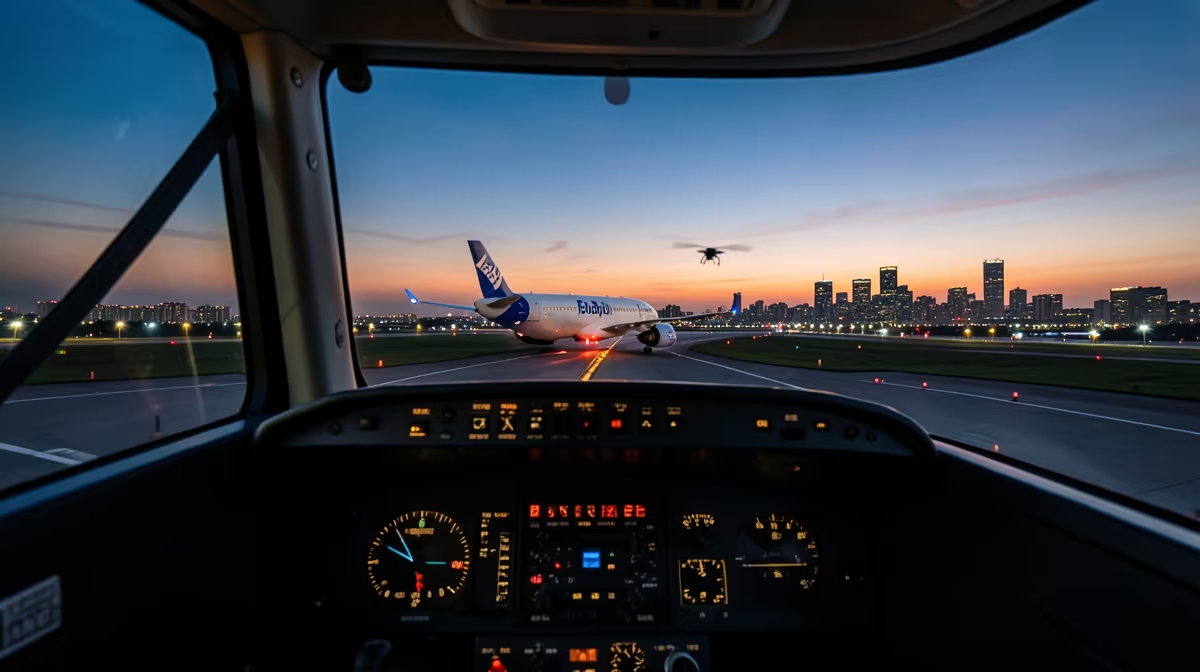
A high-altitude sighting of an unmanned aerial vehicle just outside the flight path of a major metropolitan hub has once again thrust the fragility of commercial aviation security into the spotlight. A recent JetBlue drone encounter during a routine JFK approach has highlighted ongoing concerns regarding drone collision risk in commercial flight paths, leading to renewed scrutiny of FAA airspace regulations near busy hubs.
What Unfolded
On Wednesday, JetBlue Flight 1102 was concluding its final approach to John F. Kennedy International Airport when the flight crew observed an unmanned aerial system operating in close proximity to their aircraft. The pilots, acting in accordance with standard safety protocols, immediately alerted air traffic control to the presence of the device, which was sighted at an altitude of approximately 2,000 feet.
The event, while occurring in a highly controlled Class B airspace, did not result in a collision or injuries to passengers and crew. The aircraft proceeded to land safely without further disruption to airport operations. The Federal Aviation Administration has confirmed that it is investigating the report, coordinating with law enforcement to establish the origins of the drone and identify the operator responsible for the breach of federal safety mandates.
Key Facts
The incident involving JetBlue Flight 1102 serves as a stark reminder of the rules governing national airspace. Federal regulations strictly forbid the operation of recreational or commercial drones within five miles of an airport without explicit prior authorization. The presence of such a device at 2,000 feet directly interferes with the final approach corridors, which are designed to keep commercial airliners clear of low-altitude obstacles.
Authorities have confirmed that while no physical contact occurred, the presence of any unauthorized object in these flight paths is treated as a serious hazard. Because drones are constructed of rigid materials such as high-density plastics and metal components, a collision at the speeds typically maintained by an airliner on final approach could cause severe structural damage to windshields or engine intakes, potentially leading to catastrophic outcomes.
Why It Matters
The rapid proliferation of consumer-grade, high-performance hobbyist drones has outpaced the implementation of protective measures, creating a widening gap in airport security. For airline passengers and flight crews, these incidents represent an escalating threat to daily operations. Beyond the immediate safety concerns, the broader aviation industry faces significant economic pressures; recurring reports of unauthorized drone activity can lead to mandatory safety stand-downs, approach pattern adjustments, and the necessity for costly upgrades to commercial aircraft to include automated collision-avoidance technology.
This incident also underscores a systemic challenge within the national airspace system. As urban centers become more crowded with both air traffic and consumer technology, the reliance on legacy regulatory frameworks is being tested. The incident highlights the urgent need for enhanced counter-UAS detection technology that can monitor and identify rogue devices before they enter sensitive terminal approach areas.
Analyst Perspective
The root cause of this incident lies in the intersection of two conflicting trends: the widespread commercialization of high-performance drones and the existence of detection capability gaps within congested Class B airspace. Current counter-unmanned aircraft systems often struggle to maintain constant surveillance over massive metropolitan transit zones, leaving major airports vulnerable to nuisance tactics.
Historically, the aviation industry has dealt with similar threats, most notably the 2018 Gatwick Airport drone incursions that halted air travel for three days. That event served as a global catalyst for shifting airspace security doctrine. Today, the pressure is mounting on the FAA to move beyond manual reporting and accelerate the integration of active, automated drone-mitigation technologies that can proactively protect commercial flight paths from unauthorized incursions.
Political and Geopolitical Implications
This event has exposed a growing tension between federal oversight and the practical realities of local security. There is an ongoing debate regarding the extent to which local law enforcement agencies should be granted authority to interdict drones over critical national infrastructure. Furthermore, from a geopolitical standpoint, the vulnerability of global transit hubs to these types of encounters mirrors low-cost, high-disruption tactics seen in contested regions.
There is also a hidden technical concern regarding the systemic vulnerability of the NextGen air traffic control system. Experts are increasingly wary of the potential for drone-based electronic intelligence gathering or sophisticated spoofing tactics that could target commercial flight telemetry. While this specific incident appears to be a localized safety breach, it highlights the broader risks of asymmetric threats to civilian transport corridors.
What Happens Next
The immediate future will involve a forensic investigation into the flight data and radar logs. Within the next 24 hours, the FAA and the National Transportation Safety Board are expected to initiate a formal review of radar playback to determine the drone's specific trajectory and point of origin. Over the next 72 hours, law enforcement agencies and federal authorities will likely conduct interviews with air traffic controllers and review surveillance footage from areas adjacent to the JFK approach corridors.
Industry experts anticipate that this incident will reignite legislative debates concerning mandatory remote identification and the implementation of geofencing technology for all consumer-grade drones. In a best-case scenario, the incident is classified as a minor proximity report, raising public awareness without disrupting traffic. However, a worst-case finding—should the investigation confirm a dangerous near-miss—could necessitate temporary ground stops or permanent changes to approach patterns, potentially creating widespread flight delays across the Northeast corridor.
Frequently Asked Questions
What happened during the JetBlue drone encounter at JFK?
The incident involved a JetBlue flight reporting a sighting of a drone while on its final approach to John F. Kennedy International Airport. Pilots reported the drone to air traffic control to ensure the safety of other aircraft.
Are drone sightings near JFK airport common?
Drone sightings near major airports occur periodically and pose a serious safety risk. Federal regulations strictly prohibit flying drones in controlled airspace near airports without authorization.
What is the FAA policy on flying drones near airports?
The FAA prohibits operating drones within restricted airport airspace. Violators face significant penalties, including heavy fines and potential criminal charges if their actions endanger flight safety.
How do pilots report drone sightings near runways?
Pilots are required to report drone sightings immediately to air traffic control, providing the location, altitude, and description of the device to facilitate investigation and mitigation.
Can a drone cause damage to a JetBlue aircraft?
Yes, a collision with a drone can cause significant damage to an aircraft's fuselage, engines, or cockpit windows, similar to the risks posed by bird strikes.
How is airspace around JFK protected from drones?
The airspace is classified as controlled, requiring drone operators to obtain prior authorization through systems like LAANC. Authorities also utilize various detection technologies to monitor for unauthorized activity.
Conclusion
The encounter involving JetBlue Flight 1102 has provided further evidence of the ongoing safety challenges posed by unauthorized drones in the vicinity of international transit hubs. While the flight landed safely, the event has triggered a coordinated federal investigation that will likely influence future policy regarding drone identification and airport perimeter security. As authorities work to identify the operator and review the incident details, the aviation sector remains focused on the urgent necessity of balancing recreational drone access with the absolute safety requirements of commercial airspace. Future developments will depend on the findings of the FAA and the potential for new legislative mandates aimed at securing the skies above major metropolitan airports.


.webp)

.webp)

