
Strait of Hormuz Mine Clearing Operations Trigger Global Energy Fears
Introduction
Beneath the surface of one of the world's most vital waterways, a silent game of cat and mouse has intensified as naval powers race to detect potential underwater threats. The strategic strait of hormuz mine clearing efforts have become a focal point for global markets as tensions rise in the region, threatening oil supply disruption and necessitating urgent maritime security measures.
What Happened
The United States Navy, leading a multinational coalition, has intensified mine-clearing operations and maritime security patrols in the Strait of Hormuz this week following heightened tensions and reported threats to commercial shipping lanes. The strategic waterway, through which approximately 20 percent of the world's oil consumption flows, remains a critical focus for U.S. Central Command as military officials bolster defensive postures to ensure the free flow of global energy supplies.
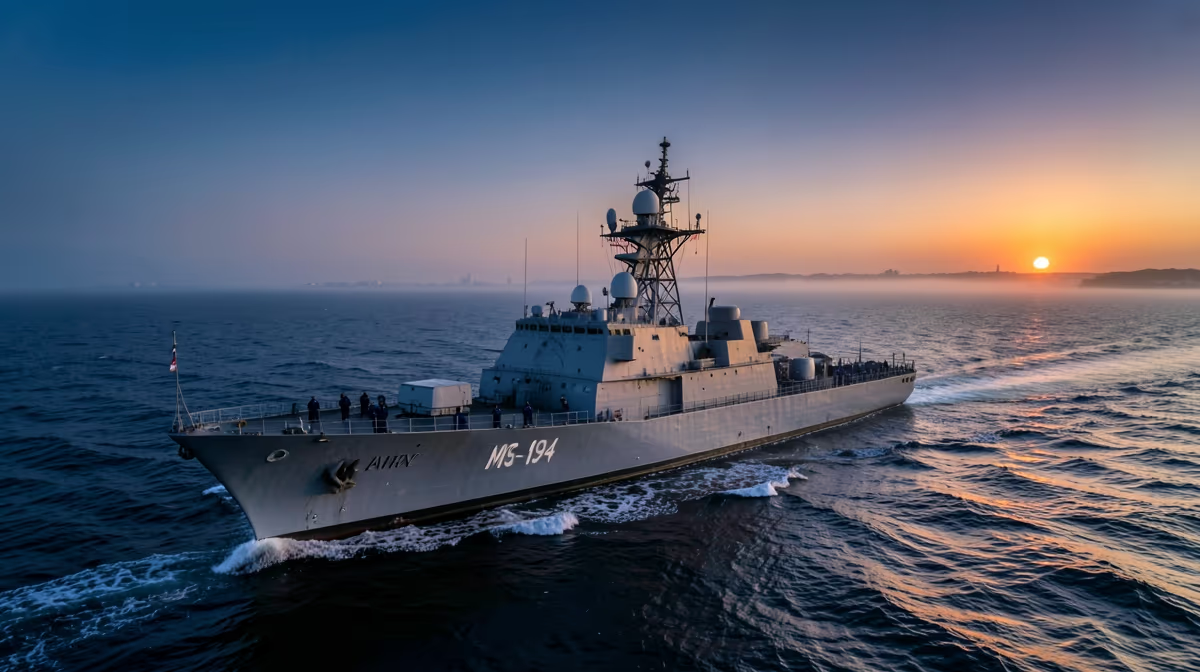
Naval forces are utilizing specialized mine-countermeasure ships and aerial drone reconnaissance to survey the vital chokepoint after intelligence reports indicated the potential placement of underwater mines by regional actors. The operation aims to neutralize threats before they can disrupt international maritime traffic, which has faced repeated disruptions over the past year. Commander-level officials have emphasized that the deployment is purely defensive and intended to deter aggression against merchant vessels. While physical mines have not been detonated, the proactive sweep is viewed as a necessary precaution to prevent an economic crisis.
Key Facts
The Strait of Hormuz is the world's most important oil transit chokepoint, with roughly 20 percent of the world's total petroleum consumption passing through this corridor daily. Naval mine clearing in this environment is a complex task that involves using specialized warships, divers, and remote-operated vehicles to ensure the path remains safe. By using advanced sonar technology and underwater drones, teams work to locate and neutralize explosives before they can damage cargo ships.
International maritime security coalitions coordinate these clearing operations to ensure safe passage, reflecting a reality where regional tensions frequently translate into the risk of sea-based sabotage. The region has been a flashpoint for international conflict for decades, most notably during the 1980s Tanker War between Iran and Iraq, when naval mines caused significant damage to international shipping. Ever since, it has remained a strategic focal point where geopolitical tensions necessitate constant maritime security patrols.
Why It Matters
Because so much of the world's oil and natural gas supply passes through this narrow gap, any disruption caused by mines could trigger a sudden and significant spike in global energy prices. For the average person, this means that instability in the Strait can quickly lead to higher fuel costs at the gas pump and increased prices for consumer goods that rely on global shipping routes. The economic stakes are high, as the prevention of a systemic global oil price shock and the stabilization of maritime insurance premiums for international shipping corridors are essential for global trade stability.
Expert Analysis
The root cause of these maneuvers is a strategic deterrence of Iranian asymmetric naval capabilities designed to paralyze global energy transit at the maritime choke point. Military experts suggest that even a temporary blockade would send global oil prices surging, making the current mine-clearing efforts a high-priority objective for the Pentagon. Defense analyst Michael Knights noted that the maritime domain in this region is a high-stakes chessboard where proactive clearance is the most effective way to prevent unintended escalation.
The operation acts as a physical rebuttal to Iranian Anti-Access/Area Denial strategies. There is also an integration of unmanned underwater vehicles and AI-driven sonar mapping that allows the U.S. to perform persistent seabed surveillance under the guise of clearance operations. This mirrors historical precedents such as Operation Earnest Will during the 1980s, which established the necessity for naval escort and clearance duties to protect commercial traffic in the Persian Gulf.
Political And Geopolitical Implications
The situation highlights the necessity for the U.S. to maintain the freedom of navigation doctrine while managing domestic pressure to avoid full-scale regional conflict. The U.S. presence acts as a stabilizer in a region where geopolitical friction between Washington and Tehran often manifests in maritime posturing. Pentagon Press Secretary Pat Ryder stated that the United States remains committed to ensuring the freedom of navigation and the free flow of commerce, and will continue to work with regional partners to counter destabilizing activities. The International Maritime Security Construct continues to play a vital role in coordinating these efforts, serving as a multi-national coalition designed to promote maritime security and share intelligence.
What Happens Next
In the next 24 hours, the region will likely see increased U.S. naval surveillance and the deployment of MH-53E Sea Dragon helicopters for mine-hunting operations near the Strait. Within the next 72 hours, the focus may shift toward the deployment of international mine countermeasures task forces to establish a secure transit corridor for commercial shipping.
Expert predictions suggest a high-stakes tactical standoff will likely persist, focusing on deterrence rather than full-scale naval engagement to avoid accidental escalation. The best-case scenario involves the rapid localization and removal of mine threats without further vessel damage, leading to a de-escalation of regional tensions. Conversely, the worst-case scenario involves damage to a tanker, which could trigger a sharp spike in global oil prices and retaliatory military strikes against regional infrastructure.
Frequently Asked Questions
How does the US Navy clear mines in the Strait of Hormuz?
The US Navy utilizes a layered defense strategy including MH-53E Sea Dragon helicopters, Avenger-class mine countermeasures ships, and specialized explosive ordnance disposal divers. These assets work together to detect, classify, and neutralize submerged naval mines to ensure the freedom of navigation through the strait.
Is it possible for Iran to block the Strait of Hormuz with mines?
Military analysts suggest that while Iran possesses a vast stockpile of sea mines capable of creating significant disruption, a total and permanent closure is difficult to maintain. The US and its coalition partners maintain a constant naval presence and rapid response capabilities specifically designed to counter such mining efforts.
How long would it take to clear mines in the Strait of Hormuz?
Clearing the strait would be a time-intensive operation that depends heavily on the scale and complexity of the minefield deployed. While advanced technology allows for faster detection, the treacherous currents and the sheer volume of maritime traffic mean that clearing the entire shipping lane could take weeks or even months to complete safely.
What types of mines are used in the Strait of Hormuz?
The Strait of Hormuz is potentially threatened by a variety of naval mines ranging from simple moored contact mines to sophisticated influence mines. Influence mines are particularly dangerous as they can be triggered by the magnetic, acoustic, or pressure signatures of passing commercial or military vessels.
What role does the International Maritime Security Construct play in the Strait of Hormuz?
The International Maritime Security Construct is a multi-national coalition designed to promote maritime security and ensure the safe passage of commercial vessels. By monitoring ship movements and sharing intelligence, the group works to deter hostile actions like mine-laying that threaten global energy supplies.
Why is mine clearing in the Strait of Hormuz so dangerous?
Mine clearing operations are inherently risky due to the high density of global oil transit and the restricted geography of the strait. The presence of hidden, modern influence mines combined with the potential for ongoing military hostility makes this one of the most hazardous maritime environments for mine-countermeasure vessels and EOD personnel.
Conclusion
The current situation in the Strait of Hormuz remains a high-stakes environment where naval forces are actively conducting surveillance and clearing operations to mitigate the risk of maritime sabotage. While no commercial vessels have reported direct mine-related damage in the last 48 hours, the proactive stance of the U.S.-led coalition underscores the volatility of this critical energy chokepoint. Future stability depends on the continued success of international monitoring efforts and the ability of regional actors to avoid miscalculation. As naval forces continue their patrols, the global community remains focused on the maintenance of free passage and the prevention of any incident that could disrupt the world's energy supply chains.


