
Strait of Hormuz Security Status Remains a Major Global Concern
Introduction
Few geographic chokepoints possess the power to dictate the rhythm of the global economy with the same intensity as the narrow passage separating Oman and Iran. With rising geopolitical tension in the region, global markets are closely monitoring the question: is the strait of hormuz open? As a critical artery for the global oil supply, any disruption in this maritime security zone has immediate ripple effects for energy traders and policy makers alike.
What Happened
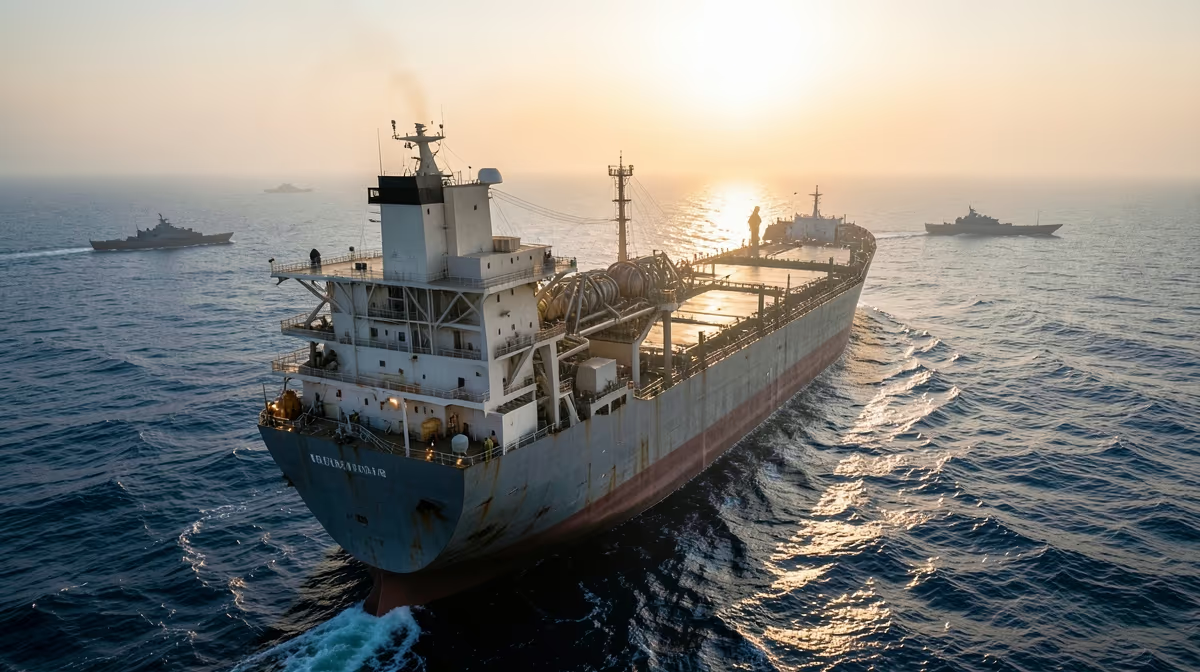
The Strait of Hormuz remains officially open and fully operational for international commercial shipping. Despite a backdrop of regional volatility, vessels continue to transit the waterway under the vigilant monitoring of international naval coalitions. While maritime agencies have observed sporadic incidents involving the detention of commercial vessels and heightened naval posturing, no official blockade or state-led closure has been implemented.
The current environment is marked by a delicate balance between standard commercial transit and persistent security monitoring. Shipping companies continue their operations while navigating the complexities of Iranian naval activity near the waterway. While insurance premiums for tankers operating in the Persian Gulf have shown fluctuations due to perceived risk, there is no evidence of a systemic stoppage of international trade. The United States Navy, specifically through its Fifth Fleet, maintains a consistent, visible presence in the region. This strategic posture serves to protect the freedom of navigation, ensuring that the movement of goods remains steady amidst the ongoing shadow war between regional actors.
Key Facts
The Strait of Hormuz stands as one of the most vital shipping chokepoints on the planet, with approximately one-fifth of the world total oil consumption passing through its narrow waters daily. It is a geographically constrained passage that links the Persian Gulf to the Gulf of Oman and the Arabian Sea. The waterway is bordered by Iran to the north and Oman and the United Arab Emirates to the south. Under international law, particularly the principles established by the United Nations Convention on the Law of the Sea, the strait is designated for transit passage, meaning vessels from all nations are permitted to move through it. The U.S. Navy and international partners maintain a continuous patrol presence to ensure that this legal right remains protected. Historically, the area has served as a flashpoint for diplomatic and military friction, dating back to the Iran-Iraq War and the Tanker War of the 1980s.
Why It Matters
The global economy is uniquely dependent on the stability of this specific maritime corridor. Because such a significant portion of the world’s petroleum and natural gas supplies must exit the Persian Gulf through this route, any credible threat of closure acts as a catalyst for market instability. If the strait were to be compromised, the immediate consequences would include a rapid, drastic spike in global energy prices and a surge in inflationary pressure for consumers in the United States and abroad.
Energy-importing nations and global shipping consortiums are particularly vulnerable to these disruptions. When security perceptions sour, maritime insurance companies often increase surcharges for vessels entering the Persian Gulf, which increases the total cost of energy delivery. The stability of this route is therefore not merely a regional concern but a fundamental requirement for maintaining predictable fuel costs and consistent energy supplies for industrial and residential consumers worldwide.
Expert Analysis
The root cause of current anxieties stems from the Strait acting as a strategic pressure valve in the ongoing competition between Iran and the U.S.-led coalition. While the passage remains legally open, it is frequently utilized by regional powers as a venue for psychological signaling. Iran, in particular, has historically leveraged the threat of potential closure as a mechanism for exerting pressure against Western sanctions. Conversely, the U.S. naval presence acts as a permanent deterrent, signaling that the global energy flow is protected by military capacity.
The increasing integration of maritime drone technology and autonomous underwater vehicles has introduced a new layer of complexity to the area. These tools allow for gray zone tactics that fall below the threshold of declared war, making the strait more difficult to monitor and easier to disrupt. While previous conflicts like the 1980s Tanker War required direct state-on-state kinetic actions to halt shipping, today’s environment is characterized by irregular disruptions that keep maritime security forces in a state of high readiness. Despite these technological shifts, the fundamental calculus remains consistent: the potential for a physical blockade is kept in check by the recognition that such an act would invite catastrophic economic retaliation and direct military engagement.
Political And Geopolitical Implications
The geopolitics of the Strait are defined by the need for regional containment. The waterway is a focal point for the interests of Gulf monarchies, Western powers, and Iran. A successful, sustained disruption of the strait would force a major military escalation, drawing global superpowers into the theater and risking the stability of the entire region. Consequently, the diplomatic priority for all stakeholders is to keep the strait open, as an escalation into full-scale conflict would be objectively detrimental to both regional security and global energy markets. The U.S. Fifth Fleet has clarified that its primary mission is to deter malign activity and promote maritime security, reinforcing the policy that maintaining open transit is a requirement for global stability.
What Happens Next
In the next 24 hours, the Strait of Hormuz is expected to remain open for commercial navigation, with regional naval patrols continuing their monitoring. There are no current indicators of kinetic interdiction. Looking toward the next 72 hours, analysts anticipate ongoing psychological signaling and localized military posturing, but a sustained closure remains highly unlikely unless a significant, direct escalatory event occurs.
The professional consensus is that Iran prefers the strategic leverage gained by threatening the strait rather than the execution of a closure, as the latter would trigger an inevitable military and economic response. In a best-case scenario, regional tensions may de-escalate, leading to more normalized transit and a reduction in risk-related insurance surcharges. Conversely, the worst-case scenario involves a deliberate act of sabotage or a catastrophic miscalculation leading to a physical blockade, which would immediately force a rapid, sharp increase in oil prices and a high risk of military confrontation.
Frequently Asked Questions
Q: Is the Strait of Hormuz currently open?
A: Yes, the Strait of Hormuz remains open for international commercial shipping. While tensions in the region can fluctuate, it continues to serve as a critical global maritime chokepoint.
Q: What is the current status of shipping through the Strait of Hormuz?
A: Shipping through the Strait of Hormuz is operating under normal conditions despite ongoing geopolitical concerns. International vessels continue to transit the waterway daily to transport oil and goods to global markets.
Q: Has the Strait of Hormuz ever been closed?
A: The Strait of Hormuz has never been fully or permanently closed to international traffic. Although it has faced periods of high military tension and increased security patrols, commercial transit has persisted throughout history.
Q: Why is the Strait of Hormuz so important for global trade?
A: The Strait of Hormuz is vital because a significant percentage of the world's total petroleum liquids pass through it every day. It serves as the primary maritime route for oil exports from major Gulf producers to markets across the globe.
Q: Who controls the Strait of Hormuz?
A: The Strait of Hormuz is bordered by Iran to the north and Oman and the United Arab Emirates to the south. Under international law, it is classified as an international waterway, allowing for transit passage for vessels from all nations.
Q: Are there security threats to ships in the Strait of Hormuz?
A: While the strait is open, ships transiting the area are often advised to follow security protocols due to regional geopolitical friction. International maritime coalitions frequently operate in the area to help monitor security and ensure the freedom of navigation.
Conclusion
The Strait of Hormuz remains an open and vital conduit for global maritime trade, despite the persistent background of geopolitical tension. While it serves as a frequent site for strategic posturing and naval observation, international law and the interests of global powers continue to support the necessity of free navigation. The current status confirms that commercial traffic is moving through the waterway, though stakeholders remain in a state of high vigilance. The future of this maritime corridor depends on the continued avoidance of miscalculation and the maintenance of a security environment that prevents regional friction from escalating into an interruption of the global energy supply.


