
US Deportation Policy Shifts Trigger Major Changes at the Border
Introduction
A profound shift in administrative priorities is reshaping the landscape of federal enforcement as the United States navigates the complex logistical and legal challenges surrounding the movement of unauthorized foreign nationals. The current landscape of deportation remains a central focus of US immigration policy, affecting communities and legal frameworks across the country as federal agencies recalibrate their operational reach.
What Happened
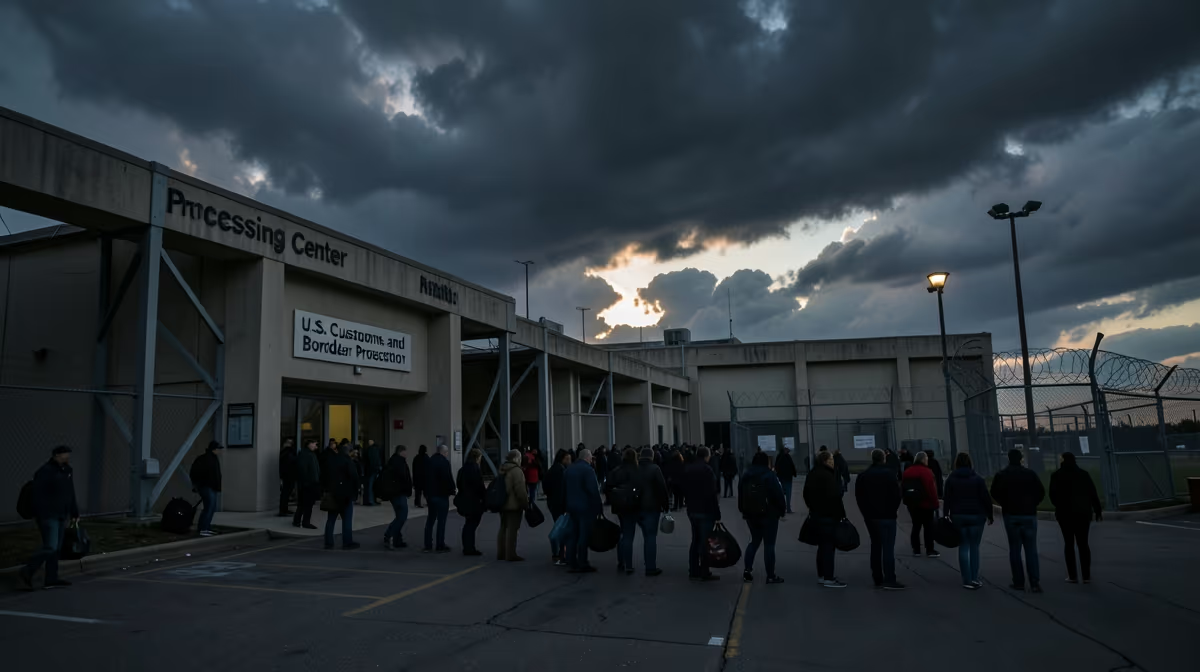
The U.S. Department of Homeland Security is currently scaling up deportation operations as the administration implements stricter enforcement policies at the southern border, aiming to accelerate the removal of individuals who lack legal authorization to remain in the country. Immigration and Customs Enforcement has increased the frequency of removal flights and expanded detention capacity to process a higher volume of cases. These efforts are focused on targeting individuals recently encountered by border patrol agents as well as those with final orders of removal from immigration judges. The federal government is currently coordinating with international partners to ensure transit countries accept these return flights, a move officials argue is necessary to maintain border integrity. Concurrently, legal advocacy groups have filed multiple petitions seeking to ensure that individuals facing deportation are granted adequate access to legal counsel and due process, noting that many detainees have credible fear claims that require thorough adjudication.
Key Facts
Deportation is a civil, not criminal, legal process in the United States, overseen by the Department of Homeland Security. Immigration judges make the final decision on most removal orders, and while individuals facing proceedings have the right to legal counsel, the government does not provide one for free. Some individuals may be eligible for relief, such as asylum, if they face danger in their home country. ICE is currently conducting regular removal flights to Central and South American nations, while federal immigration courts manage a backlog of more than 3 million pending cases. The administration has also expanded the use of expedited removal procedures for unauthorized border crossings, and detention center populations have reached near-record levels in the current fiscal year.
Why It Matters
The intensification of these policies impacts the stability of families, communities, and the labor market. When individuals are removed, it can separate children from their parents and leave businesses without essential labor, particularly in sectors such as agriculture, construction, and hospitality. This creates a structural tension between the nation's reliance on non-native labor pools and the rigidities of the legal immigration framework. Furthermore, these measures raise significant human rights and ethical questions about how a nation balances border security with the compassionate treatment of people living and working within its borders. The shadow economy and the long-term demographic health of rural communities are also at risk as enforcement protocols evolve and the threat of removal influences population movement.
Expert Analysis
The root cause of the current tension lies in the structural misalignment between labor demand in the low-skilled sector and the rigidities of the legal immigration framework. Historically, the U.S. has seen attempts at massive enforcement, such as the 1954 Operation Wetback, which resulted in significant humanitarian crises and failed to permanently stabilize border control. Today, the approach represents a pivot toward large-scale mass deportation operations and militarized border enforcement. Analysts observe that this is a departure from the 1986 Immigration Reform and Control Act, which created a legacy of undocumented status, toward an era of intense interior enforcement. The political angle involves the weaponization of border security to consolidate populist voting blocs while shifting focus from systemic administrative failures to individual criminality. Economically, a contraction in labor supply could lead to inflationary wage-push pressures and reduced GDP output.
Political And Geopolitical Implications
The geopolitical consequences of these policies include potentially strained diplomatic relations with key hemispheric partners, which could weaken regional cooperation on critical issues like drug interdiction and intelligence sharing. While the federal government seeks to strengthen interior enforcement protocols, the political pressure to demonstrate progress on border security remains a primary driver of these actions. Federal agencies are currently balancing limited administrative resources against a high volume of pending cases, with officials emphasizing that enforcement is prioritized for those who do not qualify for asylum or other forms of legal relief. The potential for prolonged constitutional litigation remains high as state attorneys general and advocacy groups interact with federal mandates.
What Happens Next
Over the next 24 hours, expect increased communication from the incoming administration regarding the logistics of mass deportation executive orders and potential legal challenges from advocacy groups. Within the next 72 hours, there will likely be an intensification of public rhetoric regarding interior enforcement priorities and coordination efforts between federal agencies and cooperative state-level law enforcement. Expert predictions suggest a phased approach that will focus initially on individuals with criminal records while concurrently expanding detention capacity and seeking state-level partnerships. A best-case scenario would involve orderly enforcement focused exclusively on security threats with minimal disruption to legal pathways and judicial due process. Conversely, the worst-case scenario involves a widespread humanitarian crisis, severe labor shortages in critical industries, and prolonged constitutional litigation resulting in total gridlock.
Frequently Asked Questions
Q: What are the most common grounds for deportation in the United States?
A: Common grounds include violating the terms of a visa, entering the country illegally, or committing certain types of criminal offenses. Additionally, individuals may face deportation if they have engaged in immigration fraud or pose a threat to national security.
Q: How long does the deportation process take?
A: The duration varies significantly depending on the complexity of the case, the individual's legal defenses, and the backlog of the immigration court system. It can take anywhere from several months to several years to reach a final resolution.
Q: Can a person fight a deportation order in court?
A: Yes, individuals in deportation proceedings have the right to appear before an immigration judge to contest their removal. They may seek various forms of relief, such as asylum, adjustment of status, or cancellation of removal.
Q: What is the difference between deportation and removal?
A: In modern U.S. immigration law, the term removal has largely replaced deportation. While they are often used interchangeably, removal refers to the formal legal process of ordering an alien out of the country after a hearing before an immigration judge.
Q: Does having a U.S. citizen child prevent deportation?
A: Having a U.S. citizen child does not automatically grant a parent legal status or prevent them from being deported. However, a judge may consider the hardship to the U.S. citizen child as a factor when evaluating an application for certain types of relief from removal.
Q: What happens if you ignore a deportation order?
A: Ignoring a final order of removal results in an outstanding warrant for arrest and immediate deportation. Furthermore, individuals who fail to leave voluntarily can be barred from re-entering the United States for a significant period or permanently.
Conclusion
The federal government has confirmed a strategic pivot toward increasing removal flight frequency and strengthening interior enforcement protocols, reflecting a significant shift in U.S. immigration policy. As federal agencies scale up operations, the nation faces a complex intersection of labor market impacts, constitutional legal challenges, and diplomatic negotiations with international partners. While the administration prepares for a phased approach to enforcement, the ongoing legal battles and the existing backlog in the immigration court system suggest that the implementation of these measures will remain a point of intense national debate. Future developments will depend on the capacity of the judicial system to manage the volume of cases and the administration's ability to balance security priorities against the economic and social realities of the current immigration landscape.
" } ]


.webp)

.webp)

