
Washington DC Reflecting Pool Slit Triggers Major Security Audit
Introduction
A deliberate breach in the containment system of a primary national landmark has drawn federal law enforcement into a quiet corner of the National Mall. Authorities are currently assessing the impact of a Washington DC reflecting pool liner slit discovered earlier this week, sparking concerns regarding the security of major national monuments.
What Happened
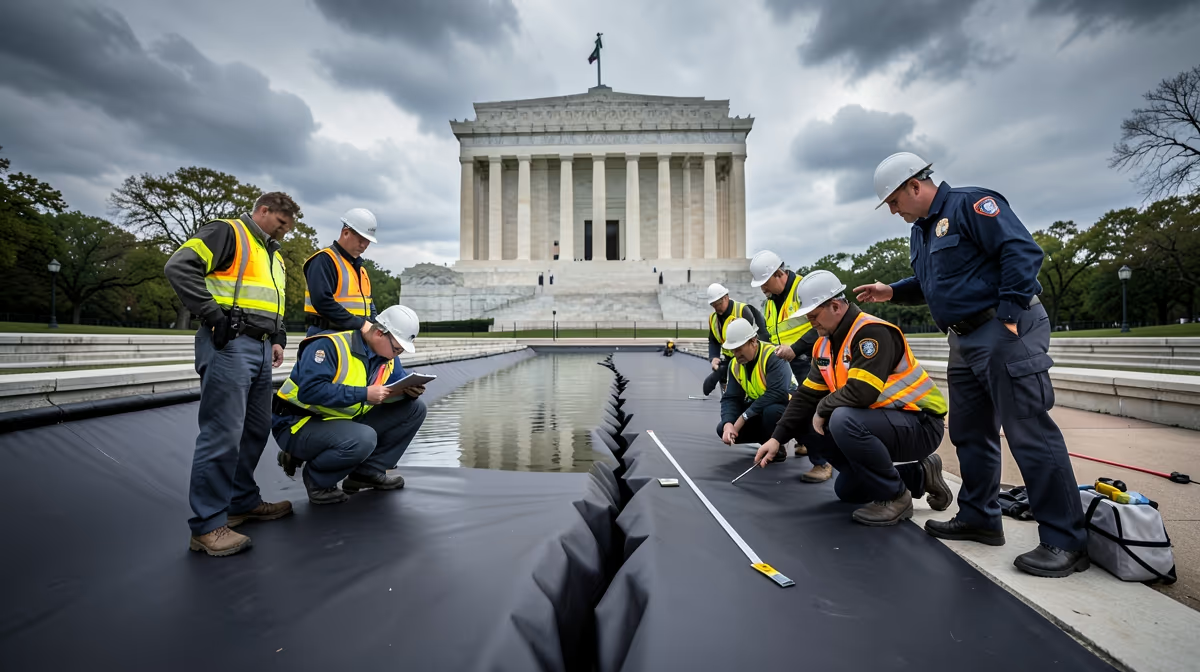
U.S. National Park Service officials confirmed that the liner of the Lincoln Memorial Reflecting Pool was discovered with a significant slit on Tuesday morning, prompting an immediate investigation into the potential act of vandalism at the high-profile national monument. The damage was identified during routine maintenance inspections on the National Mall, revealing a physical cut in the synthetic liner that holds the water within the shallow basin. Maintenance crews were alerted to the issue as water levels began to fluctuate unexpectedly, threatening the integrity of the pool infrastructure.
Park police and structural engineers were dispatched to the site to assess the extent of the damage and determine the necessary repair protocols. As of Wednesday, the pool remains cordoned off to visitors as authorities work to mitigate water loss and prevent further structural compromise to the concrete basin. Investigators are currently reviewing surveillance footage from the area to identify potential suspects or determine if the damage was caused by external environmental factors, though officials have not ruled out intentional human interference. National Park Service spokesperson Mike Litterst stated that officials are currently assessing the structural impact of the damage and working to ensure the site is stabilized while the investigation into the cause remains ongoing.
Key Facts
The incident involves several verified points regarding the state of the monument. A deliberate slit was found in the protective synthetic liner of the pool, leading to a significant and rapid loss of water. In response, the National Park Service has completely drained the pool to facilitate structural repairs and prevent long-term damage to the basin. The U.S. Park Police are leading the investigation, and the site is officially closed to the public until maintenance crews can ensure the area is safe for visitors and the aesthetic integrity of the landmark is restored.
Why It Matters
The Reflecting Pool is one of the most recognizable landmarks in the United States, serving as a primary site for tourism, civic demonstrations, and national commemorations. The damage disrupts the aesthetic integrity of the National Mall and highlights vulnerabilities in the security of open-access public monuments. Beyond the immediate logistical challenge, the incident necessitates expensive and time-consuming repairs funded by taxpayer dollars. The pool, which relies on a specialized water-recirculation system, requires precise maintenance to function correctly, and its closure impacts the experiences of tourists, local residents, and historic preservationists who frequent the area.
Expert Analysis
The root cause of the structural concern points to a combination of aging infrastructure and acute material fatigue in the synthetic geomembrane liner. Experts note that these systems are subject to significant stress from freeze-thaw cycles and hydrostatic pressure, which can exacerbate existing vulnerabilities. While the current investigation is focused on whether the slit was deliberate, analysts highlight a hidden angle involving the intersection of deferred maintenance policies and the increasing use of the Lincoln Memorial area for frequent public protests, which contributes to accelerated physical wear-and-tear. This situation draws a historical parallel to the 1980s restoration of the Statue of Liberty, which similarly exposed the systemic neglect of national icons under austerity-focused administrative cycles.
Political And Geopolitical Implications
The incident serves as a flashpoint for debates surrounding the National Park Service maintenance budget and the prioritization of monument preservation amidst federal spending impasses. Economic costs are anticipated to be significant, covering site draining, industrial-grade material procurement, and specialized labor contracts required for subterranean repair in a high-security zone. From a geopolitical perspective, the vulnerability of iconic American symbolic assets highlights the broader domestic strain on critical infrastructure, projecting an image of internal resource depletion to international rivals. This underscores the need for a heightened security audit of all reflecting pools and water features on the National Mall to detect potential copycat activity or systemic liner degradation.
What Happens Next
Over the next 24 hours, the National Park Service will continue to drain the specific section of the Lincoln Memorial Reflecting Pool to perform emergency underwater inspections and a full structural assessment of the liner. Within the next 72 hours, engineering teams will conduct forensic analysis to determine if the slit was caused by environmental wear, debris, or intentional vandalism. If safe to do so, temporary patching will be implemented to begin the restoration process. The best-case scenario involves the damage being classified as accidental, caused by a submerged object or thermal expansion, allowing for a quick, cost-effective repair. Conversely, the worst-case scenario involves confirmation of deliberate sabotage, which could prompt long-term closures of water features and necessitate costly, large-scale security upgrades across the site.
Frequently Asked Questions
Why did the Lincoln Memorial Reflecting Pool need a new liner?
The reflecting pool underwent a major renovation because the original concrete structure was leaking millions of gallons of water annually. A new, durable liner system was installed to conserve water and prevent structural damage to the pool basin.
What caused the slit or tear in the Reflecting Pool liner?
Minor tears or slits in the liner can occur due to extreme weather conditions, the natural expansion and contraction of the pool basin, or accumulated debris. Maintenance crews regularly inspect the liner to patch any punctures and ensure the pool retains its water capacity.
How is a slit in the Reflecting Pool liner repaired?
Repairs are typically performed by trained professionals who clean the affected area and apply specialized industrial-grade waterproof patches or sealants. In some cases, the pool may be partially drained to ensure the adhesive bond is strong and watertight.
Is the Reflecting Pool closed when the liner is being repaired?
The pool is sometimes partially drained for maintenance, but minor liner repairs often do not require a full closure of the area. However, major structural work may necessitate temporary closures of the surrounding walkways for public safety.
What type of material is used for the Lincoln Memorial Reflecting Pool liner?
The current liner system is made of high-quality, heavy-duty synthetic materials designed to withstand harsh outdoor elements and heavy water pressure. This modern lining was chosen specifically for its longevity and resistance to the environmental stresses of the D.C. climate.
How often does the Reflecting Pool require liner maintenance?
While the liner is built for long-term use, it undergoes routine visual inspections and minor preventive maintenance throughout the year. Comprehensive assessments are conducted periodically to identify any potential issues before they develop into significant leaks or structural problems.
Conclusion
The discovery of a liner slit at the Lincoln Memorial Reflecting Pool has prompted a rigorous, multi-agency response focused on site stabilization and forensic investigation. While the National Park Service continues to assess whether the damage resulted from environmental fatigue or intentional vandalism, the immediate priority remains the structural integrity of this vital national monument. The public can expect continued restricted access to the site as engineering teams implement temporary repairs and federal authorities finalize their assessment of security protocols for the National Mall.
"


.webp)

.webp)

