
Abbas Araghchi Moves to Reshape Iran Foreign Policy Amidst Chaos
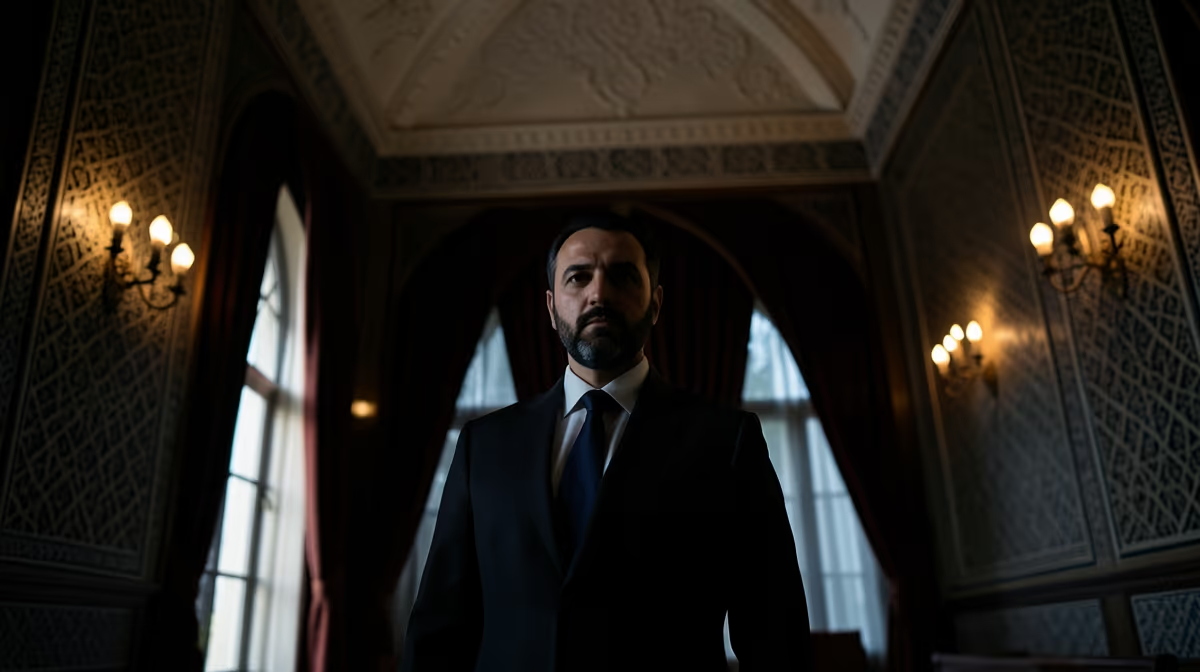
As the geopolitical landscape shifts, Abbas Araghchi has emerged as a central figure in defining the new direction of Iran foreign policy amidst complex Middle East diplomacy. His recent arrival in Damascus to conduct high-level discussions with Syrian leadership serves as a clear signal that Tehran is recalibrating its regional posture in the face of escalating military tensions.
A Technocratic Return to Diplomacy
The appointment of Abbas Araghchi as the Minister of Foreign Affairs in August 2024 marks a strategic pivot for the Iranian government. As a career official with over 30 years of experience within the Ministry of Foreign Affairs, Araghchi represents the return of technocratic-pragmatist leadership to the administration. Holding a Ph.D. in political thought from the University of Kent, he is recognized for his disciplined, professional approach to international relations, a skill set that was previously instrumental during his tenure as a lead negotiator for the 2015 Joint Comprehensive Plan of Action. His transition from high-profile diplomacy during the nuclear deal era to his recent appointment highlights the regime’s need for an experienced hand capable of navigating the dual pressures of intense regional conflict and long-standing international isolation.
Regional Mission and Strategic Signaling
Araghchi’s diplomatic tour, which included stops in Beirut and Damascus, underscores his role as the primary architect of Iranian outreach during a period of high volatility. By engaging directly with regional counterparts, he is attempting to maintain a unified stance against ongoing Israeli military operations. During his time in Beirut, Araghchi emphasized that Tehran is in constant contact with its allies, aiming to achieve a ceasefire and prevent the expansion of regional conflict. This diplomatic maneuvering is not merely symbolic; it is a calculated effort to preserve Iran’s deterrence strategy and project stability at a time when the Iranian government faces significant scrutiny from both the P5+1 nations and local powers. His presence on the ground in these conflict-affected zones serves to reaffirm Tehran’s commitment to its regional network, often referred to as the Axis of Resistance, while simultaneously signaling a readiness for diplomatic intervention.
The Mechanics of Sanctions and Stability
Beyond the immediate theater of war, Araghchi is tasked with managing the severe economic strain caused by global sanctions. A core component of his current strategy is the pursuit of economic relief through back-channel communications. His deep institutional knowledge of the Iranian Ministry of Foreign Affairs, coupled with his background as a former diplomat in countries like Japan and Finland, allows him to navigate complex international channels that are currently closed to more radical factions of the government. Analysts note that his leadership serves as a vital link between the Supreme Leader’s security-oriented administration and the international community. By leveraging his reputation for professional communication, even in the face of political hostility, Araghchi aims to create bargaining leverage that could, in theory, mitigate the impact of domestic inflation and currency collapse.
Anticipating Immediate Shifts
The next 24 to 72 hours are expected to be defined by intensive shuttle diplomacy. Araghchi is likely to focus on formalizing communications with European envoys and regional interlocutors to manage perceptions of Iran’s military posture. The objective is to emphasize Tehran’s right to defense while simultaneously signaling restraint to prevent a direct, large-scale confrontation that could trigger wider Western sanctions. His strategy, characterized by experts as active patience, involves using these diplomatic channels to de-escalate immediate military tension while preparing the country’s internal infrastructure for the possibility of prolonged external pressure. The worst-case scenario remains a potential miscalculation on the battlefield, which would force Araghchi to pivot from his current diplomatic signaling toward a more direct and high-intensity military response.
The Security and Intelligence Nexus
An essential, though often hidden, aspect of Araghchi’s leadership is his historical affiliation with the security-intelligence apparatus. This background provides a crucial internal security mechanism, ensuring that any diplomatic concessions he proposes remain within the strict parameters defined by the Iranian state and military leadership. This alignment allows him to operate as a linchpin, bridging the gap between the revolutionary ideals held by the Iranian establishment and the pragmatic necessity for diplomatic flexibility. By serving as both a diplomat and a figure who holds the trust of the security establishment, he can navigate the competing demands of the Iranian public, the security apparatus, and international negotiators, ensuring that Iran’s foreign policy goals remain coherent across all fronts.
Expert Outlook and Long-term Impact
As the regional security architecture faces unprecedented challenges, the role of the foreign minister has become a critical indicator of Iran’s future trajectory. Whether Araghchi can successfully manage these tensions depends on his ability to find a path toward a tacit de-escalation agreement. International observers are monitoring his meetings closely for any signs of a shift in the delivery of support to regional militias or changes in Iran's military posturing. The success of his diplomatic approach will determine whether Iran can achieve a temporary, managed reduction in regional hostility or if the ongoing conflict will lead to a broader collapse of diplomatic channels, fundamentally altering the Middle East security landscape for years to come.
Frequently Asked Questions
Who is Abbas Araghchi?
Abbas Araghchi is a prominent Iranian diplomat and politician currently serving as the Minister of Foreign Affairs of Iran. He has held numerous high-level government positions throughout his career, including serving as a senior nuclear negotiator for the Iranian government.
What is Abbas Araghchi's role in the Iranian government?
As the Minister of Foreign Affairs, Abbas Araghchi is responsible for managing Iran's diplomatic relations and foreign policy strategy. He plays a key role in representing Iran on the international stage and overseeing negotiations with other global powers.
Was Abbas Araghchi involved in the JCPOA negotiations?
Yes, Abbas Araghchi was a lead negotiator for Iran during the extensive talks that resulted in the 2015 Joint Comprehensive Plan of Action (JCPOA), often referred to as the Iran nuclear deal. His technical expertise and diplomatic experience were critical to the development of the agreement.
What is Abbas Araghchi's educational background?
Abbas Araghchi holds a Ph.D. in political thought from the University of Kent in the United Kingdom. He also earned a master's degree in international relations from the Islamic Azad University in Tehran and a bachelor's degree in international relations from the School of International Relations.
What are the main diplomatic priorities of Abbas Araghchi?
Abbas Araghchi's priorities center on navigating complex regional tensions and addressing the impact of international sanctions on Iran's economy. He frequently emphasizes the need for constructive engagement and the protection of Iran's national security interests within the global framework.
What previous government positions has Abbas Araghchi held?
Before becoming Foreign Minister, Abbas Araghchi served as the Deputy Foreign Minister for Political Affairs and as the Iranian ambassador to both Finland and Japan. He has decades of experience within the Ministry of Foreign Affairs, having served in various senior diplomatic and administrative capacities.
Conclusion
Abbas Araghchi’s return to the forefront of Iranian diplomacy marks a significant transition toward a more technocratic and pragmatist approach in managing the country's severe regional and economic challenges. His ongoing diplomatic tour of the Middle East underscores an attempt to balance the regime’s ideological commitments with the pressing need for de-escalation and regional stabilization. As Araghchi continues to navigate these high-stakes negotiations, the primary focus for policymakers and global observers will remain on whether his strategy of active patience can prevent further conflict or if geopolitical pressures will force a shift toward more volatile measures. The coming days will be critical in determining the extent to which his diplomatic mission can successfully manage regional instability and the evolving status of Iran’s foreign security posture.


