
Bab al-Mandab Strait Crisis Sparks Global Shipping Disruptions
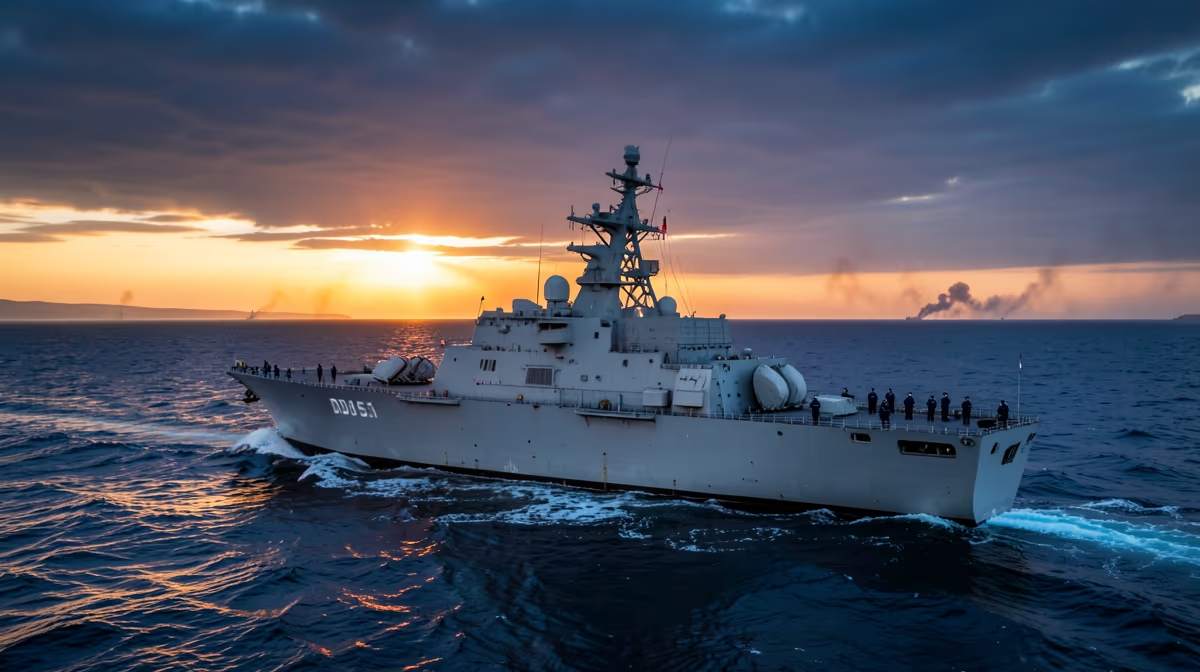
The United States and allied forces intensified defensive patrols in the Bab al-Mandab Strait this week, responding to a surge of drone and missile attacks launched by Houthi forces targeting international shipping lanes in the vital Red Sea choke point. The bab al-mandab strait remains a critical focal point for international trade as ongoing disruptions continue to impact red sea shipping lanes and force carriers to seek alternative routes.
Why This Matters
The Bab al-Mandab Strait is a narrow and crucial strip of water connecting the Red Sea to the Gulf of Aden. It serves as a vital maritime bottleneck for international trade, particularly for ships traveling between Europe and Asia via the Suez Canal. Recently, the strait has become a major flashpoint due to attacks on commercial shipping by militant groups, prompting US and allied military forces to intervene to protect cargo vessels and keep the global supply chain moving. For everyday Americans, this remote Middle Eastern waterway might seem far away, but disruptions here can cause immediate economic ripples. When cargo ships are forced to avoid the strait and take much longer alternative routes around Africa, it increases shipping costs and delays the delivery of goods. This directly contributes to higher prices for consumer products, fuel, and manufacturing materials in the United States. The strait connects the Red Sea and the Indian Ocean and is only about 20 miles wide at its narrowest point. Roughly 10 to 12 percent of global trade passes through this waterway daily, requiring US warships to be deployed to the area to protect commercial vessels from attacks while major shipping companies frequently pause or reroute voyages around Africa to avoid the danger.
What Unfolded
The Bab al-Mandab Strait, a narrow maritime corridor connecting the Red Sea to the Gulf of Aden through which a significant portion of global trade passes, has become an increasingly hazardous zone. Commercial vessels navigating the strait face heightened risks as regional conflict spills over into international waters, prompting major shipping companies to reroute vessels around the southern tip of Africa. In response to the escalating threat, the U.S. Navy has deployed guided-missile destroyers to intercept incoming projectiles and safeguard commercial traffic. Operation Prosperity Guardian, the multinational security initiative spearheaded by the United States, continues to coordinate naval escorts and defensive measures to maintain freedom of navigation in the critical waterway. Economic analysts warn that ongoing disruptions in the strait are driving up global shipping costs, delaying supply chains, and increasing insurance premiums for maritime transport. Despite international warnings and targeted military strikes against militant infrastructure, the security situation in the region remains highly volatile. U.S. naval forces are actively engaged in defensive operations to protect commercial shipping from airborne threats originating from Houthi-controlled areas of Yemen. Houthi forces have launched multiple drone and missile attacks toward vessels in the Bab al-Mandab Strait, and the U.S. Navy and coalition partners are actively intercepting incoming projectiles in the region while major international shipping companies have rerouted numerous vessels around the Cape of Good Hope under the coordination of Operation Prosperity Guardian. We remain fully committed to protecting mariners and ensuring the free flow of commerce through one of the world's most critical chokepoints, despite persistent threats to regional stability, noted a U.S. Central Command Spokesperson.
Analyst View
The structural vulnerability of global supply chains converging on a single 18-mile chokepoint has been weaponized by non-state actors exploiting asymmetric warfare against maritime commerce. The Houthis leverage regional resistance narratives to cement domestic legitimacy and regional clout, while Western powers struggle to deter attacks without escalating into a wider Middle Eastern war. Economically, this dynamic drives surging shipping insurance premiums, forced diversions around the Cape of Good Hope, and localized inflation risks for European and Asian markets reliant on Suez Canal transit. Geopolitically, this accelerates a multipolar security order where traditional US naval dominance is increasingly challenged by regional proxies, compelling secondary powers like China, India, and the EU to secure their own energy corridors. A hidden angle in this shift is the quiet militarization of lesser-known East African and Arabian littoral states, trading port access and sovereignty for foreign military bases and financial bailouts from competing global powers. Historically, this mirrors the 1973 oil embargo and the 1984 Tanker War phase of the Iran-Iraq conflict, where energy transit security was similarly held hostage to geopolitical friction. This trajectory unfolded across key milestones, starting in 2015 with the outbreak of the Yemeni civil war involving the Houthi movement and a Saudi-led coalition, which put the southern Red Sea on high alert. By 2023, Houthi forces began drone and missile attacks on commercial vessels in the Bab al-Mandab strait following the escalation of the Israel-Hamas war. By 2024, the launch of US-led Operation Prosperity Guardian and subsequent airstrikes failed to fully deter maritime disruptions, cementing a permanent high-risk normal for Red Sea shipping.
Future Outlook
Within the next 24 hours, expectations point to heightened surveillance and defensive posture by US naval forces in the southern Red Sea and Bab al-Mandab Strait following recent Houthi missile and drone activity. Looking to the next 72 hours, potential targeted US airstrikes on Houthi launch sites or command nodes in Yemen may occur if provocation continues, coupled with ongoing rerouting of commercial shipping around the Cape of Good Hope. Key players driving these developments include the United States Navy, the Houthi movement, commercial shipping operators, and Saudi Arabia, with primary impact felt across global supply chains, energy commodity prices, Middle East regional stability, and maritime insurance rates. Expert prediction suggests that low-intensity asymmetric conflict will persist in the strait, keeping shipping costs elevated and requiring a continuous, costly Western naval presence to maintain freedom of navigation. In a best-case scenario, regional diplomatic backchannels successfully de-escalate tensions, leading to a temporary cessation of Houthi attacks and the resumption of normal commercial transits through the Bab al-Mandab Strait. Conversely, the worst-case scenario involves a successful Houthi strike on a major energy tanker causing a severe environmental disaster or loss of life, triggering a massive US military retaliation and a wider regional escalation that disrupts global energy markets.
Frequently Asked Questions
Where is the Bab al-Mandab Strait located?
The Bab al-Mandab Strait is a crucial waterway situated between the Arabian Peninsula and the Horn of Africa. It connects the Red Sea to the Gulf of Aden and the Arabian Sea.
Why is the Bab al-Mandab Strait important for global trade?
This strategic chokepoint serves as a vital shipping lane connecting the Mediterranean Sea and the Indian Ocean via the Suez Canal. A massive percentage of global trade, particularly oil and natural gas shipments, passes through it daily.
What does the name Bab al-Mandab mean?
The name translates from Arabic as the Gate of Tears or the Gate of Lamentation. This dramatic moniker historically refers to the dangers associated with navigating the strait, including treacherous currents and winds.
Which countries border the Bab al-Mandab Strait?
The strait is bordered by Yemen on the Arabian Peninsula, and by Djibouti and Eritrea on the African side. Its geopolitical position makes these surrounding nations strategically significant for international security.
How wide is the Bab al-Mandab Strait?
At its narrowest point between Ras Menheli in Yemen and Ras Siyan in Djibouti, the strait is approximately 18 miles (29 kilometers) wide. The island of Perim divides this passage into two channels, with the eastern channel being the narrower and shallower of the two.
Is the Bab al-Mandab Strait currently safe for commercial shipping?
Recent geopolitical tensions and conflicts in the region have led to increased security risks for vessels transiting the strait. Naval coalitions and international patrols frequently monitor the area to protect commercial cargo ships from threats.
Conclusion
The escalating security crisis in the Bab al-Mandab Strait underscores the fragile nature of critical maritime chokepoints and their direct link to global economic stability. With United States and coalition naval forces maintaining an active defensive posture under Operation Prosperity Guardian, commercial carriers continue to navigate heightened operational risks through reinforced patrols and alternative African routes. As geopolitical tensions persist, international stakeholders monitor regional developments closely while weighing diplomatic avenues against ongoing defensive requirements to safeguard international trade corridors.


