
Nepal Flash Floods Death Toll Spikes as Humanitarian Crisis Deepens
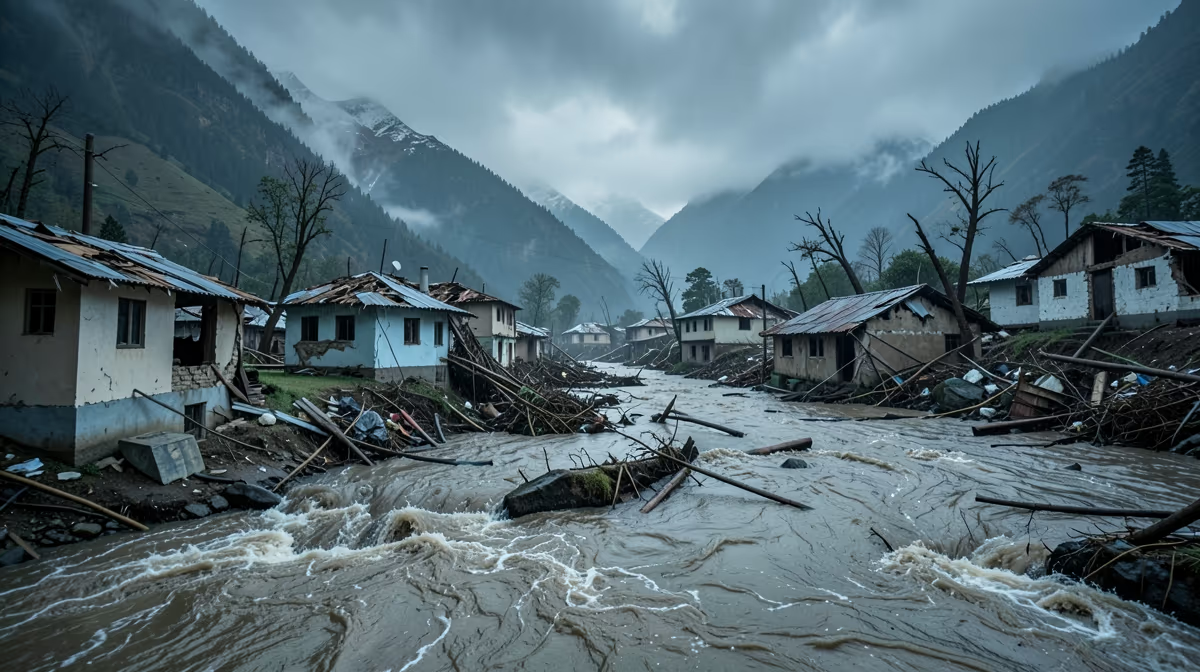
The latest reports confirm a rising Nepal flash floods death toll as continuous monsoon rains and rapid Himalayan glacier melt devastate communities across the region. Flash floods in Nepal have triggered a severe humanitarian crisis, with death tolls rising and thousands of people, including many children, in urgent need of assistance as fears of fresh floods loom across the Himalayan region.
What Unfolded
According to reports from outlets including The Hindu, The Indian Express, News On AIR, UN News, NPR, and UNICEF, the catastrophic disaster has claimed hundreds of lives while leaving hundreds more missing, including foreign nationals. The unfolding emergency has drawn widespread international concern over the immense scale of destruction. Glacial destabilization and extreme weather convergence trigger sudden catastrophic flash floods across regions of Nepal. Casualties mount rapidly with hundreds reported dead and many more missing, including foreign nationals, prompting major search and rescue operations. International agencies and local bodies scramble to deliver urgent humanitarian aid while warnings of fresh floods persist.
Key Facts
- The death toll from the Nepal flash floods has risen significantly, with reports indicating hundreds of fatalities
- Hundreds of people remain missing following the disaster, including 133 Indian nationals
- UNICEF has highlighted that thousands of children are in urgent need of humanitarian assistance due to the floods
- Experts and reports indicate that a melting glacier contributed to the deadly flash floods
- The disaster has sparked widespread concern and warnings regarding vulnerability across the Himalayas and neighboring India
Humanitarian Impact and UNICEF Relief Efforts
UNICEF has reported that thousands of children are currently in urgent need of humanitarian assistance in the aftermath of the deluge. Relief and rescue operations are facing major hurdles as authorities and international organizations struggle to reach affected populations in remote areas. Local residents in flood-affected regions of Nepal, thousands of children needing urgent humanitarian aid, and families of the missing individuals, including foreign nationals such as Indian citizens, are directly impacted by the disaster.
A melting glacier contributed to the deadly Nepal floods, serving as a stark warning to fragile mountain ecosystems and downstream populations.
Analyst View
Unprecedented glacial melting combined with extreme monsoon rainfall destabilizing the fragile Himalayan ecosystem, causing catastrophic flash floods. Disaster response management and coordination failures by regional governments raise questions on emergency preparedness, infrastructure vulnerability, and transboundary early-warning communication. Severe disruption to tourism, agriculture, and local trade is coupled with massive costs for infrastructure reconstruction and urgent humanitarian relief operations. Cross-border implications for downstream nations like India highlight the urgent need for collaborative regional climate resilience frameworks and shared hydrological data systems in the Himalayas. The disproportionate psychological and developmental toll on children and displaced populations in remote areas risks being overshadowed by headline casualty numbers. This event shares historical parallels with the 2013 Kedarnath floods in India, which similarly exposed the extreme vulnerabilities of Himalayan infrastructure to climate-driven glacial and meteorological extremes.
Global Angle and Regional Impact
Environmental and meteorological analysts point to contributing factors such as melting glaciers, raising serious warnings about the long-term vulnerability of the Himalayan region and neighboring countries like India to escalating climate-related disasters. This disaster highlights the devastating real-world impacts of climate change and melting glaciers in fragile mountain ecosystems. It serves as a warning to neighboring countries like India that rapid environmental shifts can trigger sudden, cross-border humanitarian crises affecting thousands of vulnerable families and children. Flash floods in mountainous regions like the Himalayas are often triggered by heavy monsoon rains, glacial lake outburst floods, or melting glaciers exacerbated by global temperature rises. These sudden deluges frequently catch communities off guard, causing severe destruction to infrastructure and displacing populations.
What Comes Next
Search and rescue operations are expected to continue amidst fears of fresh floods, with international agencies and regional authorities addressing the urgent humanitarian crisis affecting thousands of children and missing persons. Assessments of the disaster's immense impact will likely expand, focusing on relief distribution, medical assistance for survivors, and evaluating infrastructure damage related to melting glaciers and extreme Himalayan weather patterns. Analysts would likely expect increased scrutiny on Himalayan climate vulnerability, particularly regarding melting glaciers and glacial lake outburst floods, prompting calls for enhanced cross-border early warning systems and regional disaster preparedness. In a best-case scenario, rescue operations successfully locate missing individuals, weather conditions stabilize to allow unhindered delivery of humanitarian aid to affected children and families, and regional cooperation mitigates further downstream risks. In a worst-case scenario, fresh floods materialize due to ongoing weather instability, further compounding the high death toll, overwhelming rescue capacities, and worsening the humanitarian crisis across isolated mountain communities.
Nepal flash floods death toll reaches critical levels as international aid agencies mobilize Nepal floods 2026 humanitarian crisis relief.
Frequently Asked Questions
What is the current situation regarding the Nepal flash floods?
Nepal is facing a severe humanitarian crisis after flash floods caused hundreds of fatalities, with hundreds more missing, including foreign nationals, and thousands of children in urgent need of assistance.
What caused the flash floods in Nepal?
Reports indicate that continuous monsoon rains combined with a melting glacier in the Himalayas contributed to the deadly and sudden flash floods.
Who is providing humanitarian assistance in the region?
International organizations, including UNICEF, alongside local and regional authorities, are mobilizing emergency response and relief efforts for affected populations and children.
Are there cross-border impacts from this disaster?
Yes, the disaster has raised concerns for neighboring countries like India, with reports noting that missing persons include 133 Indian nationals and highlighting vulnerability across the Himalayan region.
Conclusion
Flash floods in Nepal have resulted in a rapidly rising death toll and a widespread humanitarian crisis involving hundreds of missing persons and thousands of children in urgent need of relief. Confirmed developments indicate that international organizations, UNICEF, and regional responders are actively engaged in ongoing search, rescue, and humanitarian distribution efforts. As meteorological conditions maintain a threat of fresh floods, authorities continue to assess the immense infrastructure and environmental impact driven by extreme monsoon weather and melting Himalayan glaciers.
Sources
- Nepal flash floods LIVE: Death toll rises to 547; fear of fresh floods looms — The Hindu
- Why the Nepal floods are a warning for the Himalayas, and India — The Indian Express
- Nepal flash flood claims nearly 160 lives; over 750 Missing, including 133 Indians — News On AIR
- ‘Immense impact’ of Nepal flood disaster highlighted as casualties mount — UN News
- A melting glacier contributed to the deadly Nepal floods. We can expect more like this — NPR
- Flash floods in Nepal leave thousands of children in urgent need of humanitarian assistance — UNICEF


.webp)