
Ballistic Missile Submarines Are Facing a Major Strategic Reality Check
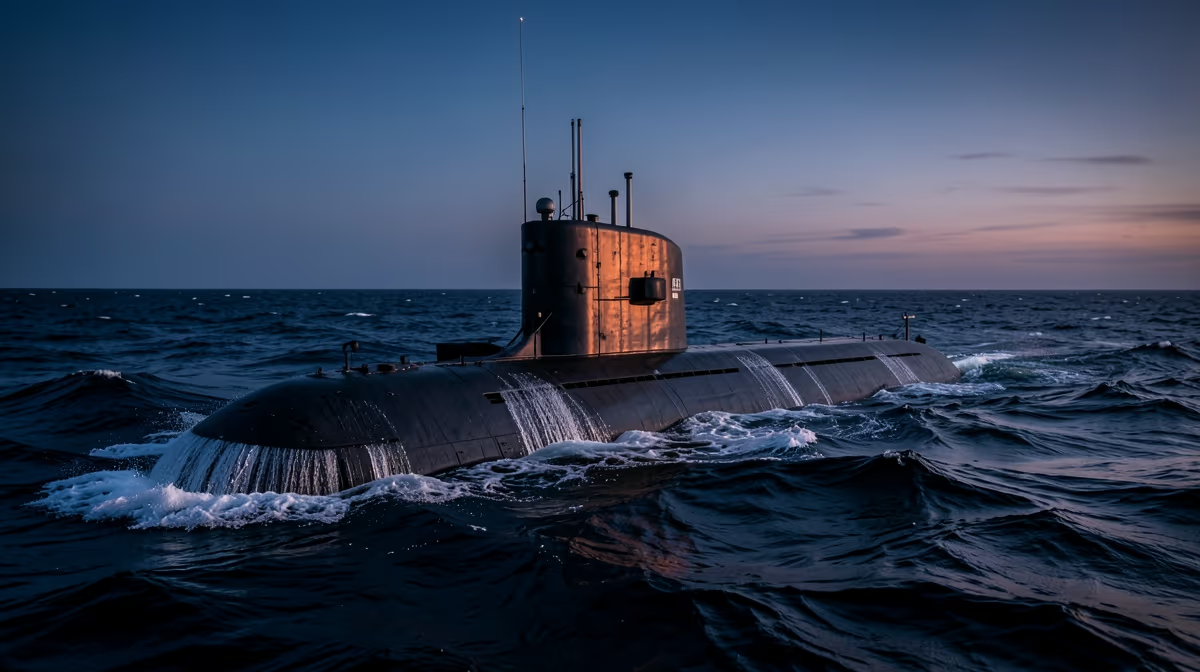
The ballistic missile submarine remains the most survivable leg of the US nuclear triad, serving as a cornerstone of national security and nuclear deterrence in an era of heightened naval warfare. As global powers recalibrate their maritime strategies, the United States Navy continues to prioritize the modernization of its sea-based nuclear deterrent, moving forward with the production of the Columbia-class ballistic missile submarines intended to replace the aging Ohio-class fleet by the early 2030s.
The Evolution of Underwater Deterrence
The concept of the ballistic missile submarine emerged during the Cold War in the 1950s and 60s as nations sought to move their nuclear deterrents off of vulnerable land bases and into the sea, where they could not be easily tracked by radar or spy satellites. These vessels, often referred to as boomers due to their immense destructive power, are specialized naval assets designed to stay submerged and hidden in the ocean for months at a time. They are powered by nuclear reactors, allowing them to traverse vast distances without the need to surface for fuel.
Their primary mission is nuclear deterrence, a strategy predicated on the idea that the threat of a guaranteed counter-strike prevents conflict before it starts. By maintaining a constant, invisible presence deep beneath the ocean surface, these submarines provide an invulnerable second-strike capability that forms the logic of Mutually Assured Destruction. Even in the event of a surprise attack on land-based military installations, the submerged fleet remains safe, ensuring that a retaliatory response is always possible.
Current Fleet Status and Transition
The Ohio-class submarines, which have served as the backbone of the U.S. nuclear triad since the 1980s, are steadily approaching the end of their operational lifespans. To maintain a credible capability, the U.S. Navy has engaged General Dynamics Electric Boat and Huntington Ingalls Industries to construct the next generation of vessels. This Columbia-class program is widely considered the service's number one acquisition priority. Secretary of the Navy Carlos Del Toro has repeatedly emphasized that the delivery of these submarines is essential to ensuring national security interests and maintaining the global balance of power.
The transition is a massive undertaking, with the lead ship of the Columbia class expected to be delivered by 2031. Each of these new vessels is designed to carry 16 Trident II D5LE missiles. The program is currently under the management of the Naval Sea Systems Command, which faces the dual challenge of transitioning to new technology while ensuring the existing fleet continues its routine patrol operations in the Atlantic and Pacific oceans.
Geopolitical and Economic Realities
The necessity for this modernization is driven by a shift toward undersea dominance as a counter to Anti-Access and Area Denial strategies, particularly concerning regional influence in the Indo-Pacific. While there is a strong bipartisan consensus in Congress supporting the Columbia-class program, the massive capital allocation required is significant. This investment creates a long-term fiscal burden and has contributed to inflationary pressures within specialized manufacturing sectors of the defense-industrial base.
Strategic challenges in both the Indo-Pacific and Eastern Europe have intensified the urgency of this transition. Defense officials maintain that the invisibility of the submarine fleet provides a crucial layer of security that prevents the need for active military confrontation. However, the program faces significant industrial base constraints. Maintaining the production schedule is a top priority, as any delay could create a gap in U.S. undersea deterrence capabilities during a period of rising global geopolitical competition.
Technological Challenges and Future Risks
While the strategy remains sound, the operational environment is changing. Analysts are closely monitoring the rapid advancement of deep-sea sensing and artificial intelligence-driven autonomous underwater vehicles, which potentially threaten the long-term stealth advantage of the entire fleet. Furthermore, shipyard labor shortages and long-lead material procurement delays remain critical hurdles.
Looking toward the next 72 hours, the naval leadership is expected to continue affirming strategic deterrence commitments, with an internal focus on crew rotations and supply chain readiness. The expert prediction for the near term suggests a continued acceleration of the procurement process, provided that the Navy can balance these ambitions with tight oversight of shipyard workforce capacity. The best-case scenario involves the successful, on-time delivery of critical submarine components, while the worst-case scenario entails the discovery of technical failures during sea trials or severe budget-related delays that could impact the broader strategic deployment timeline.
Frequently Asked Questions
What is the primary purpose of a ballistic missile submarine?
The primary purpose of a ballistic missile submarine, or SSBN, is to serve as an undetectable nuclear deterrent. By remaining submerged and hidden in the ocean, these vessels provide a survivable second-strike capability that ensures a nation can respond to a nuclear attack.
How many ballistic missile submarines does the US have?
The United States currently operates 14 Ohio-class ballistic missile submarines. These vessels form the sea-based leg of the U.S. nuclear triad and are being modernized with the upcoming Columbia-class replacement program.
How long can a ballistic missile submarine stay underwater?
Ballistic missile submarines are nuclear-powered, meaning they can remain submerged for months at a time. The limiting factor for their duration at sea is typically the amount of food and supplies that can be stored for the crew rather than fuel or air replenishment.
How many nuclear missiles are on an Ohio-class submarine?
An Ohio-class ballistic missile submarine is equipped with 20 missile tubes, each capable of carrying a Trident II D5 ballistic missile. These missiles can be fitted with multiple independently targetable reentry vehicles, allowing a single submarine to carry significant nuclear firepower.
What is the difference between a ballistic missile submarine and an attack submarine?
The main difference is their mission: ballistic missile submarines (SSBNs) are designed to carry long-range nuclear weapons for strategic deterrence, while attack submarines (SSNs) are designed for anti-submarine warfare, intelligence gathering, and attacking surface ships. SSNs are generally smaller and carry conventional weapons like torpedoes and cruise missiles.
What is the Columbia-class submarine?
The Columbia-class submarine is the next generation of U.S. ballistic missile submarines currently under development. These vessels are designed to replace the aging Ohio-class fleet and will feature advanced quieting technology and a longer service life to maintain the credibility of the U.S. nuclear deterrent.
Conclusion
The modernization of the U.S. ballistic missile submarine fleet remains the most significant long-term investment in the nation’s nuclear triad. While the Columbia-class program represents a vital strategic imperative to replace the aging Ohio-class vessels, the Navy continues to navigate complex industrial, economic, and technological challenges. The path forward remains focused on maintaining silent-running operational readiness and managing the critical construction timelines necessary to preserve the global balance of power through the 2030s and beyond.


.webp)
