
Indus Waters Treaty Status Shift Triggers Regional Security Concerns
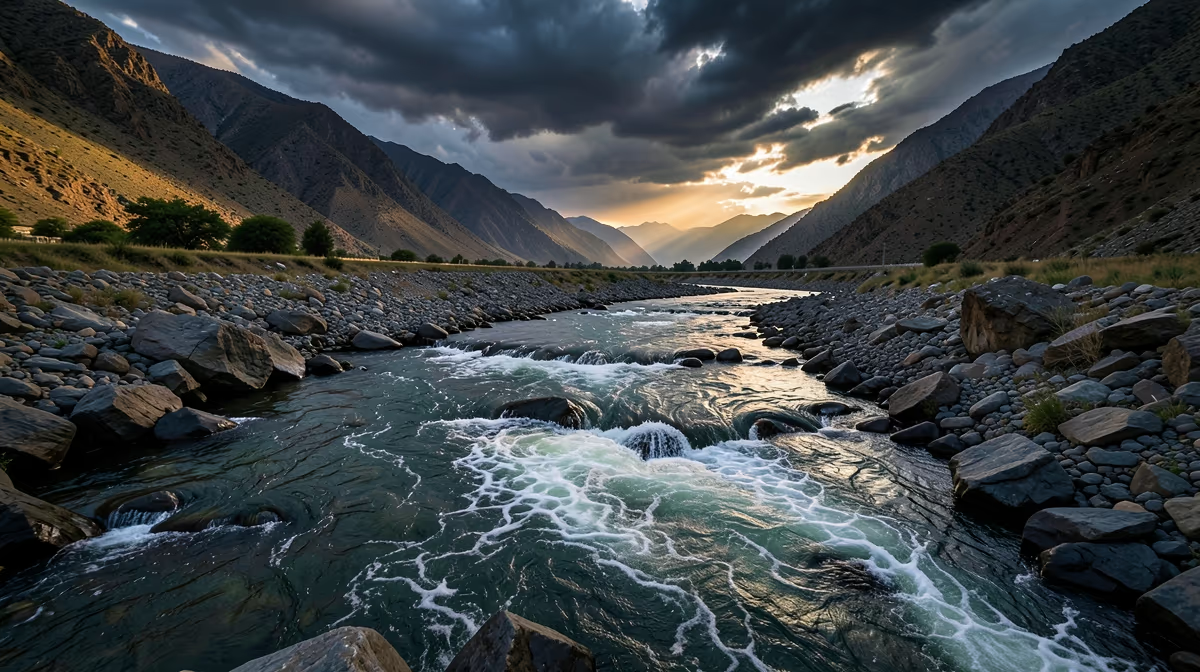
The Indus Waters Treaty remains a critical pillar of stability in South Asian geopolitics, serving as a rare institutional bridge that has weathered decades of regional discord. As diplomatic rhetoric intensifies following a landmark move by New Delhi, understanding the intricacies of this India Pakistan water dispute is essential for analyzing the future of regional water security.
A Legacy of Cooperation Under Pressure
Signed in Karachi on September 19, 1960, by Indian Prime Minister Jawaharlal Nehru and Pakistani President Ayub Khan, the treaty was brokered by the World Bank, which remains a primary guarantor of the agreement. The core mechanism of the pact is a division of the six rivers comprising the Indus system. India was granted control over the eastern three rivers, namely the Ravi, the Beas, and the Sutlej. Conversely, Pakistan holds rights to the western three rivers: the Indus, the Jhelum, and the Chenab. This framework allows India to utilize the western rivers for specific non-consumptive purposes, such as hydroelectric power generation and limited irrigation, provided the technical specifications align with the treaty's rigorous guidelines. For over sixty years, this arrangement has facilitated regular engagement through the Permanent Indus Commission, ensuring data sharing and conflict resolution between the two nations.
The Current Diplomatic Impasse
The long-standing framework is now facing its most significant challenge since its inception. In January 2023, the Indian government issued a formal notice to Pakistan seeking a modification of the treaty. This decision was driven by what New Delhi describes as Pakistan's persistent intransigence regarding the development of the Kishanganga and Ratle hydroelectric projects. India maintains that its hydroelectric facilities are fully compliant with the treaty's technical provisions. The tension stems from a procedural deadlock where Pakistan has simultaneously requested the appointment of a Neutral Expert and sought proceedings through a Court of Arbitration. India contends that these parallel, conflicting legal processes undermine the integrity of the bilateral dispute resolution mechanism, compelling the call for a formal treaty review.
The Root Causes of Systemic Strain
The instability surrounding this water-sharing regime is not merely a product of current political hostility but is rooted in a fundamental divergence of interests. The treaty is built upon a zero-sum hydrological logic that fails to account for the modern realities of climate change, rapid population growth, and the surging energy demands of both nations. While the pact was designed for an era of predictable flows, the rapid retreat of Himalayan glaciers now threatens the historical water-sharing ratios, potentially rendering them mathematically obsolete. Furthermore, the treaty has increasingly become a domestic political instrument, where water issues are leveraged to project national strength. This brinkmanship, combined with the economic risks associated with stalled cross-border infrastructure, has placed the Permanent Indus Commission under immense pressure.
The Geopolitical and Economic Stakes
The economic implications of this dispute are profound, particularly regarding energy security. Hydroelectric projects like Kishanganga and Ratle are vital for regional power needs, yet their development has become a flashpoint for international arbitrage. India’s desire to assert sovereign control over its resource development directly clashes with Pakistan’s concerns regarding water weaponization. This dynamic has drawn global observers into the fray, testing the World Bank’s capacity to mediate as the guarantor. From a broader security perspective, the potential for this dispute to escalate is high; because millions of farmers in the Punjab and Jammu and Kashmir regions, along with a vast segment of the Pakistani population, rely on the Indus basin, any breakdown in cooperation could trigger severe food and water insecurity.
Predicting the Near-Term Trajectory
In the immediate term, diplomatic observers expect increased posturing following the formal notice of modification. Over the next 24 hours, officials are likely to reaffirm their respective commitments to the treaty’s provisions while maintaining their firm stance on project legality. Within the next 72 hours, an exchange of sharp rhetoric regarding the interpretation of dispute settlement clauses is anticipated. The expert consensus suggests that the treaty faces unprecedented stress, with both nations likely to engage in prolonged legalistic maneuvering to redefine their positions without formal abandonment of the agreement. The best-case scenario remains a resumption of bilateral engagement through the Permanent Indus Commission to resolve technical differences, while the worst-case scenario involves a complete breakdown of the commission, leading to a unilateral suspension of obligations and heightened regional insecurity.
Frequently Asked Questions
What is the Indus Waters Treaty between India and Pakistan?
The Indus Waters Treaty is a water-sharing agreement signed in 1960 between India and Pakistan, brokered by the World Bank. It governs the use of the six rivers of the Indus system, allocating the three eastern rivers to India and the three western rivers to Pakistan.
Who signed the Indus Waters Treaty?
The treaty was signed by the then Indian Prime Minister Jawaharlal Nehru and the Pakistani President Ayub Khan. The agreement was finalized in Karachi on September 19, 1960, after years of negotiations.
Which rivers does India control under the Indus Waters Treaty?
Under the treaty, India has unrestricted use of the three eastern rivers: the Ravi, the Beas, and the Sutlej. Pakistan holds control over the three western rivers, which are the Indus, the Jhelum, and the Chenab, subject to certain exceptions for Indian use.
Is the Indus Waters Treaty still valid today?
Yes, the Indus Waters Treaty remains in effect and has proven remarkably resilient despite multiple wars and geopolitical tensions between India and Pakistan. It includes specific mechanisms for dispute resolution, such as the Permanent Indus Commission and the appointment of neutral experts.
Can India withdraw from the Indus Waters Treaty?
While the treaty does not contain a specific clause for unilateral withdrawal, international law generally allows for the termination of treaties under exceptional circumstances. However, India has maintained its commitment to the agreement, viewing it as a binding international obligation.
What happens if there is a dispute regarding the Indus Waters Treaty?
Disputes are typically handled through the Permanent Indus Commission, consisting of commissioners from both countries. If they cannot resolve the issue, the treaty provides for a graded dispute settlement mechanism, including the appointment of a Neutral Expert or referral to a Court of Arbitration.
Conclusion
The Indus Waters Treaty continues to stand as a vital, if currently strained, framework for regional stability. While India’s recent move to seek modification reflects the growing complexities of the India Pakistan water dispute, both nations remain legally bound by the 1960 agreement. The coming period will be defined by how these two countries navigate the current procedural deadlock. Preservation of the treaty's functionality through the Permanent Indus Commission remains the most viable path toward averting a crisis in transboundary water management. International stakeholders continue to monitor the situation closely, emphasizing the need for technical cooperation over unilateral action to protect the livelihoods of millions dependent on the Indus basin.


.webp)

.webp)
