
FIFA World Cup 2026 Plans Trigger Massive Global Economic Shifts
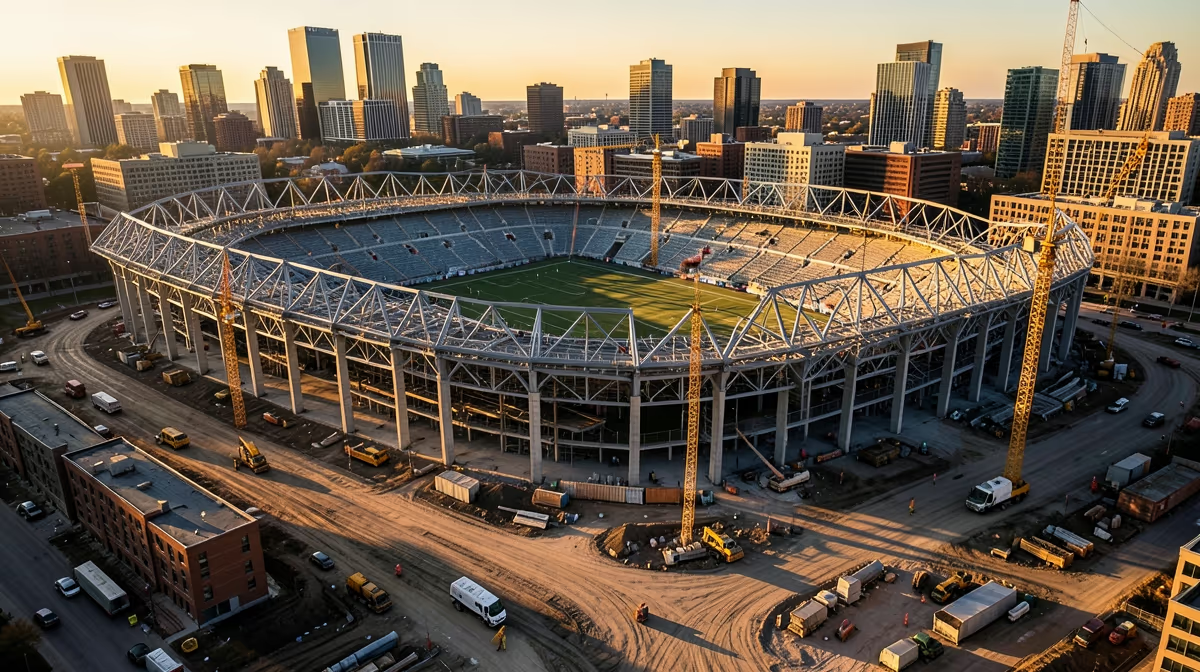
Beyond the familiar spectacle of elite athletics lies a massive geopolitical and economic experiment that promises to redefine how the world consumes sport. As anticipation builds for the FIFA World Cup 2026, global football fans and economists are closely monitoring the preparations for the largest tournament in history, a venture that pivots from a simple competition to a complex, multi-nation infrastructure operation.
A Changing Format for a New Era
For the first time in the tournament’s history, the competition will move away from its traditional 32-team framework to accommodate 48 participating nations. This expansion is designed to facilitate 104 matches across 16 iconic stadiums, significantly increasing the event's footprint. The logistics of coordinating this massive undertaking across Canada, Mexico, and the United States have necessitated a fundamental shift in how host nations approach urban planning, tourism, and digital broadcasting. FIFA President Gianni Infantino has framed this as the most inclusive tournament to date, emphasizing that the logistical challenges are being met with unprecedented preparation across the three North American host countries.
Key Facts and Tournament Logistics
The tournament is officially scheduled to take place from June 11 to July 19, 2026. The final match, the climax of this month-long event, will be held at MetLife Stadium in East Rutherford, New Jersey. With 16 host cities involved, the tournament will span diverse climates and urban landscapes, from Toronto and Vancouver in Canada to Monterrey, Guadalajara, and Mexico City in Mexico, alongside a network of U.S. metropolitan hubs. This infrastructure push represents more than just stadium capacity; it is a long-term investment in regional tourism and hospitality sectors, aiming to capitalize on the heightened global interest in the sport.
The Economic and Geopolitical Landscape
The expansion to 48 teams acts as a catalyst for global sports economics, shifting the focus toward digital broadcasting rights and massive commercial sponsorship activations. The tournament effectively serves as a strategic instrument for soft power, consolidating influence within the CONCACAF region and acting as a testing ground for North American diplomatic and logistical cohesion. Analysts suggest that the hosting arrangement functions as a counter-weight to other emerging blocs in the international sports arena, reflecting a modern era where such events are treated as high-stakes national security assets. The securitization of these games suggests that the boundary between civilian sporting entertainment and national defense sector oversight is becoming increasingly blurred.
Impact on the Indian Subcontinent
For football fans in India, the scale of the 2026 tournament presents both unique challenges and massive opportunities. While time zone differences remain a factor for the North American-based matches, the sheer volume of games and the expansion of the format are expected to generate record-breaking broadcast viewership. Experts anticipate a significant surge in commercial tie-ups between Indian brands and global FIFA sponsors, as companies seek to tap into the massive Indian digital audience. However, logistical realities such as high travel costs and visa complexities could potentially limit the physical presence of Indian fans at the tournament, prompting stakeholders to prioritize the development of viewing party partnerships in major Indian cities.
Anticipated Developments and Projections
Over the next 24 hours, stakeholders expect increased social media activity from the All India Football Federation regarding venue preparation and fan engagement initiatives. In the coming 72 hours, media focus is likely to shift toward the logistical hurdles facing international travelers and the growth of grassroots football infrastructure. Looking ahead, the best-case scenario for the region involves record-breaking viewership numbers that catalyze long-term domestic investment in football academies. Conversely, the worst-case scenario involves barriers to entry, such as elevated travel and visa costs, dampening physical participation from overseas fans.
Frequently Asked Questions
When and where will the FIFA World Cup 2026 be held?
The FIFA World Cup 2026 is scheduled to take place from June 11 to July 19, 2026. It will be co-hosted by three North American countries: Canada, Mexico, and the United States.
How many teams will participate in the FIFA World Cup 2026?
For the first time in history, the tournament will feature 48 teams instead of the traditional 32. This expansion allows for more nations to qualify and increases the total number of matches played during the event.
Which cities are hosting the FIFA World Cup 2026 matches?
There are 16 host cities across the three countries, including Toronto and Vancouver in Canada, Guadalajara, Mexico City, and Monterrey in Mexico, and several major cities across the United States like New York, Los Angeles, and Miami.
How can fans in India purchase tickets for the 2026 World Cup?
Tickets for the 2026 World Cup will be sold exclusively through the official FIFA website. Fans in India should monitor the official FIFA ticketing portal for announcements regarding sales phases and registration processes.
Where can I watch the FIFA World Cup 2026 in India?
The broadcasting rights for the FIFA World Cup 2026 in India are expected to be held by major sports networks and digital streaming platforms. Official confirmation regarding specific channels and apps will be released closer to the event.
Will India participate in the FIFA World Cup 2026?
India's participation in the 2026 World Cup depends on the qualification process conducted by the Asian Football Confederation. The Indian national team must navigate through the AFC qualifying rounds to secure a spot in the final tournament.
Conclusion
The FIFA World Cup 2026 represents a transformative moment for international sport, blending unprecedented scale with complex geopolitical and economic strategies. While the infrastructure upgrades and the 48-team format establish a new benchmark for global tournaments, the success of the event will ultimately be measured by its ability to integrate diverse international audiences. For fans and stakeholders in India, the coming months will be critical as broadcasting partnerships, travel logistics, and commercial engagements continue to take shape. As the world prepares for this historic expansion, the focus remains on the seamless execution of 104 matches across North America, setting the stage for what is expected to be a landmark event in the global sporting calendar.


.webp)

.webp)

