
DoorDash Instacart Deal Triggers Massive Shifts Across US Delivery
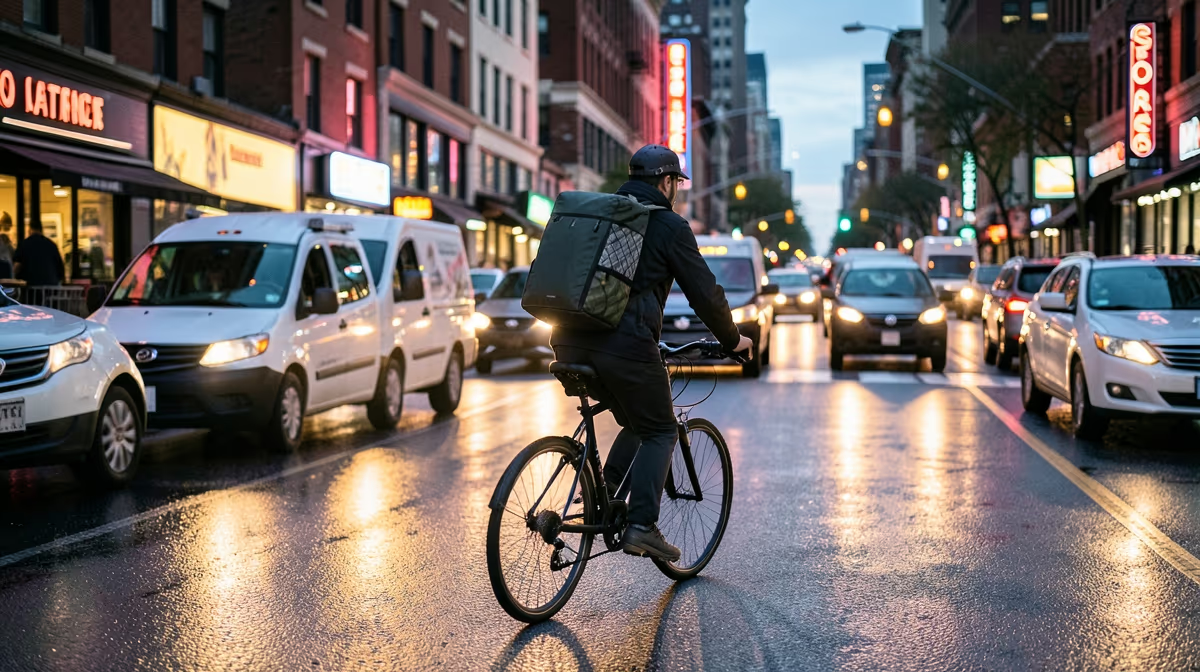
Two platforms that redefined how households source dinner and restock pantries are preparing to merge into an unprecedented logistics behemoth. The decision for DoorDash to acquire Instacart in a monumental $17 billion agreement marks a structural turning point for digital commerce, consumer habituation, and platform economics across the United States. The blockbuster transaction consolidates two fierce domestic rivals under a unified corporate umbrella, creating a delivery powerhouse that bridges restaurant takeout and supermarket aisles.
The $17 billion merger between DoorDash and Instacart fundamentally consolidates the US on-demand logistics sector into a singular powerhouse spanning restaurants and supermarkets.
Chronology of a Landmark Consolidation
The path to the official announcement developed through high-stakes negotiations that captured intense industry attention during late October 2026. Initial reports indicated that DoorDash had entered advanced talks regarding an acquisition valued at approximately $17 billion. The prospect of such an immense combination immediately triggered widespread debate among market participants and industry observers, setting off waves of investor unease prior to the confirmation of the agreement.
| Date / Period | Milestone Event |
|---|---|
| Late October 2026 | Reports emerge revealing advanced talks for a potential $17 billion acquisition between US rivals. |
| October 27–28, 2026 | Financial markets experience initial investor unease regarding valuation and operational scale. |
| October 29, 2026 | DoorDash officially strikes the definitive $17 billion deal to acquire Instacart. |
On October 29, 2026, the two companies formalized the transaction. By securing the definitive agreement, DoorDash and Instacart settled days of intense market speculation, establishing the foundational terms for one of the most consequential mergers in the history of app-based logistics.
What the DoorDash Instacart Deal Means for Grocery Logistics
The strategic foundation of this transaction rests on an aggressive bet on the future of grocery delivery. Following periods of rapid acceleration, growth rates in online ordering normalized post-pandemic, creating intense competition across the on-demand logistics landscape. In response to this mature operating environment, consolidating market shares became the primary route to securing sustained market dominance.
The $17 billion transaction represents an aggressive expansion into supermarket delivery, uniting two of the largest on-demand fulfillment networks in the United States.
Uniting Instacart's established network of supermarket partnerships with DoorDash's expansive courier fleet establishes an operational footprint of unmatched scale. For millions of consumers, the consolidation promises a streamlined experience combining prepared meals and packaged household goods on connected interfaces. Yet, for local merchants and supermarket chains, the retail delivery market impact is immediate. Retailers that previously leveraged competing platforms to negotiate fees and merchant terms now face a single delivery powerhouse capable of setting terms across thousands of local economies.
The Battle for Merchant Data and Digital Advertising
Behind the consumer-facing delivery apps lies a deeper, highly lucrative objective centered on consumer data and commercial infrastructure. Beyond the physical transport of groceries and prepared food, this acquisition is an ambitious play to control proprietary grocery consumer data and comprehensive retail analytics.
By unifying data streams from restaurant orders and routine grocery runs, the combined enterprise gains granular visibility into household spending patterns, dietary preferences, and brand loyalty. This proprietary insight shifts the broader competitive battleground directly toward digital advertising and merchant supply chain dominance. Brands and local merchants seeking digital shelf space will increasingly depend on the combined platform's analytics infrastructure to target consumers effectively, transforming the enterprise from a pure courier intermediary into a dominant retail media and data platform.
Investor Skepticism and the Historical Echo of Massive Mergers
Despite the transaction's ambitious scale, the market reaction has been marked by caution. Reports surrounding the acquisition initially prompted noticeable investor unease, driven by anxieties over the $17 billion valuation, the substantial capital expenditure required to finance the purchase, and the significant integration risks inherent in combining two distinct corporate architectures.
Financial analysts have pointed to the AOL-Time Warner merger of 2000 as a historical parallel, illustrating how massive platform consolidation during shifting market paradigms can create unexpected operational hurdles, severe cultural friction, and aggressive regulatory pushback. Merging two distinct corporate structures, reconciling overlapping courier management systems, and maintaining partner goodwill across independent grocers and franchise restaurants present immense execution challenges. Investors remain acutely focused on whether the projected operational efficiencies and logistical synergies can justify the massive capital outlay in a normalized growth climate.
Antitrust Scrutiny and Gig Economy Labor Dynamics
The creation of a combined entity of this magnitude ensures immediate and rigorous review from market regulators and lawmakers. Because the transaction eliminates direct competition between two of the country's foremost on-demand platforms, antitrust authorities are expected to examine the concentration of market power across multiple fronts:
- The potential monopolistic control over local delivery fees and service pricing charged directly to consumers.
- The heightened bargaining leverage over independent restaurants and grocery stores that rely on app-based orders to sustain revenue.
- The operational and wage implications for thousands of delivery drivers and couriers working within the gig economy logistics framework.
The labor dimension represents a significant political angle. Couriers for both DoorDash and Instacart navigate variable compensation models, shifting delivery incentives, and platform-determined routing algorithms. Lawmakers and regulatory bodies scrutinizing the merger are expected to evaluate whether unified platform ownership restricts worker flexibility, depresses earnings opportunities, or centralizes algorithmic control over gig economy labor across the country.
Near-Term Trajectories and Competing Scenarios
As the official announcement reverberates across financial markets, the transaction enters an uncertain transitional phase characterized by regulatory filings, partner evaluations, and market adjustments.
The First 72 Hours
Over the initial 24 hours following the confirmation, market focus centers on stock price movements for both companies, early investor assessments, and initial statements from regulatory agencies. Over the subsequent 72 hours, financial analysts and antitrust experts will release detailed modeling on valuation mechanics and antitrust feasibility. Concurrently, regional grocery chains, restaurant associations, and gig worker advocacy groups will begin formal assessments of how policy and operational integration will alter their business models.
Projected Structural Pathways
Anticipating the downstream consequences reveals two distinct potential outcomes for the combined delivery powerhouse:
- The Best-Case Integration Pathway: The combined enterprise successfully streamlines grocery and restaurant logistics, building a resilient corporate giant. Operational efficiencies reduce overhead costs, cross-platform routing improves driver utilization, and consumers benefit from broader product selections and faster fulfillment times, all while navigating regulatory scrutiny without fatal structural concessions.
- The Worst-Case Regulatory Challenge: Antitrust authorities intervene aggressively, citing monopolistic concentration across grocery and prepared meal delivery. The resulting legal battles prolong regulatory reviews, heighten investor anxiety, depress stock valuations, and trigger operational disruptions that strain ongoing merchant partnerships and courier retention.
While the acquisition agreement is formally executed, the regulatory review timelines, detailed operational integration plans, and formal counter-strategies from competing delivery services remain actively developing.
Frequently Asked Questions
Did DoorDash acquire Instacart?
DoorDash has reached a deal to acquire its US rival Instacart for $17 billion. This massive transaction is set to combine two of the biggest names in the delivery industry into a single delivery giant.
Why are investors uneasy about the DoorDash and Instacart deal?
Reports of the $17 billion acquisition have left some investors feeling uneasy. While the merger creates a delivery powerhouse with a heavy focus on grocery delivery, market reactions reflect caution regarding the scale and integration of such a massive purchase.
What does the DoorDash-Instacart merger mean for grocery delivery?
The $17 billion deal represents a major bet on the future of grocery delivery in the US. By bringing Instacart under its umbrella, DoorDash significantly expands its footprint and competitive edge in the grocery sector.
What happens next following the DoorDash acquisition announcement?
Following the agreement in advanced talks and subsequent reports of the $17 billion deal, the companies will navigate regulatory reviews and the complex process of combining operations. Industry watchers will closely monitor how the integration unfolds for merchants and consumers.
Who is affected by the $17 billion delivery giant merger?
The merger impacts a vast network of restaurants, grocery stores, couriers, and consumers across the United States. As DoorDash and Instacart combine forces, stakeholders throughout the delivery ecosystem are evaluating potential changes to fees, services, and market competition.
What is the financial value of the DoorDash and Instacart agreement?
The transaction values Instacart at $17 billion. This major financial milestone highlights the immense growth and consolidation within the on-demand delivery and e-commerce marketplace.
Conclusion
DoorDash's definitive agreement to acquire Instacart for $17 billion establishes a historic turning point in the logistics and e-commerce landscape. By bringing two fierce domestic competitors under one roof, the deal aims to capture commanding control over grocery fulfillment, consumer spending analytics, and merchant advertising. However, the path toward full integration remains subject to formidable obstacles, including pronounced investor skepticism, intricate logistics harmonization, and rigorous antitrust investigations into market dominance and labor impacts. As regulatory reviews commence and operational frameworks are finalized, the evolution of this merger will define the economic boundaries of the on-demand economy for years to come.
Sources
- Doordash to acquire Instacart for $17 billion, creating delivery giant — NBC News
- DoorDash Reportedly Near $17 Billion Instacart Deal. Why Investors Are Uneasy. — Investor's Business Daily
- DoorDash strikes $17 billion deal for US rival Instacart in bets on grocery delivery — Reuters
- DoorDash to Buy Instacart in $17 Billion Deal — Bloomberg
- DoorDash plans to buy Instacart for $17 billion, creating a delivery powerhouse — Business Insider
- DoorDash in advanced talks to acquire Instacart in potential $17B deal: report — Fox Business


