
Spain High-Speed Train Collision Exposes Critical Flaws Across Rail
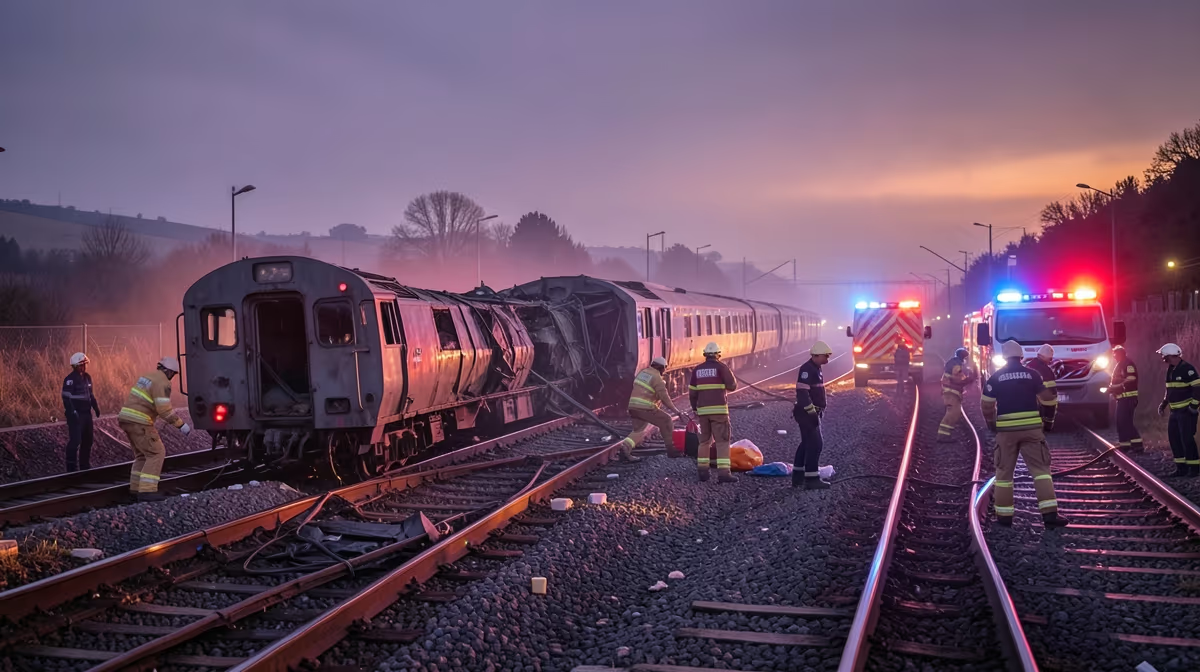
High-speed rail has long stood as the pinnacle of European transit efficiency, built on precision engineering where split-second automated interventions are engineered to prevent catastrophe. That foundational premise shattered in central Spain when two high-speed locomotives collided along a popular route, leaving twisted wreckage, dozens of fatalities, and profound operational questions for the continent’s transit authorities.
Breaking reports confirm that the Spain high-speed train collision has resulted in at least 30 to 39 deaths, with numerous passengers suffering serious injuries. Emergency responders, medical units, and railway safety teams mobilized immediately to secure the scene near Toledo, initiating one of the largest emergency operations the Spanish rail system has confronted in modern history.
A collision between two high-speed trains on one of Europe's premier rail corridors has exposed acute systemic vulnerabilities, resulting in at least 39 deaths and triggering urgent safety inquiries.
The Scale of the Disaster in Central Spain
The disaster occurred along a heavily trafficked corridor that serves as an essential transit artery for daily commuters and long-distance travelers alike. Initial accounts from multiple international news agencies describe a violent impact between two high-speed trains that pulverized passenger carriages and derailed locomotive sections. Emergency services arriving at the accident site were confronted with severe structural damage that complicated immediate search, extraction, and triage operations.
Rescue workers operating inside the debris field faced heavily crumpled metal and compromised rail cars. Transport authorities immediately halted traffic along the affected sector, establishing an emergency perimeter to allow medical personnel and specialized disaster recovery teams unimpeded access. First responders worked continuously to pull trapped survivors from the carriages, stabilizing critically injured travelers on-site before dispatching them to regional medical facilities across central Spain.
Casualty Toll and Emergency Rescue Measures
The human toll of the accident climbed rapidly as emergency teams penetrated deeper into the wreckage. Official and journalistic updates established that the death toll quickly reached at least 30 to 39 people, with warnings that casualty numbers could fluctuate as search-and-rescue teams clear the remaining compartments.
- At least 30 to 39 fatalities confirmed by emergency personnel and major reporting agencies.
- Numerous passengers injured, with multiple individuals requiring urgent hospitalization and intensive medical care.
- Immediate deployment of national emergency services, specialized extraction teams, and regional healthcare networks.
- Full suspension of rail services along the impacted route to facilitate rescue, site stabilization, and evidence gathering.
The scale of the casualties has placed acute pressure on emergency healthcare systems in the region. Medical triage stations were assembled adjacent to the tracks to prioritize urgent trauma care, while transport officials worked alongside local authorities to identify passengers and establish communications lines for affected families.
Infrastructure Vulnerabilities and Systemic Questions
While high-speed rail maintains one of the strongest safety records of any mass transportation mode globally, a direct collision between two locomotives indicates a profound failure within core operational safety layers. Central Spain's high-speed corridors are equipped with complex automated signaling and track-monitoring mechanisms specifically designed to prevent two trains from occupying the same block of track.
An accident of this magnitude along an established high-speed line signals an unprecedented breakdown in the signaling redundancies and infrastructure management that protect modern rail transit.
Technical analysts point toward a catastrophic signaling or infrastructure failure as the probable root cause of the crash. Such an event typically suggests either a complete loss of track-circuit communication, an undetected routing malfunction, or a critical human-system interface failure that allowed two locomotives onto colliding paths. A key hidden vulnerability facing modern networks is the operational strain caused by maximizing train frequencies and network utilization. When high-speed corridors operate at near-peak capacity, routine maintenance windows narrow, elevating the potential consequences of any unaddressed technical fault.
Historical Context and the Legacy of Past Inquiries
The collision immediately invokes comparisons to the 2013 Santiago de Compostela train derailment, a defining disaster in Spanish transit history that prompted sweeping overhauls of national rail safety protocols, speed enforcement systems, and institutional oversight. While that historical tragedy centered on a high-speed train entering a curve at excessive speed, this latest disaster presents an entirely different and concerning operational reality: two high-speed locomotives colliding directly on a major line.
The Toledo train crash investigation will inevitably assess whether systemic lessons learned from earlier disasters were sufficient, particularly regarding active track-switching safety and automatic train control. Railway operators and infrastructure managers now face intense technical audits to verify whether signaling failsafes functioned as designed or if warning signals failed to engage automatic braking mechanisms aboard the locomotives.
Political and Geopolitical Ramifications
The disaster carries immediate and heavy political implications. Intense scrutiny has fallen upon Spain's transport ministry and national rail infrastructure management agencies. Government officials are tasked with delivering immediate transparency regarding operational oversight, scheduling pressures, and technical maintenance logs for the affected line.
Beyond Spain's borders, the accident reverberates throughout the European Union. Spain operates one of the most extensive and respected high-speed rail networks in the world, frequently held up as a model for modern sustainable transport and rail technology export. A catastrophic failure on a core Spanish line inevitably forces European transit authorities to re-evaluate common high-speed rail safety protocols, signaling interoperability, and passenger protection standards across international rail corridors.
Economic Consequences and Transport Disruption
The immediate economic impact centers on widespread network disruption. The closure of this vital corridor paralyzes travel between major hubs, stranding thousands of daily commuters and dealing a severe blow to regional connectivity and domestic tourism.
| Operational Dimension | Immediate and Mid-Term Impact |
|---|---|
| Passenger Rail Traffic | Indefinite suspension and widespread rerouting along central corridors |
| Emergency & Recovery Costs | Immediate mobilization of disaster response, wreckage removal, and medical logistics |
| Infrastructure Repair | Extensive reconstruction required for damaged track beds, power lines, and signaling gear |
| Institutional Liabilities | Severe financial exposure related to infrastructure restoration and passenger compensation claims |
Prolonged corridor closures will redirect domestic travelers toward road and air alternatives, causing secondary transit bottlenecks. Furthermore, the direct fiscal burden on transport authorities will be substantial, encompassing the emergency response, long-term infrastructure reconstruction, and statutory compensation for victims and their families.
Timeline of Developing Events
The crisis continues to develop as technical investigators and rescue crews work concurrently at the collision site:
- Two high-speed trains collide on a heavily utilized central Spanish route, causing catastrophic derailment and structural damage.
- Emergency services and regional medical networks launch mass rescue operations, pulling survivors from crushed carriages.
- Death tolls are documented at between 30 and 39 victims, with numerous passengers transported for emergency trauma care.
- Transport authorities issue an immediate corridor shutdown and initiate formal investigations into technical and operational causes.
- National transport leadership faces acute political scrutiny regarding signaling maintenance and network oversight.
Forecasting the Next Phases
The immediate trajectory of the crisis will depend on technical recovery operations and official communications from safety boards. Over the coming days, response efforts will shift from acute crisis management to forensic safety reviews.
The Next 24 Hours
The Next 72 Hours
Under a best-case recovery scenario, emergency operations will conclude rapidly without a further rise in casualties, allowing investigators to isolate a localized signal or mechanical failure that can be quickly rectified across the fleet. Conversely, the worst-case scenario involves the discovery of additional fatalities within crushed cars, followed by the revelation of systemic maintenance or signaling defects that force prolonged nationwide line closures, heightened political instability, and sweeping leadership challenges within national transport agencies.
Frequently Asked Questions
What happened in the Spain train crash?
Two high-speed trains collided along a popular transit corridor in central Spain, causing severe structural damage to both locomotives, dozens of deaths, and numerous injuries.
How many people died in the Spanish high-speed train collision?
Early reports from emergency services and major international news agencies confirm that at least 30 to 39 people have lost their lives in the disaster.
Why does this train crash matter?
High-speed rail is globally recognized as one of the safest mass transit modes. A fatal collision between two locomotives raises serious concerns regarding track infrastructure, automated signaling reliability, and passenger safety protocols.
Who is affected by the Spain train collision?
The disaster directly impacts the passengers and families of those killed or injured, emergency rescue personnel operating at the scene, and thousands of travelers facing widespread cancellations across Spain's high-speed rail network.
What happens next following the disaster in central Spain?
Emergency response teams will complete rescue and recovery operations while investigators examine on-board data recorders, signaling infrastructure, and traffic control records to establish the exact cause of the crash.
Where did the high-speed train collision take place?
The accident occurred along an active and popular high-speed rail route in central Spain, near Toledo.
Conclusion
The high-speed rail collision in central Spain marks a catastrophic event for European mass transit, resulting in at least 39 confirmed fatalities and leaving numerous individuals injured. Emergency rescue personnel have concluded the most critical stages of life-saving interventions while securing the devastated crash site near Toledo. As national transport authorities transition from medical response to technical investigation, the primary focus shifts to determining how automated signaling and infrastructure controls failed to avert a direct locomotive impact. The definitive findings of this inquiry will shape railway maintenance regulations, political accountability, and passenger transit standards across Spain and the broader continent for years to come.
Sources
- Spain train crash latest: At least 39 dead after two high-speed trains collide — Sky News
- Spain train crash leaves 'at least 39 dead' as high-speed locomotives collide — Chronicle Live
- At least 30 people die in major Spanish train crash — POLITICO.eu
- 'Numerous injuries' reported after high-speed rail crash in Spain — Sky News
- Dozens dead as high-speed trains crash on popular Spanish route — The Independent
- Dozens killed in high-speed train collision in central Spain — France 24


