
Red Sea Tanker Shipping Threats Trigger Global Trade Panic
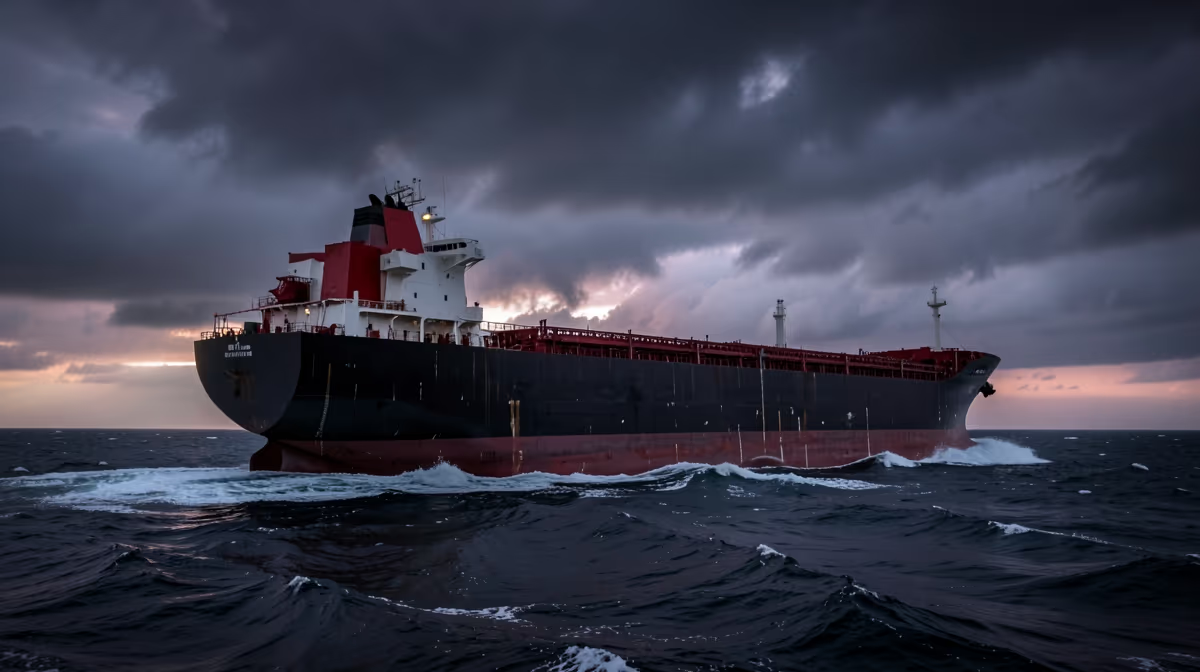
Global shipping operations through the Red Sea faced severe disruptions this week as Houthi militants launched multiple drone and missile attacks against commercial tankers, prompting major maritime carriers to suspend transits through the critical Bab el-Mandeb Strait. The intensification of red sea tanker shipping threats has forced major energy companies to suspend voyages through critical maritime chokepoints, triggering widespread economic concerns. Commercial ships and oil tankers traveling through the region are facing serious attacks from militant groups using missiles and armed drones to target cargo vessels, making one of the world's most important waterways extremely dangerous for shipping companies and their crews. Because of these ongoing threats, many major shipping companies have decided to pause their voyages through the region, opting to take a much longer detour all the way around the southern tip of Africa instead of utilizing the fast and direct route through the Red Sea and the Suez Canal.
The Geopolitical Roots of Red Sea Tanker Shipping Threats
The escalation of regional conflicts in the Middle East serves as the root cause behind these maritime disruptions. Specifically, the Houthi movement has strategically leveraged maritime choke points in response to military operations in Gaza, aiming to exact economic and political costs from Western allies and Israel. This form of asymmetric warfare is utilized by non-state actors to project regional power, challenge Western naval dominance, and test international deterrence frameworks without triggering full-scale conventional war. Historically, this dynamic parallels the 1980s Tanker War during the Iran-Iraq conflict, where attacks on commercial shipping in the Persian Gulf internationalized a regional war and compelled superpower naval intervention to secure energy flows. The vulnerability of critical maritime choke points exposes the limits of unipolar security guarantees, accelerating de-risking strategies and forcing middle powers like China, India, and the EU to recalibrate their naval presence and diplomatic stances. Furthermore, the proliferation of shadow fleets and unregulated bunkering networks adapting to bypass insurance and security risks has inadvertently created new illicit economic ecosystems and environmental vulnerabilities.
What Unfolded
The unfolding crisis has forced vessels carrying crude oil, refined products, and consumer goods to reroute around the southern tip of Africa, adding thousands of miles and significant fuel costs to voyages between Asia and Europe. Insurance premiums for passage through the region have surged exponentially, while naval coalitions led by the United States and international allies have stepped up patrols and intercepted numerous incoming projectiles. Houthi forces hijacked the Galaxy Leader vehicle carrier in November 2023, marking a severe escalation in Red Sea security. By December 2023, Operation Prosperity Guardian was launched by the United States and its allies, while major container lines began diverting vessels around the southern tip of Africa. Transatlantic friction and burden-sharing debates were highlighted in February 2024 when the European Union launched Operation Aspides to protect commercial shipping. Presently, sustained maritime volatility has become the new normal, structurally altering global supply chain logistics and maritime insurance markets indefinitely. Defense officials report that military escorts are being coordinated for select vessels, but shipping executives maintain that the current risk level remains unacceptably high for regular commercial traffic, while diplomatic efforts involving regional and international stakeholders continue to de-escalate tensions and secure the vital waterway. International Maritime Organization Secretary-General Arsenio Dominguez stated that ships must be allowed to trade freely and safely in accordance with international law, urging an immediate halt to attacks against innocent merchant vessels. Meanwhile, a Pentagon spokesperson emphasized that Operation Prosperity Guardian remains fully committed to defending freedom of navigation in the Red Sea and holding the perpetrators accountable.
Economic Impact on Global Oil Prices and Supply Chains
Economic analysts warn that the prolonged security threat threatens to reignite global supply chain bottlenecks reminiscent of the pandemic era, potentially driving up energy prices and inflation. The Bab el-Mandeb Strait is a vital global chokepoint through which approximately 12 percent of global trade and a significant portion of the world's petroleum pass daily. When cargo ships and oil tankers have to take a massive detour around Africa instead of using the Red Sea, journeys take much longer and require a lot more fuel. This causes shipping costs to skyrocket, which ultimately leads to higher prices for everyday consumer goods, clothing, electronics, and gasoline around the world. Everyday consumers worldwide face higher prices for goods, European and Asian importers and exporters experience severe shipping delays, shipping companies face skyrocketing insurance and fuel costs, and global energy markets experience volatility. Liquefied natural gas carriers, alongside crude oil and chemical tankers, have suspended transits through the Red Sea due to the high risks of collateral damage, forcing European buyers to source alternative liquefied natural gas supplies and compete more aggressively in the spot market.
How Maritime Coalitions Are Responding to the Crisis
A multinational maritime coalition, notably including Operation Prosperity Guardian led by the United States and the United Kingdom, alongside EU Operation Aspides, has been established to protect commercial shipping. Naval warships operating in the region actively intercept incoming Houthi missiles and drones. Additionally, naval escorts and heightened security protocols are being utilized by tanker operators to mitigate risks. Ansar Allah forces continue launching missile and drone attacks in the southern Red Sea and Bab el-Mandeb strait, targeting commercial tankers with intermittent naval coalition interceptions. Major container lines and tanker operators continue rerouting vessels around the Cape of Good Hope, sustaining elevated freight rates and insurance premiums globally. Key players including US Naval Forces Central Command, major tanker operators, and multinational naval forces coordinate across impact areas such as the Bab el-Mandeb Strait, Suez Canal transit volume, global energy markets, and East-West supply chains to manage the crisis.
The Outlook Ahead
Over the next twenty-four hours, Houthi drone and missile activity is expected to remain elevated in the southern Red Sea and Bab el-Mandeb strait, targeting commercial tankers with intermittent naval coalition interceptions. Over the next seventy-two hours, major container lines and tanker operators will continue rerouting vessels around the Cape of Good Hope, sustaining elevated freight rates and insurance premiums globally. Expert predictions indicate that asymmetric threat persistence will force a permanent baseline adjustment in maritime risk management, keeping Red Sea transit subdued for commercial tankers despite occasional military strikes on launch sites. In a best-case scenario, de-escalation talks yield a cessation of maritime attacks, allowing a phased return of commercial tankers to the Bab el-Mandeb strait under international naval escort. Conversely, a worst-case scenario involves a successful strike on a laden oil tanker causing a major ecological disaster and severe disruption to global crude supplies, prompting a massive retaliatory military campaign.
Frequently Asked Questions
Why are oil tankers avoiding the Red Sea?
Oil tankers are avoiding the Red Sea due to escalating attacks by Houthi rebels based in Yemen targeting international commercial shipping. These security threats have forced major shipping companies and energy firms to suspend transit through the vital Bab el-Mandeb strait. Consequently, vessels are rerouting around the southern tip of Africa to ensure crew and cargo safety.
How are Red Sea shipping threats affecting global oil prices?
Threats to Red Sea tanker shipping have introduced significant volatility and upward pressure on global energy markets. The longer transit times required to circumnavigate Africa increase fuel consumption and operational costs, which ultimately drive up crude oil and consumer fuel prices worldwide. Furthermore, supply chain delays heighten the risk of regional shortages.
Who is behind the attacks on tankers in the Red Sea?
The Houthi movement, a political and armed group controlling large parts of Yemen, has claimed responsibility for the majority of drone and missile attacks on commercial vessels. These militants state their actions are in solidarity with Palestinians in the Gaza conflict. Despite international naval coalitions patrolling the area, these asymmetric threats continue to disrupt maritime trade.
What military measures are protecting ships in the Red Sea?
A multinational maritime coalition, notably including Operation Prosperity Guardian led by the United States and the United Kingdom, has been established to protect commercial shipping. Naval warships operating in the region actively intercept incoming Houthi missiles and drones. Additionally, naval escorts and heightened security protocols are being utilized by tanker operators to mitigate risks.
How much longer is the detour around Africa compared to the Red Sea?
Rerouting tankers around the Cape of Good Hope instead of using the Suez Canal and Red Sea adds approximately 10 to 14 days to a typical voyage between Asia and Europe. This significant increase in distance drastically reduces global shipping capacity and turnaround times. The extra journey also requires careful management of fuel reserves and crew logistics.
Are liquefied natural gas (LNG) carriers also affected by Red Sea threats?
Yes, liquefied natural gas carriers, alongside crude oil and chemical tankers, have suspended transits through the Red Sea due to the high risks of collateral damage. Major energy companies like QatarEnergy and Shell have paused shipments through this vital waterway. This disruption has forced European buyers to source alternative LNG supplies and compete more aggressively in the spot market.
Conclusion
Commercial shipping and energy transit through the Red Sea remain heavily disrupted by ongoing Houthi drone and missile attacks targeting vessels in the Bab el-Mandeb Strait. Major shipping lines and energy companies continue to divert vessels around the Cape of Good Hope, resulting in extended transit times, increased fuel consumption, and elevated maritime insurance premiums. Multinational naval coalitions actively patrol the region and intercept incoming projectiles, while military escorts and diplomatic efforts continue alongside sustained security alerts. Stakeholders across global energy and supply chain sectors must navigate persistent maritime volatility as vessel operators prioritize crew and cargo safety amid ongoing geopolitical tensions.


