
SpaceX Starship Flight 13 Plans Reveal a Major Shift in Space Strategy
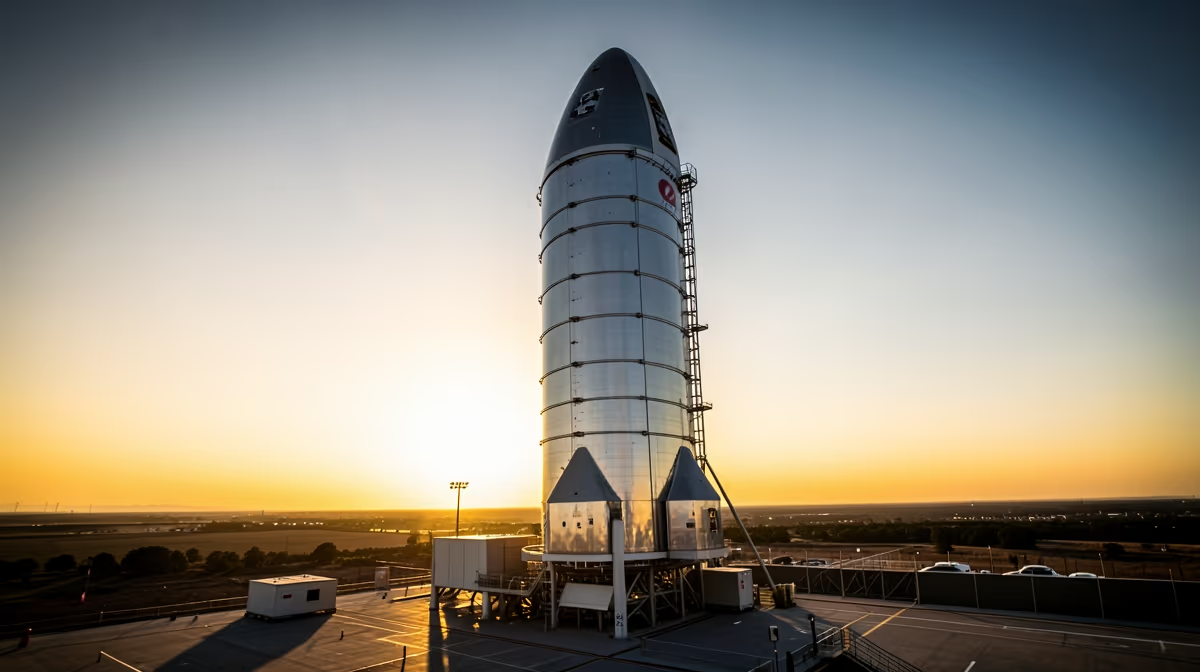
The horizon of space exploration is shifting as engineers at Starbase, Texas, refine the most powerful launch vehicle ever conceived to bridge the gap between orbital aspirations and permanent interplanetary presence. The upcoming SpaceX Starship Flight 13 launch marks a significant milestone in this rapid iteration cycle, representing a critical juncture where experimental engineering meets the harsh realities of vacuum-rated propulsion and atmospheric re-entry. As global observers and defense strategists monitor the mission, the focus remains on whether this flight can cement the viability of a fully reusable system capable of altering the economic landscape of Earth orbit and beyond.
The Mechanics of Innovation
At its core, Starship is a marvel of aerospace engineering, designed to transform the cost-benefit analysis of access to space. By utilizing liquid methane and liquid oxygen as propellant, the vehicle aims to facilitate the rapid, low-cost delivery of massive payloads. Unlike traditional rockets that are discarded after a single use, the Starship architecture is fundamentally built for total reusability. The upcoming mission focuses heavily on the performance of the Raptor engine sequences, particularly the difficult restart process in the vacuum of space, which is an essential prerequisite for any mission intending to reach the Moon or Mars. Engineers are currently scrutinizing the thermal protection system, implementing structural refinements that are necessary for the craft to survive the intense heat of atmospheric descent, a recurring hurdle in the vehicle's development history.
Strategic and Geopolitical Implications
The transition of the aerospace sector from an old-guard, cost-plus contracting model to a dynamic, outcome-based partnership is driving the rapid pace of current operations. Analysts observe that this shift is not merely commercial; it carries significant geopolitical weight. As the United States and other global powers engage in an intensifying space race, the capability to deploy, maintain, and potentially refuel assets in orbit serves as a strategic tether for national influence. The integration of this heavy-lift capability into programs such as the broader defense-related Starshield initiative creates a complex intersection between private commercial spaceflight and the requirements of national security, effectively blurring the lines between corporate logistics and strategic intelligence infrastructure.
Regulatory Hurdles and Operational Readiness
Before the countdown clock can be initiated, SpaceX must navigate the mandatory regulatory landscape overseen by the Federal Aviation Administration. The process for securing a launch license is a rigorous assessment of environmental impacts, public safety protocols, and operational site requirements in the Boca Chica region. Currently, the mission is in a state of final integration, with technical teams performing load testing and propellant loading rehearsals to ensure that every system is primed for the launch window. While the physical hardware is being finalized, the official timeline remains tethered to the successful completion of these administrative and regulatory reviews, as well as the unpredictable nature of local weather conditions.
Expert Forecasts and Risk Assessment
Industry observers are maintaining a cautious but optimistic outlook regarding the forthcoming test profile. The expert consensus suggests that a successful mission will demonstrate tangible improvements in heat shield resilience and precision landing maneuvers for the Super Heavy booster. In a best-case scenario, the flight will yield critical data on orbital insertion and splashdown accuracy, providing the necessary evidence to support the upcoming HLS lunar missions mandated by NASA. Conversely, the risks remain inherent to the development of such unprecedented technology. Anomalies during any phase could result in the activation of the flight termination system or damage to ground infrastructure, potentially forcing a multi-month recalibration period for the entire program.
The Economic Shift in Orbital Access
The long-term impact of a successful Starship program transcends scientific discovery, promising to disrupt the global economy. By drastically reducing the cost-per-kilogram of lifting equipment and supplies into orbit, SpaceX is creating a supply chain shift that threatens the business models of traditional contractors while simultaneously opening doors for new commercial space sectors. This includes the expansion of satellite internet constellations, potential orbital manufacturing, and sustained deep-space research. The ripple effect of these efficiencies is already being felt across the commercial space industry, as satellite communications companies and international agencies reorganize their long-term infrastructure plans to account for the increased frequency and capacity of modern heavy-lift vehicles.
Frequently Asked Questions
Has SpaceX officially scheduled Starship Flight 13?
As of now, SpaceX has not released an official launch date for Starship Flight 13. The company is currently focused on the progression of the previous test flight and upcoming development milestones.
What is the expected timeline for Starship Flight 13?
The timeline depends heavily on the success of intervening flight tests and regulatory approvals from the FAA. SpaceX typically iterates rapidly, but schedules are subject to change based on hardware performance and data.
What are the primary goals for upcoming Starship test flights?
The primary objectives include refining the Super Heavy booster catch maneuver, demonstrating orbital refilling capabilities, and improving the reliability of heat shield tiles during atmospheric reentry.
Will Starship Flight 13 include a payload?
Test flights are currently focused on demonstrating the full reusability of the system rather than carrying commercial payloads. Future missions will transition to carrying hardware once consistent reliability is proven.
Where can I watch the next Starship launch live?
You can watch all upcoming Starship launches live on the official SpaceX website or their account on X. The stream typically begins 30 minutes before liftoff.
How does Starship Flight 13 differ from previous missions?
Each flight introduces hardware upgrades and software refinements based on telemetry gathered from previous flights, specifically targeting structural improvements and engine performance.
Conclusion
SpaceX continues to move toward the realization of its rapid-turnaround mission architecture, with Flight 13 representing a vital step in the iterative development of the Starship system. As final preparations, including FAA license reviews and wet dress rehearsals, move toward completion, the mission remains a focal point for the aerospace community. Success in this flight test would provide the data necessary to support long-term goals, including the NASA Artemis program, while underscoring the shift toward a new era of space-based economic and geopolitical capabilities. For now, the global aerospace sector waits for the official announcement of the launch window, knowing that each test serves as a fundamental building block for the next generation of deep-space exploration.


.webp)


.webp)
