
Bab al Mandab Strait Instability Is Reshaping Global Trade Logistics
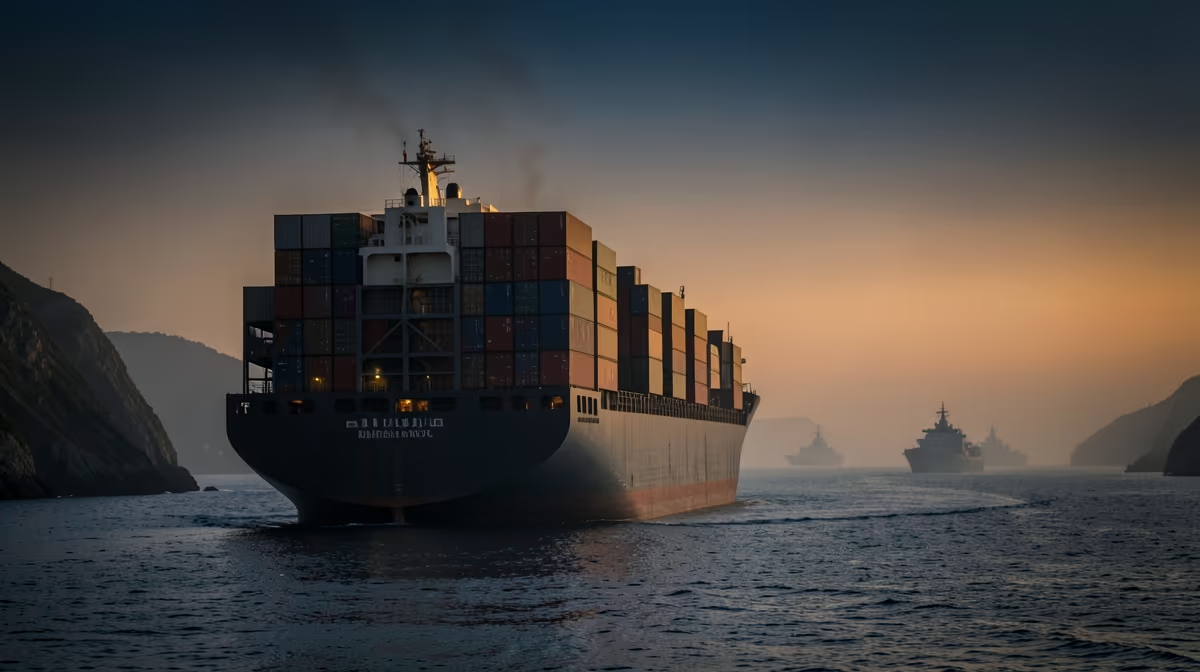
A silence that once defined the maritime passage between the Arabian Peninsula and the Horn of Africa has been replaced by the roar of naval engagement and the uncertainty of redirected merchant fleets. As a narrow gateway linking the Red Sea to the Gulf of Aden, the Bab al Mandab Strait is currently the site of a profound reordering of international shipping logistics and naval defense doctrines.
The Strategic Chokepoint
Often referred to as the Gate of Lamentation, this 18-mile-wide waterway is much more than a geographical feature; it is one of the world's most critical maritime chokepoints. Roughly 10 to 15 percent of all global maritime trade, including a substantial portion of the world's energy supply chain, passes through this narrow artery. Its importance became codified in the global economy with the 1869 opening of the Suez Canal, which transformed the strait into the primary shortcut between the Mediterranean and the Indian Ocean. Today, the strait is the unavoidable entrance for vessels seeking to utilize the Suez Canal from the south. When this passage becomes compromised, the resulting economic ripple effects are felt from the fuel stations of Europe to the manufacturing hubs of Asia.
The Mechanics of Instability
The current climate of geopolitical instability is rooted in the intersection of long-standing regional power struggles and asymmetric warfare. Houthi forces operating from Yemen have utilized drones and anti-ship missiles to target commercial vessels, framing these actions as a direct response to the ongoing conflict in Gaza. This tactic has turned the region into a theater for testing modern defensive capabilities against low-cost, high-frequency aerial threats. The persistence of these attacks has forced major shipping companies to abandon the Red Sea route entirely in favor of the significantly longer voyage around the Cape of Good Hope. This diversion is not merely a logistical shift; it represents a fundamental break in the efficiency of the global supply chain, resulting in increased fuel consumption, elevated shipping insurance premiums, and inevitable inflationary pressure on consumer goods.
Naval Response and Coalition Dynamics
In response to these persistent threats, the United States, in coordination with the United Kingdom and other international partners, launched Operation Prosperity Guardian in late 2023. This multinational task force was designed to restore maritime security and protect the rights of merchant vessels to traverse international waters without harassment. Naval destroyers and coalition aircraft maintain a near-constant presence in the region, conducting active interception of projectiles and providing escort services. Pentagon press secretary Maj. Gen. Pat Ryder has characterized the U.S. stance as an unwavering commitment to freedom of navigation, labeling the Houthi activities as reckless and illegal. Despite these defensive efforts, the military environment remains highly volatile, as coalition forces continue to strike Houthi radar and missile launch sites to degrade their ability to threaten commercial traffic.
The Economic and Political Calculus
The economic stakes reach far beyond the immediate costs of diverted cargo. The threat to energy supply chains is particularly acute, as this route is essential for oil and liquefied natural gas tankers moving from the Middle East to European markets. Beyond the immediate economic impact, the situation reflects a deeper contest for influence involving Iran, Saudi Arabia, and various Western powers. The region has become a flashpoint for competition over the strategic ports of the Horn of Africa, including Djibouti, Berbera, and Assab. Control over these hubs influences the economic dependency of landlocked nations like Ethiopia, potentially destabilizing the broader East African region. Historical parallels, such as the 1973 oil embargo, underscore how transit chokepoints can be weaponized to exert geopolitical leverage, a reality that global policymakers are now forced to confront as they balance military interventionism against the risk of further escalation.
Projections and Future Impact
Expert consensus suggests that the region will remain in a state of controlled volatility. For the next 24 hours, stakeholders should expect increased surveillance drone activity from coalition forces and ongoing tactical skirmishes between Houthi units and merchant escorts. Looking toward a 72-hour horizon, there is potential for localized precision strikes on Houthi infrastructure alongside intensified diplomatic efforts to bolster maritime security patrols. While the current environment avoids full-scale regional war, the scenario remains precarious. The best-case outcome involves the establishment of a de-escalation corridor that allows for the safe passage of vessels. Conversely, the worst-case scenario remains a significant strike on a large-scale commercial tanker, which would not only cause an environmental disaster but would likely trigger a rapid, forced escalation toward direct U.S.-Houthi military confrontation.
The Human and Global Dimension
The impact of this disruption is not confined to military ledgers or maritime insurance boardrooms. For international consumers, the insecurity of the Bab al Mandab Strait translates to the potential for shortages and increased costs for everyday products. The situation highlights the inherent fragility of modern globalized trade when a single, narrow geographic location is exploited for political leverage. As nations grapple with these security threats, the fundamental reevaluation of maritime security protocols is well underway. The reliance on the Suez route is being weighed against the harsh reality of its vulnerability, suggesting that the era of unchallenged access to these critical waterways may be entering a more complex and defensive chapter.
Frequently Asked Questions
What is the Bab al-Mandab Strait and why is it important?
The Bab al-Mandab Strait is a crucial maritime chokepoint connecting the Red Sea to the Gulf of Aden and the Arabian Sea. It is a vital artery for global trade, as millions of barrels of oil and significant amounts of commercial goods pass through it daily between the Indian Ocean and the Mediterranean via the Suez Canal.
Where is the Bab al-Mandab Strait located?
The strait is located between the Arabian Peninsula, specifically Yemen, and the Horn of Africa, involving Djibouti and Eritrea. It serves as the southern entrance to the Red Sea, making it a key strategic location for international shipping lanes.
Why is the Bab al-Mandab Strait significant for global shipping?
It is significant because it provides the shortest maritime route between the Persian Gulf and Europe. Any disruption to traffic in this strait can lead to major supply chain delays and increased fuel costs, as ships may be forced to divert around the Cape of Good Hope.
Is the Bab al-Mandab Strait dangerous for ships?
The strait can be dangerous for commercial vessels due to geopolitical tensions, regional conflicts, and the threat of piracy. Because of its narrow width, it is a high-risk area where international navies often conduct patrols to ensure safe passage and deter attacks.
What does Bab al-Mandab mean in English?
The name Bab al-Mandab translates to Gate of Lamentation or Gate of Grief in Arabic. According to folklore, the name refers to the dangers associated with crossing the strait or the tragic history of those who navigated its often treacherous waters.
How wide is the Bab al-Mandab Strait?
At its narrowest point, the Bab al-Mandab Strait is approximately 18 miles (29 kilometers) wide. This narrow width is what makes it a critical maritime chokepoint that is easily monitored and potentially obstructed by local actors or naval blockades.
Conclusion
The situation in the Bab al-Mandab Strait remains a persistent flashpoint, with ongoing Houthi attacks on commercial vessels forcing a continuous U.S. and coalition naval presence. While defensive operations are providing a measure of security, the long-term impact on global shipping costs and regional stability remains a primary concern for international stakeholders. Future developments will depend heavily on the effectiveness of maritime security patrols and the containment of tactical exchanges, as the world navigates the difficult balance between preserving vital trade routes and avoiding broader regional conflict.


.webp)


.webp)
