
Cargo Ship Crisis in the Red Sea Threatens Global Trade Stability
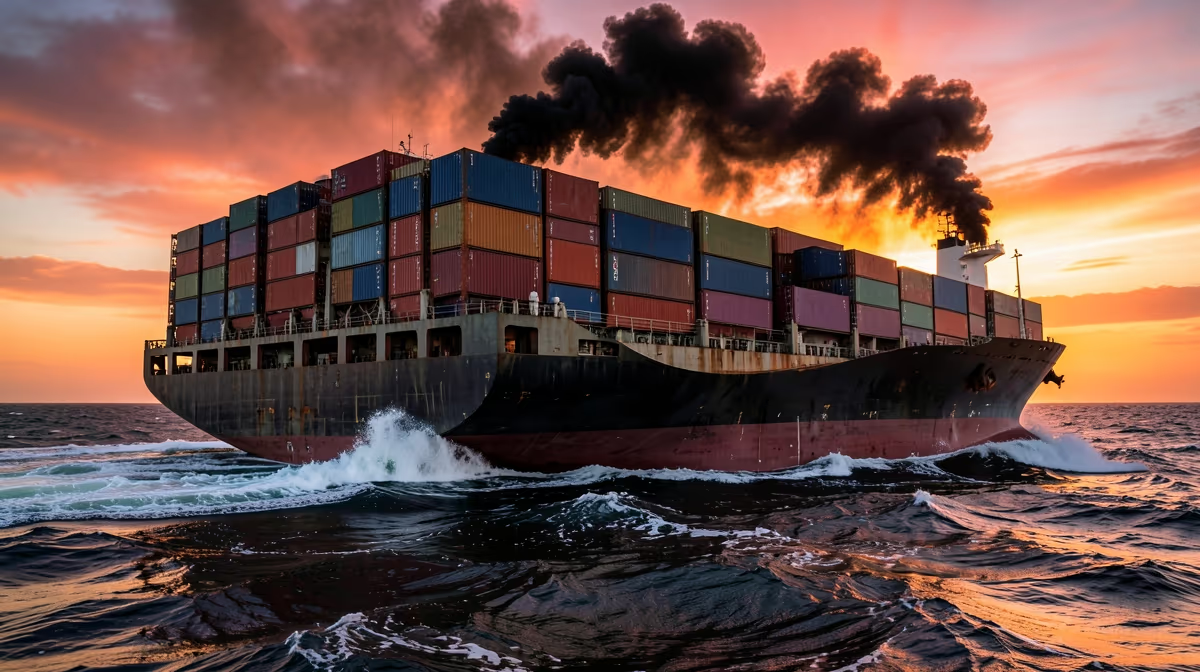
A massive container ship remains stranded in the Red Sea following a suspected targeted drone attack by Houthi militants earlier today, raising fresh alarms over the safety of critical global maritime trade corridors. The stability of the global economy relies heavily on the movement of a cargo ship across key maritime lanes, but recent challenges have highlighted the vulnerability of international logistics.
The Anatomy of an Incident
The vessel, which was en route from Asia to Europe, suffered structural damage to its port side after being struck by an unidentified projectile. The crew successfully extinguished a subsequent fire, and no casualties have been reported among the sailors currently on board. Naval assets from a multinational coalition patrolling the region have been deployed to escort the ship to a safe harbor. Shipping companies are now evaluating rerouting options, with industry analysts warning that further security incidents could lead to a significant spike in insurance premiums and shipping delays. International shipping regulators are convening an emergency session to review security protocols for merchant vessels traversing the Bab el-Mandeb Strait. This incident highlights the persistent instability in the region as military forces work to contain the threat posed to commercial maritime interests.
Understanding Maritime Vulnerability
A cargo ship operates as a vital link in the chain of global commerce, carrying thousands of metal containers filled with everything from food and electronics to clothing and car parts. These vessels are the backbone of the global economy, yet they are susceptible to mechanical failure, environmental hazards, or hostile intervention. When a ship of this size faces such an incident, it creates a traffic jam that ripples across the world. Because modern shipping schedules operate on a just-in-time basis, even a short delay can cause goods to be stuck at sea for weeks, forcing businesses to scramble for new ways to get their products to stores. The modern industry transformed global trade in the 1950s with the invention of standardized steel shipping containers, which allowed goods to be moved efficiently between ships, trains, and trucks, connecting the world's markets into a single, complex, and highly interdependent network.
Key Facts of Global Logistics
Cargo ships carry over 80 percent of the world's trade by volume, making them the primary conduits for international prosperity. Modern container ships are engineering marvels, often longer than four football fields, yet they remain reliant on specific maritime chokepoints. Incidents at sea often lead to immediate increases in shipping costs, reflecting the risk inherent in global transport. Because these supply chains operate with minimal buffer, there is very little room for error or delays. When these vessels are disabled or forced to divert, specialized heavy equipment is required to salvage or move them, a process that can take days or even weeks.
The Economic and Geopolitical Fallout
The root cause of the current instability is the structural fragility of global supply chains, combined with an extreme reliance on specific maritime chokepoints. We are witnessing the weaponization of maritime corridors as a leverage tool for state and non-state actors to exert pressure on global energy and consumer markets. This trend mirrors the 1956 Suez Crisis, which illustrated how the closure of a critical waterway triggers immediate geopolitical shifts and exposes the vulnerability of trade routes. Beyond the immediate security concerns, there is a systemic economic pressure caused by escalating insurance premiums and the prohibitive cost of rerouting vessels away from high-risk zones. The deployment of dark fleet tankers operating outside international safety regulations to evade sanctions further complicates the environment, while the erosion of maritime hegemony by non-state actors challenges the long-standing principle of freedom of navigation.
Predicting Future Volatility
In the next 24 hours, we anticipate ongoing disruptions in Red Sea transit, with a sharp increase in vessels rerouting around the Cape of Good Hope to avoid security threats. Over the next 72 hours, we expect an escalation in insurance premiums for commercial vessels and heightened port congestion in European and Mediterranean hubs as rerouting creates a backlog. Expert predictions suggest that continued volatility in these lanes will drive inflationary pressure as transit times extend by 10 to 14 days on average. While a best-case scenario involves an international naval task force securing safe passage, the worst-case scenario—a targeted attack on a major container vessel causing a total blockade of a canal—remains a distinct risk that could precipitate a global supply chain crisis.
The Human and Industrial Cost
When cargo ships are delayed, the impact hits your wallet and your local neighborhood store. Scarcity of products can lead to price hikes, and manufacturing plants may have to slow down production if they do not receive raw materials on time. This affects a wide range of stakeholders, including international retailers, local small businesses, manufacturing industries, logistics providers, and ultimately, everyday consumers. Any interruption in maritime transit serves as a bottleneck that slows down the global economy, leading to potential inflation and shortages of essential goods. The current situation demands careful monitoring as the industry balances the safety of seafarers with the absolute necessity of maintaining the flow of global commerce.
Frequently Asked Questions
How do cargo ships work?
Cargo ships work by utilizing powerful marine diesel engines to propel a large hull through the water while carrying massive amounts of containerized or bulk freight. They navigate global shipping lanes using advanced GPS, radar, and satellite communication systems to ensure the safe and timely delivery of goods between international ports.
How much does a cargo ship cost?
The cost of a cargo ship varies significantly depending on its size, type, and age. While a smaller feeder vessel might cost around 20 million to 30 million dollars, a massive Ultra Large Container Vessel can cost well over 150 million dollars to build.
How fast do cargo ships travel?
Most modern cargo ships travel at a cruising speed of approximately 20 to 25 knots, which is about 23 to 29 miles per hour. Many ships now practice slow steaming, reducing their speed to 15 to 18 knots to improve fuel efficiency and lower carbon emissions.
How much cargo can a large cargo ship carry?
The largest container ships in the world can carry over 24,000 Twenty-foot Equivalent Units of cargo. This massive capacity allows them to transport tens of thousands of consumer products, raw materials, and machinery across oceans in a single voyage.
How long do cargo ships stay at sea?
A typical cargo ship voyage between major international ports can take anywhere from two to four weeks depending on the route and weather conditions. However, ships may remain at sea for several months at a time, moving between various ports to drop off and pick up cargo globally.
What is the largest cargo ship in the world?
As of current records, the largest class of container ships includes vessels like the MSC Irina, which has a capacity exceeding 24,000 Twenty-foot Equivalent Units. These massive ships measure nearly 400 meters in length and are designed to maximize the volume of global maritime trade.
Conclusion
The situation in the Red Sea remains fluid following the recent drone attack on a commercial vessel. While the crew remains safe and the ship is currently under escort, the incident has exposed the deepening vulnerability of international trade routes to security threats. Shipping regulators, multinational naval forces, and corporate logistics leaders are now coordinating to mitigate further disruption. As insurance costs rise and rerouting becomes the industry standard for the region, the global economy faces continued inflationary pressure. The immediate priority remains the security of seafarers and the restoration of safe, unimpeded transit through the world's most critical maritime corridors.


.webp)


.webp)
