
Bushehr Nuclear Power Plant Operations Signal a Deepening Regional Shift
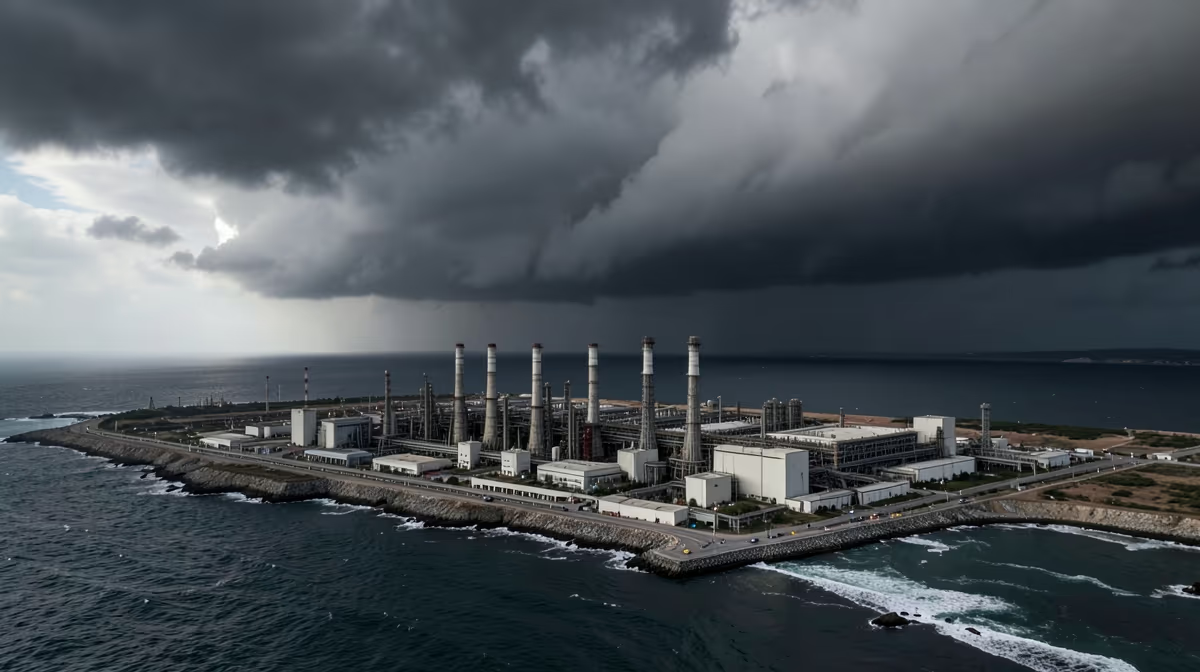
The coastal landscape of the Persian Gulf masks a complex intersection of energy ambition and international security, where the hum of industrial turbines meets the sharp edge of diplomatic scrutiny. The bushehr nuclear power plant remains a central focus in global discourse regarding the Iran nuclear program, as international observers continue to monitor site activity to discern the boundaries between civilian energy production and strategic capability.
Historical Context and Technological Foundations
Construction of the facility originally began in the 1970s under the Shah of Iran with initial support from German firms, but the project was derailed by the 1979 revolution and the subsequent Iran-Iraq war. It was not until the 1990s that the Russian state-owned enterprise Rosatom stepped in to revitalize the site, eventually bringing the reactor to full operational capacity in 2011. This transition reflects a deep-seated strategic reliance on Russian nuclear technology, designed to bypass international technological isolation and secure sovereign energy autonomy for Tehran. The facility, which utilizes a VVER-1000 light water reactor, serves as the first and only operational nuclear power facility in the Middle East.
Operational Status and Technical Oversight
The facility generates approximately 1,000 megawatts of electricity, feeding directly into the Iranian national power grid to help mitigate recurring power shortages during peak summer months. While the plant is a critical component of domestic energy infrastructure, its existence is inextricably linked to stringent oversight. The International Atomic Energy Agency (IAEA) maintains a regular inspection mandate at the site to verify that operations remain confined to civilian electricity generation. Because the plant relies on specialized fuel assemblies supplied by Russia under a long-term agreement, the fuel cycle itself is subject to international monitoring. This dependency on Moscow for both technical expertise and fuel cycles has created a persistent, high-cost operational environment that remains a focal point for global watchdogs.
Geopolitical Implications
The Bushehr site acts as a persistent friction point in international relations, frequently surfacing during discussions between the P5+1 nations and Iran. For the Iranian regime, the plant serves as a domestic validation tool for scientific legitimacy, while simultaneously functioning as a diplomatic bargaining chip within the broader context of negotiations regarding the Iran nuclear program. Meanwhile, members of the Gulf Cooperation Council have expressed recurring concerns regarding regional security, focusing on potential proliferation risks and the environmental implications of nuclear infrastructure. These concerns are further compounded by the site's vulnerability to seismic activity and potential cyber threats, factors that remain a constant undercurrent in regional security assessments.
Strategic Assessments and Future Outlook
In the immediate term, the plant is expected to maintain steady-state operations. The next 24 hours will likely see routine maintenance and standard monitoring of energy output levels, with no unscheduled shutdowns currently anticipated. Looking toward the next 72 hours, operational focus will likely shift toward cooling system efficiency to manage the challenges posed by intense regional heat waves. While the best-case scenario involves continued cooperation with IAEA inspectors and routine maintenance, the worst-case scenario involves potential technical malfunctions or cybersecurity incidents that could trigger localized safety protocols, thereby exacerbating existing diplomatic friction. Ongoing discussions between Moscow and Tehran concerning the construction of additional reactor units, known as Bushehr II and III, suggest that the facility will continue to serve as a cornerstone of Iranian energy policy in the coming years.
The Human and Economic Dimension
For the Iranian public, the plant is a vital source of electricity, essential for supporting the national grid and alleviating the burden of periodic energy shortfalls. However, this dependence creates a unique economic pressure. The high costs associated with maintenance and technical upgrades necessitate a sustained financial and logistical relationship with Russia. This reliance creates a paradox where the drive for energy independence requires a deep integration with foreign technology providers, ensuring that the facility remains a topic of both economic and diplomatic debate.
Frequently Asked Questions
Where is the Bushehr Nuclear Power Plant located?
The Bushehr Nuclear Power Plant is located on the coast of the Persian Gulf, about 17 kilometers south of the city of Bushehr in Iran. Its strategic position along the coastline provides essential access to water for the facility's cooling systems.
Who built the Bushehr Nuclear Power Plant?
The plant was originally started by a German company, Siemens, in the 1970s. Following the 1979 Iranian Revolution, construction was halted, and it was eventually completed by the Russian state nuclear agency, Rosatom, becoming fully operational in 2011.
Is the Bushehr Nuclear Power Plant safe?
The Bushehr Nuclear Power Plant is designed to meet international safety standards and operates under the supervision of the International Atomic Energy Agency (IAEA). However, its proximity to seismic fault lines has led to international discussions regarding its structural resilience against potential earthquakes.
What is the power output of the Bushehr Nuclear Power Plant?
The Bushehr Nuclear Power Plant currently has an installed capacity of approximately 1,000 megawatts of electricity. It plays a significant role in Iran's national power grid by providing a steady supply of base-load electricity to the region.
Does the Bushehr plant use Iranian-made fuel?
The fuel for the Bushehr Nuclear Power Plant is primarily supplied by Russia under a long-term agreement. Although Iran has developed its own domestic uranium enrichment capabilities, the reactors at this specific facility are designed to utilize specialized fuel assemblies provided by the Russian side.
Are there plans to expand the Bushehr Nuclear Power Plant?
Yes, Iran has announced plans to expand the facility with the construction of additional reactor units, referred to as Bushehr II and III. These expansion projects are intended to increase the country's total nuclear power generation capacity significantly in line with their long-term energy goals.
Conclusion
The Bushehr Nuclear Power Plant continues to operate as a critical, albeit sensitive, pillar of Iran’s national energy strategy. While it provides essential electricity to the grid, the facility remains under heavy scrutiny by the international community, with its operations, safety protocols, and expansion plans inextricably linked to the broader Iran nuclear program. As the facility prepares for potential future expansion under the technical guidance of Rosatom, the necessity for transparent cooperation with the IAEA remains the primary factor in determining its role in regional stability. The immediate future will see a continuation of current operational patterns, with global observers watching closely for any shifts in transparency or safety standards that might alter the regional security landscape.


.webp)


.webp)
