
Spain Ceuta Border Security Breach Sparks Urgent Regional Crisis
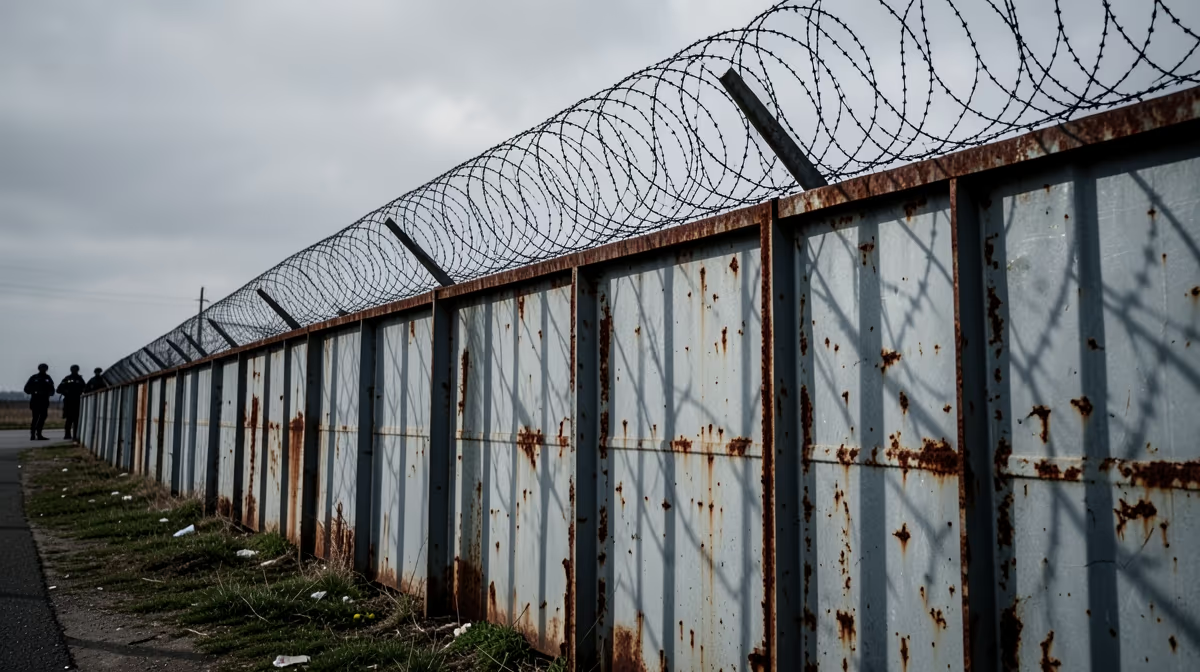
Hundreds of migrants attempted to cross the heavily fortified border into the Spanish enclave of Ceuta from Morocco early Tuesday morning, resulting in clashes with security forces that left dozens injured. Recent developments at the spain ceuta border have sparked international attention regarding migration policies and security measures, highlighting the complex geopolitical pressures shaping Europe's southern perimeter. Ceuta is a small piece of land belonging to Spain, located on the northern coast of Africa. Because it shares a land border with Morocco, it serves as one of the only direct entry points into Europe from the African continent. Recently, this border has become a major flashpoint as large numbers of people from Africa try to cross over in search of a better life in Europe. To manage this movement, Spanish and Moroccan authorities use heavy security, including high fences, cameras, and patrols. However, desperate conditions in migrants' home countries often lead to dramatic attempts to scale the fences or swim around the border barriers, creating tense standoffs between migrants and border guards.
What Unfolded
The coordinated surge began around dawn as groups of individuals rushed the double-wire border fence separating Morocco from the Spanish territory on the North African coast. Spanish Civil Guard and Moroccan border police deployed in large numbers to push back the crowd, utilizing riot control gear and barricades. Emergency services reported treating at least 30 people, including both migrants and law enforcement officers, for various injuries ranging from cuts and bruises to broken bones. Several individuals who managed to scale the initial barrier found themselves trapped between the fences for hours before being processed by authorities. Ceuta, along with neighboring Melilla, represents the European Union's only land borders on the African continent, making them frequent targets for migrants seeking entry into Europe. Tuesday's incident follows a period of relatively lower crossing attempts, though geopolitical tensions and seasonal weather shifts often influence migration patterns in the region. Local government representatives emphasized the aggressive nature of the breach attempt, with a spokesperson for the Spanish delegation in Ceuta stating that the assault on the fence was violent and orchestrated, posing a severe security risk to the personnel stationed at the border. Meanwhile, humanitarian organizations called for restraint, noting that every individual has the right to seek asylum and should be treated with dignity and in accordance with international law.
Key Facts And Background
Ceuta is a Spanish autonomous city located on the coast of North Africa, having been under Spanish control since the 16th century. It shares a heavily guarded land border with Morocco, making it a gateway to the European Union. Migrants frequently attempt to cross the border by climbing high double fences or swimming. Spain and Morocco have increased security cooperation to curb unauthorized crossings. The border situation often sparks humanitarian concerns and diplomatic tensions between Spain and Morocco. Morocco claims sovereignty over Ceuta and nearby Melilla, another Spanish enclave, which occasionally complicates diplomatic efforts between the two nations regarding border management and migration control. The land border between Ceuta and Morocco is approximately 8 kilometers long. Despite its relatively short length, it is heavily fortified with advanced surveillance technology, motion sensors, and high walls, with security measures jointly managed by Spanish and Moroccan authorities to control cross-border movement.
Geopolitical And Historical Context
The root causes of these recurring events involve asymmetric post-colonial borders, deep wealth disparities between the European Union and North Africa, and Morocco's strategic leverage of migration to extract diplomatic and territorial concessions from Spain. Madrid navigates a precarious balancing act between maintaining territorial sovereignty and appeasing Rabat, while Brussels views Ceuta as an externalized EU security frontier rather than a purely bilateral Spanish issue. Ceuta's historical dependence on cross-border informal trade has collapsed due to Moroccan restrictions, shifting the enclave's economy toward state subsidies, public sector employment, and high-cost mainland integration. This dynamic mirrors broader Euro-African tensions where migration and border controls are weaponized as geopolitical currency, intersecting with Western Sahara recognition politics and energy corridors. The historical timeline includes Portuguese rule from 1580 to 1640 before permanent integration with Spain following the Iberian Union, the 1985 enactment of Spain's first comprehensive foreigners law turning Ceuta and Melilla into formal external borders of the European Community, the 2021 diplomatic crisis where Morocco relaxed border controls allowing over 10,000 migrants to swim into Ceuta in a single day, the 2022 shift in Spain's historical stance on Western Sahara to endorse Morocco's autonomy plan in exchange for normalized border operations, and the present reality of ongoing militarization and the use of human mobility as an instrument of statecraft.
Why This Matters And Who Is Affected
The Ceuta border is a crucial testing ground for European immigration policy and human rights. How Spain and Morocco handle the situation sets a precedent for how Europe manages its southern borders, balancing security with the humanitarian treatment of vulnerable people seeking asylum and economic opportunity. Those affected include migrants and refugees seeking entry into Europe, local residents and businesses in Ceuta, Spanish and Moroccan border security forces, and European Union policymakers. The systematic erasure of Amazigh and local cross-border familial ties has transformed a historically fluid cultural zone into a heavily militarized technocratic fortress, echoing historical parallels such as the 1975 Green March, where Morocco similarly used civilian mobilization to force colonial powers to negotiate territorial claims under duress.
Outlook And Security Predictions
In the next 24 hours, increased surveillance and patrols by the Spanish Guardia Civil and Moroccan forces are expected along the perimeter fences and maritime borders of Ceuta to deter potential migrant surges. Within the next 72 hours, diplomatic engagement between Madrid and Rabat will likely review border cooperation protocols, alongside heightened security readiness and potential processing of any intercepted undocumented migrants. Expert predictions suggest that bilateral security cooperation will hold, keeping migrant crossing attempts at manageable levels, though periodic pressure points will persist due to broader geopolitical and economic push factors. In the best-case scenario, seamless intelligence sharing between Spain and Morocco prevents unauthorized crossings entirely, leading to stable border conditions and reinforced bilateral ties. Conversely, the worst-case scenario involves a sudden, coordinated mass rush that overwhelms perimeter security, straining local reception facilities and triggering a political crisis in Madrid.
Frequently Asked Questions
Where is the Spain Ceuta border located?
The Ceuta border separates the Spanish autonomous city of Ceuta from Morocco on the northern coast of Africa. It serves as one of the two land borders between the European Union and the African continent, alongside Melilla. This strategic location makes it a frequent focal point for migration into Europe.
Why is the Spain Ceuta border famous?
The border is widely known for the double-fenced barrier system designed to prevent irregular crossings by migrants. It has historically been a primary route for individuals attempting to reach European soil from Africa. High-profile incidents involving large groups scaling the fences have frequently made international news.
Do you need a visa to cross the Spain Ceuta border?
Yes, travelers crossing from Morocco into Ceuta generally require a valid visa for the Schengen Area, unless they are citizens of specific exempt countries. Residents of the nearby Moroccan provinces of Tetouan and Nador previously enjoyed special border-crossing exemptions, though regulations have tightened over the years. All travelers must pass through official immigration and customs controls.
How long is the border between Spain and Ceuta?
The land border between Ceuta and Morocco is approximately 8 kilometers long. Despite its relatively short length, it is heavily fortified with advanced surveillance technology, motion sensors, and high walls. Security measures are jointly managed by Spanish and Moroccan authorities to control cross-border movement.
Can tourists visit Ceuta easily from mainland Spain?
Tourists can easily visit Ceuta by taking a high-speed ferry or helicopter from mainland Spain, typically departing from Algeciras. Because Ceuta is part of Spanish territory, Spanish citizens and EU nationals only need a valid ID card or passport to enter. However, entering from the Moroccan side requires going through full international border checks.
What are the current rules for crossing the Ceuta border?
Current rules enforce strict customs and immigration controls for all individuals and vehicles passing between Morocco and Ceuta. The commercial customs office operates under specific bilateral agreements to regulate the flow of goods. Travelers should expect identity verifications, baggage checks, and potential wait times depending on traffic conditions.
Conclusion
The coordinated mass crossing attempt at the Ceuta border highlights the ongoing security, humanitarian, and diplomatic complexities defining Europe's southern frontier. With confirmed injuries sustained during clashes at the double-wire fence, attention remains focused on the immediate responses of the Spanish Civil Guard, Moroccan border police, and local emergency services. As bilateral authorities navigate heightened surveillance and diplomatic channels, the situation at the border continues to underscore the delicate balance between managing irregular migration and upholding regional stability between Spain and Morocco.


.webp)
