
Flash Flood Warning Issued as Storms Threaten Major US Regions
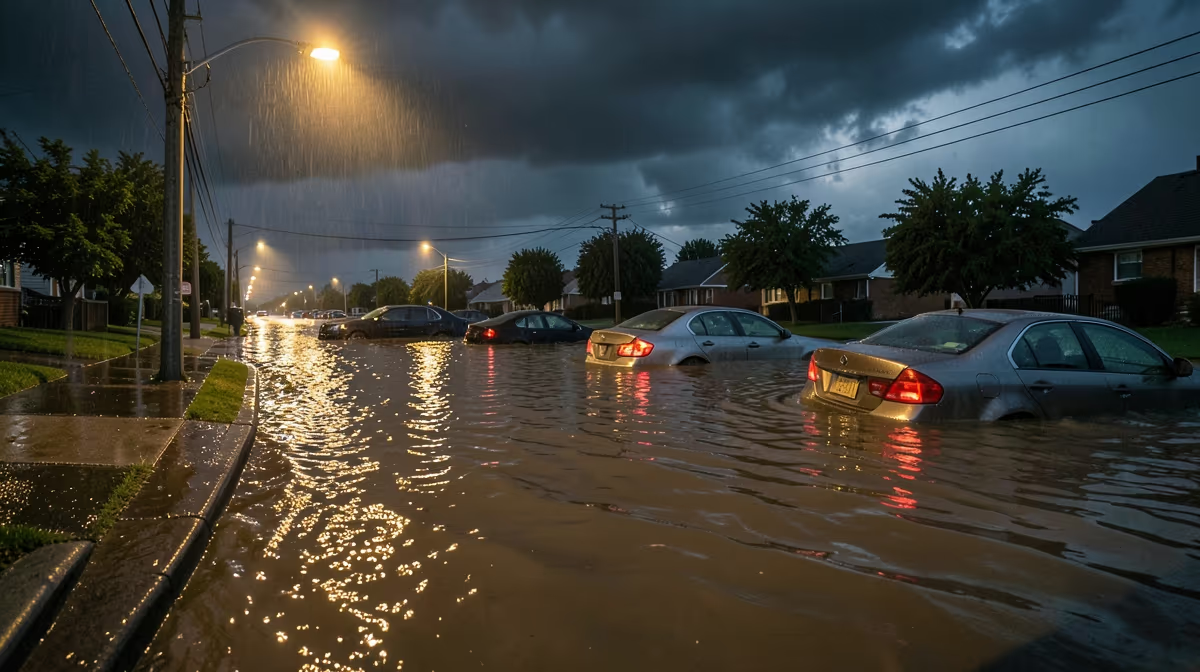
A flash flood warning has been issued, requiring immediate attention to weather safety protocols for residents in affected US regions. This urgent alert marks a critical juncture for communities caught in the path of a slow-moving storm system that is currently dumping torrential rainfall across already saturated landscapes.
The Anatomy of a Flash Flood
A flash flood warning means that dangerous flooding is either happening right now or is expected to start very soon in your area. This usually happens because of heavy rainfall that occurs faster than the ground can soak it up, causing water to rise rapidly in streets, low-lying areas, and near small streams. Unlike regular floods, which can take days to develop, flash floods happen suddenly, often without warning. Because the water moves with great force and speed, it can sweep away cars, damage homes, and make roads completely impassable in a matter of minutes.
The risks associated with these events are profound. Flash floods are the number one weather-related killer in the United States. A primary factor in these fatalities is that most deaths occur when people attempt to drive through flooded roads. It is important to remember that just six inches of fast-moving water can knock an adult off their feet, and twelve inches of water can carry away most small vehicles. By staying off the roads and moving to higher ground, residents prevent becoming trapped in a situation where emergency responders may not be able to reach them quickly.
Current Situation and Operational Response
The National Weather Service has issued an urgent flash flood warning for parts of the central United States through Thursday evening as a slow-moving storm system brings torrential rainfall to already saturated regions. Meteorologists report that an intense band of thunderstorms is stalling over low-lying areas, expected to drop between three and five inches of rain in a matter of hours. The combination of heavy precipitation and poor drainage in urban centers has prompted immediate concern for life-threatening flooding, particularly in creeks, streams, and underpasses.
Emergency management officials have activated high-water response teams and are advising residents to avoid travel as water levels rise rapidly. Several local jurisdictions have opened sandbag distribution centers as the storm front continues to track eastward across the affected counties. National Weather Service meteorologists have emphasized that this is a dangerous and life-threatening situation, and residents should take immediate action to protect their safety as conditions deteriorate rapidly, noting that flash flooding can occur with little to no warning.
Climate Drivers and Infrastructure Limitations
The root cause of these increasingly frequent emergencies lies in the intersection of climate-driven atmospheric instability and aging urban design. We are seeing an increased frequency of atmospheric rivers and stalled weather patterns caused by climate-driven jet stream instability. This is coupled with outdated, aging urban drainage infrastructure that was never designed to handle current precipitation variability.
From a policy perspective, this has created a complex landscape. There is a clear partisan divide over disaster mitigation funding and the shifting of responsibility between federal emergency management agencies and cash-strapped state and municipal governments. Historically, the 1993 Great Flood of the Midwest served as a catalyst that forced a permanent shift in how the US manages riverine infrastructure and federal disaster declaration protocols. Today, the challenge is even more acute. We are witnessing a rapid transition from the post-war era of urban sprawl, which largely ignored natural flood plain drainage patterns, to a 2024 landscape defined by the need for real-time, high-frequency disaster responses driven by AI-enhanced predictive modeling.
The Economic and Social Fallout
The economic implications of these weather events are far-reaching. We are observing soaring insurance premiums in high-risk zones, the devaluation of coastal and riverfront property, and a cascading impact on local supply chain logistics and small business continuity. On a global scale, the destabilization of the US domestic insurance market is beginning to impact international reinsurance firms, potentially triggering capital flight from climate-vulnerable US regions.
Furthermore, there is a hidden angle regarding social equity. There is a disproportionate impact on marginalized communities living in flood shadows or zones lacking updated flood plain mapping, leading to systematic under-investment in protective measures. As communities struggle to cope, the reality of climate adaptation becomes a pressing concern for urban planners and policy makers alike.
Predicting the Next 72 Hours
Over the next 24 hours, heavy precipitation will move eastward, causing rapid water accumulation in low-lying areas, overwhelmed drainage systems, and immediate localized street flooding. As we look toward the 72-hour window, river levels will crest, leading to lingering flooding in basins and rural areas as runoff travels downstream. At that stage, emergency assessments will shift to cleanup and infrastructure damage evaluation.
Expert predictions indicate that persistent soil saturation will increase the risk of secondary flash flooding with even minor subsequent rain events, maintaining a high probability of travel disruptions. In the best-case scenario, a rapid dissipation of storm cells leads to minimal property damage, with water receding within hours of the precipitation ending. Conversely, the worst-case scenario involves significant levee breaches and widespread power grid failures, potentially leading to prolonged displacement of residents and critical damage to transportation infrastructure.
Frequently Asked Questions
What does a flash flood warning mean?
A flash flood warning indicates that flash flooding is imminent or already occurring in the specified area. You should take immediate action to move to higher ground or seek shelter if you are in a low-lying or flood-prone zone.
What is the difference between a flash flood watch and a warning?
A watch means that conditions are favorable for flash flooding, so you should remain alert and prepared. A warning means that flash flooding is actually occurring or is about to happen, requiring immediate safety precautions.
What should you do during a flash flood warning?
If you are in a flash flood warning area, move to higher ground immediately and avoid walking or driving through floodwaters. Turn around, don't drown, as even a small amount of moving water can sweep a vehicle away.
Can you drive through a flash flood?
No, you should never attempt to drive through flooded roadways. Most flood-related deaths occur in vehicles because water can hide deep holes or wash away the road surface underneath.
How long do flash flood warnings typically last?
Flash flood warnings are usually short-term alerts that last for a few hours, depending on the intensity of the rainfall and the local geography. Stay tuned to local weather reports or a NOAA Weather Radio for updates on when the threat has subsided.
Where can I get real-time flash flood alerts?
You can receive real-time alerts through your smartphone via the Wireless Emergency Alerts (WEA) system or by monitoring the National Weather Service website. Additionally, local television and radio stations provide continuous coverage during severe weather events.
Conclusion
The flash flood warning currently in effect highlights the urgent need for both individual vigilance and systemic infrastructure reform. Confirmed developments show that a specific geographic region is under threat due to imminent heavy rainfall, with emergency protocols already active across multiple jurisdictions. The storm system, characterized by its slow movement and high precipitation rates, remains a significant threat until it clears the region late tonight. Residents are strongly urged to prioritize safety by moving to higher ground and avoiding flooded roadways. As the storm passes, emergency agencies will transition from active rescue operations to infrastructure damage assessment, marking the beginning of a difficult recovery process for impacted communities.


.webp)
