
US Iran Tensions Reach a Critical Threshold With Global Consequences
The intricate dance of power in the Persian Gulf has reached a precarious threshold, forcing global markets and policymakers to recalibrate their assessments of regional stability. Stay updated with the latest US Iran news as geopolitical tension between the two nations continues to dominate international headlines, reflecting a deepening divide that threatens to spill over into the global energy sector and beyond.
The Mechanics of Escalation
Tensions between the United States and Iran have spiked recently due to ongoing regional conflicts in the Middle East. The U.S. has increased its military presence and imposed new economic sanctions, while Iran continues to support various groups in the region, leading to direct and indirect clashes. These interactions have created a cycle of retaliatory actions that keep global markets and international diplomats on edge. The current standoff is characterized by proxy warfare and cyber threats. While neither side has signaled an intent to enter a full-scale war, the situation remains highly volatile. International observers are closely monitoring these developments as any miscalculation could quickly escalate into a much larger geopolitical crisis.
The Historical and Political Roots
The relationship has been hostile since the 1979 Iranian Revolution, yet the current friction is rooted in the structural failure of the 2015 Joint Comprehensive Plan of Action (JCPOA) and the subsequent transition of Iran from a regional state actor to a critical logistical node in the China-Russia strategic alignment. The Biden administration is currently attempting to maintain regional containment without triggering a full-scale kinetic war ahead of election cycles, an approach that stands in stark contrast to Iran's strategy of forward defense via its regional proxies. From a geopolitical perspective, the U.S. is currently shifting its focus from Middle Eastern hegemony toward Indo-Pacific containment. This transition is forcing a reorganization of regional security architecture, increasingly involving Israel and the Arab Gulf states to fill the vacuum.
Economic Consequences and Global Trade
This conflict significantly impacts global stability and the economy, particularly because the region is a critical hub for global oil supplies. Any major disruption could trigger a surge in energy prices worldwide, affecting everything from transportation costs to the price of consumer goods in India and beyond. The economic angle is further complicated by the circumvention of U.S. sanctions through Sino-Iranian oil trade and the role of the shadow tanker fleet in insulating the Iranian economy from maximum pressure policies. For India, which relies on the Persian Gulf for a significant portion of its crude oil imports, these developments create a direct risk to energy security and macroeconomic stability.
Current Military and Diplomatic Posture
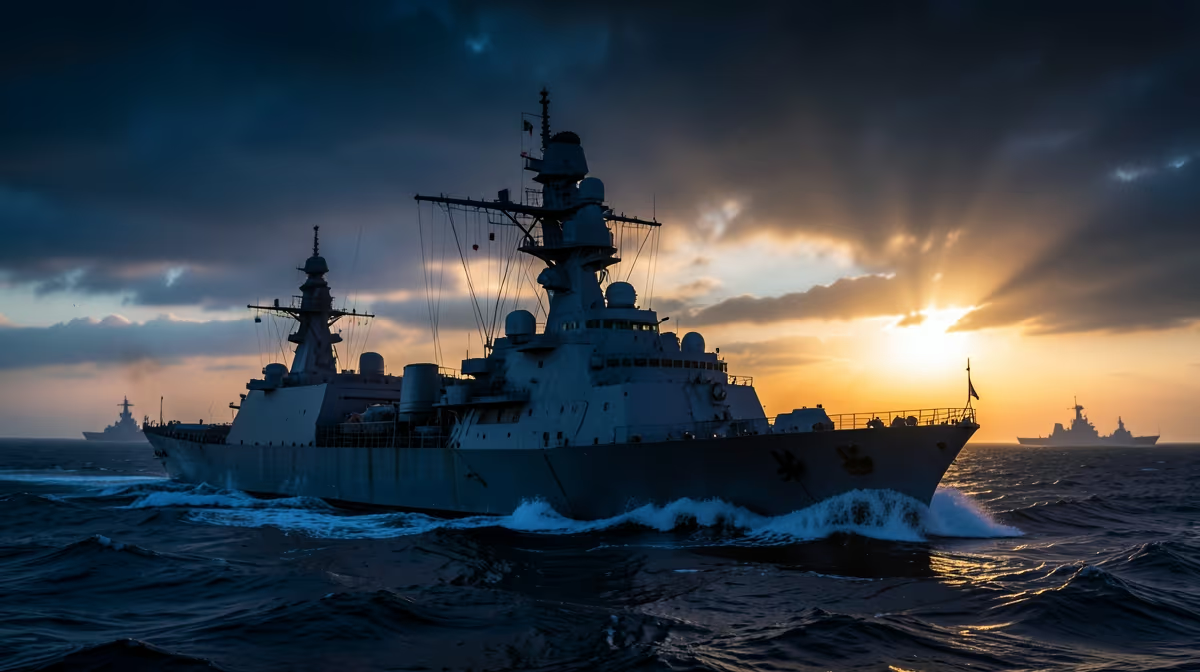
The U.S. has deployed additional naval assets to the Middle East as a deterrent against further aggression, while Iran maintains that its military activities are defensive and aimed at regional influence. Diplomatic channels between Washington and Tehran remain largely indirect, often facilitated by third-party nations. U.S. State Department officials have stated that all options remain on the table to ensure the security of maritime transit routes, while Iranian Foreign Ministry spokespersons have characterized U.S. actions as provocative maneuvers that threaten regional sovereignty. Naval security in the Strait of Hormuz remains a primary concern for international trade, and both nations are actively engaged in posturing through military exercises and sanctions.
Forecasting the Immediate Future
Within the next 24 hours, the international community can expect continued diplomatic signaling through backchannels to prevent direct escalation following recent regional incidents, while military forces remain on high alert. Over the next 72 hours, the intensity is likely to shift toward increased public posturing and rhetoric regarding nuclear enrichment programs and regional proxy activities, accompanied by heightened monitoring of maritime shipping lanes. Experts predict a continuation of the gray zone conflict strategy where both nations avoid full-scale war but maintain strategic pressure through economic sanctions and limited regional maneuvers. While the best-case scenario involves the resumption of indirect nuclear talks and a verifiable de-escalation agreement, the worst-case scenario remains that a miscalculation leads to a direct kinetic engagement between naval assets, triggering a cycle of retaliatory strikes that would severely destabilize global energy markets.
A Shifting Security Landscape
The situation is heavily influenced by internal succession dynamics within the Iranian Supreme Leader’s office and how domestic regime survival dictates the tempo of regional escalation. Since the 2018 U.S. withdrawal from the Iran nuclear deal and the 2023 expansion of proxy hostilities following the October 7 crisis, the region has moved into a phase of direct escalatory brinkmanship. This historical parallel to the 1980s Tanker War highlights how regional tensions become intertwined with global energy security and U.S. naval intervention. As the situation evolves, the status of potential back-channel negotiations and the impact of further U.S. sanctions on the Iranian economy will serve as primary indicators of whether the region drifts toward greater confrontation or a fragile status quo.
Frequently Asked Questions
What is the current status of US-Iran relations?
US-Iran relations remain highly strained due to ongoing disputes over Iran's nuclear program, regional proxy conflicts, and economic sanctions. There is currently no direct diplomatic dialogue, and tensions are frequently exacerbated by military posturing in the Persian Gulf.
Why are there sanctions on Iran by the US?
The US imposes sanctions on Iran primarily to curb its nuclear development program, missile proliferation, and support for groups designated as terrorist organizations. These economic measures are intended to pressure the Iranian government into changing its foreign and domestic policies.
Are the US and Iran at war?
The US and Iran are not in a state of declared war, but they engage in frequent indirect confrontations. These often manifest through proxy skirmishes, cyber operations, and heightened military readiness rather than direct, full-scale combat.
What is the latest news on the Iran nuclear deal?
Efforts to revive the 2015 Iran nuclear deal, known as the JCPOA, have largely stalled with little expectation of a breakthrough in the near term. Both nations remain at an impasse regarding the requirements for returning to full compliance with the original agreement.
How do US-Iran tensions affect global oil prices?
Tensions between the US and Iran often trigger volatility in global oil markets because a significant portion of the world's oil supply passes through the Strait of Hormuz. Any threat of conflict in this region can lead to immediate price spikes due to fears of supply chain disruptions.
Is travel to Iran safe for US citizens?
The US Department of State maintains a strict Do Not Travel advisory for Iran due to the high risk of wrongful detention and kidnapping. US citizens are strongly discouraged from visiting the country, as the lack of diplomatic relations makes it difficult for the US government to provide consular assistance.
Conclusion
The friction between the United States and Iran remains a volatile component of the contemporary geopolitical landscape, characterized by a persistent reliance on gray zone tactics and indirect military posturing. While both nations continue to avoid direct, full-scale kinetic engagement, the structural pressures of the stalled nuclear agreement and regional proxy dynamics ensure that the status quo remains fragile. Global stakeholders, particularly those in the energy-dependent economies of Asia, must continue to monitor the integrity of maritime transit corridors in the Persian Gulf. Future developments will depend heavily on the efficacy of back-channel communications and the ability of both nations to manage regional escalations without triggering a systemic disruption to global energy supplies.


.webp)

.webp)
