
US Military Funding Request Signals a Massive Shift in Global Strategy
The White House has officially submitted a 67 billion military funding request, signaling a significant shift in national defense priorities that could alter the trajectory of global conflict zones for years to come. This massive allocation serves as a defining moment in contemporary statecraft, as the administration seeks to recalibrate its international commitments amidst mounting domestic fiscal scrutiny and an increasingly volatile geopolitical environment.
Strategic Foundations of the Request
At its core, this proposal represents an urgent effort to replenish weapons stockpiles that have been stretched thin by sustained global support initiatives. The administration’s move is rooted in the structural erosion of the American defense industrial base, a byproduct of years of proxy support expenditures that have outpaced current manufacturing capacity. By injecting 67 billion dollars into the system, the White House aims to provide lethal aid to strategic partners in Ukraine, Israel, and the Indo-Pacific, while simultaneously upgrading the technological capabilities required to deter peer competitors. This transition marks a departure from post-Cold War assumptions toward a multipolar, fortress-style strategy where long-term war-readiness is prioritized over immediate tactical interventions.
The Domestic Legislative Battlefield
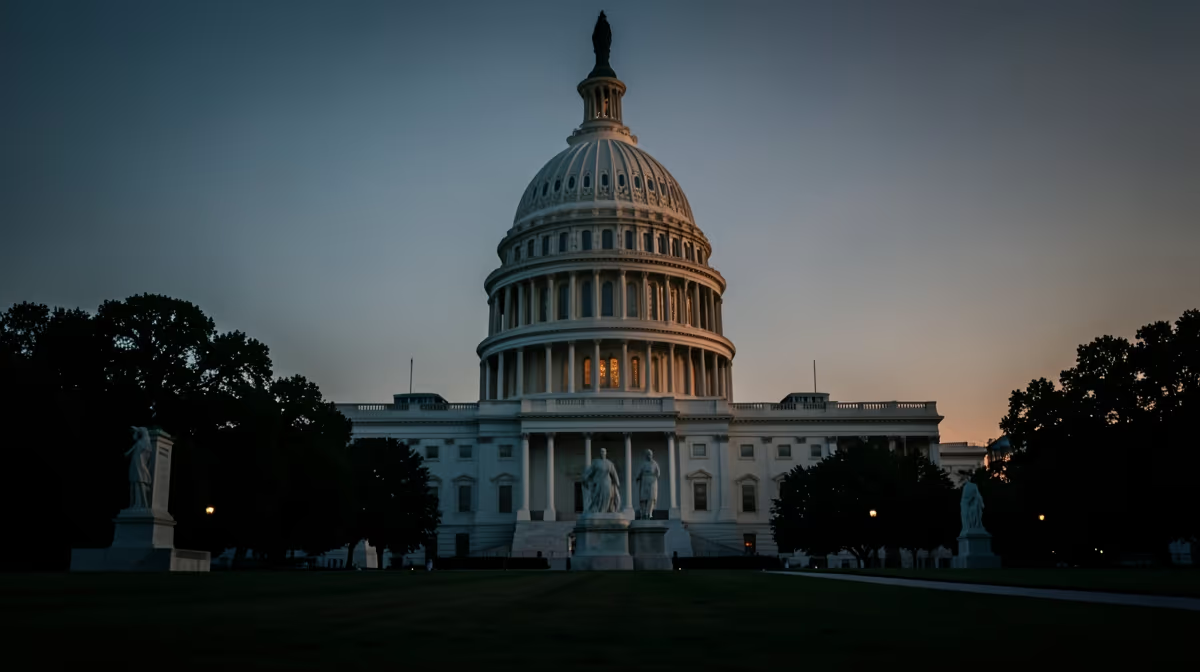
The path to passage for this funding request is fraught with political volatility. In the halls of Congress, a high-stakes leverage tactic is currently underway, as the administration attempts to bundle vital international aid with shifting domestic policy demands. House leadership, led by figures like Mike Johnson, faces immense pressure from isolationist factions who demand that any military spending be strictly linked to comprehensive border security reforms. Senate leaders, including Mitch McConnell and Chuck Schumer, are navigating the narrow margin between interventionist support and the need to address the national deficit. This legislative tug-of-war has transformed the bill into a referendum on the role of the United States in global affairs, with the fiscal conservative wing of the Republican party insisting on stringent oversight and accountability measures before a single dollar is released.
Economic Implications and Manufacturing Shifts
Beyond the immediate geopolitical theater, the funding request functions as a massive fiscal stimulus for the domestic manufacturing sector. The influx of capital is designed to revitalize defense contractors and sustain regional labor markets that are essential to the nation's military-industrial complex. However, this injection of capital is not without economic costs. Economists and observers note that while the spending bolsters defense capabilities, it simultaneously intensifies inflationary pressures and adds to the national debt servicing burden. The balance between maintaining an industrial-scale war readiness and protecting the stability of the federal budget remains a point of contention for market analysts, who are closely watching how these funds will impact long-term procurement cycles and the viability of government spending programs.
A Multi-Theater Deterrence Strategy
The integration of funding for Ukraine, the Middle East, and the Indo-Pacific into a single legislative package signals a clear intent to streamline U.S. power projection. This strategy is intended to show global adversaries that the United States remains prepared to manage multiple theaters of operation simultaneously. By reinforcing the international rules-based order through these supplemental appropriations, the White House is essentially mirroring the historical precedent set by the 1941 Lend-Lease Act. This historical parallel underscores a shift toward a state-sponsored infrastructure for sustaining allied theaters for the foreseeable future. The decision to prioritize these long-term procurement cycles suggests that the administration is locking the country into multi-decade operational commitments, moving away from short-term crisis management toward a permanent state of high-readiness posture.
Anticipating the Legislative Timeline
The next 24 to 72 hours are expected to be critical as lobbying efforts intensify and the White House pushes for a definitive vote. Internal GOP pressure remains the primary obstacle, with party leadership struggling to reconcile the demands of internal factions. Experts predict that the funding request will face significant delays and will likely be subjected to a series of stringent amendments, potentially resulting in a fragmented or scaled-down approval process. A best-case scenario involves a bipartisan compromise that secures the full amount while addressing domestic policy reforms, whereas a worst-case scenario could see a total breakdown of negotiations. Such a freeze would likely jeopardize current military training programs and trigger a significant loss of American credibility among international allies, as ammunition stockpiles continue to decline.
Frequently Asked Questions
What is included in the 67 billion military funding request?
The 67 billion funding request primarily focuses on replenishing military stockpiles used in recent international conflicts and supporting operational costs for ongoing defense initiatives. It also allocates resources for military readiness, training, and the modernization of essential hardware to maintain strategic advantages.
Why is the US requesting 67 billion for military aid?
The request is designed to bolster national security by assisting key allies and ensuring the United States has the necessary resources to respond to global threats. It serves as a strategic investment to deter aggression and maintain stability in volatile geopolitical regions.
How will the proposed 67 billion in military funding be spent?
The funds are earmarked for a variety of purposes including the procurement of advanced weaponry, cybersecurity infrastructure, and logistical support for deployed forces. A significant portion is also dedicated to maintaining military bases and providing economic stability to regional partners.
Does the 67 billion military funding package impact domestic spending?
While the funding is primarily directed toward defense, discussions in Congress often involve balancing these expenditures against domestic priorities like infrastructure and education. Debates continue regarding how such large-scale military investments affect the overall federal budget and fiscal deficit.
What is the status of the 67 billion military aid bill?
The bill is currently undergoing legislative review in Congress, where lawmakers are debating the specific provisions and oversight mechanisms required for the funds. Approval depends on reaching a bipartisan consensus on the urgency of these defense commitments compared to other legislative needs.
Which countries benefit from the 67 billion military request?
The funding is primarily directed toward key international allies involved in ongoing regional conflicts, particularly in Eastern Europe and the Indo-Pacific. By providing this support, the United States aims to strengthen collective defense agreements and ensure regional security against geopolitical adversaries.
Conclusion
The 67 billion military funding request remains a cornerstone of the current legislative agenda, serving as a bellwether for the future of U.S. foreign policy. While the White House maintains that the expenditure is essential for the preservation of global security and the modernization of defense manufacturing, the path to enactment is stalled by the intersection of foreign aid and domestic fiscal demands. As Congress enters a period of intense negotiation, the final shape of this funding will likely reflect a complex compromise between the needs of global theater deterrence and the constraints of the federal budget. The outcome of these deliberations will determine the operational readiness of the U.S. military and the stability of its international partnerships in the coming years.


