
Vladimir Putin Shadow Tanker Drones Reveal a Dangerous Maritime Shift
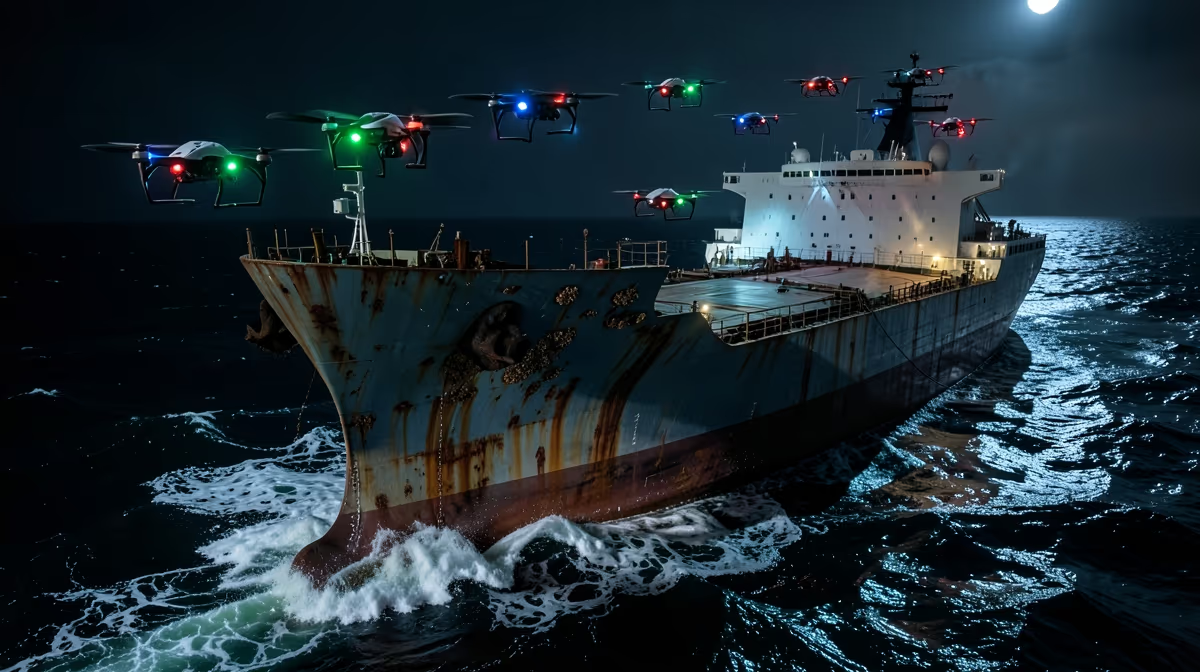
A growing fleet of covert shadow tanker vessels, suspected of operating under Russian control, is increasingly utilizing drone technology to evade international detection and sanctions while transporting crude oil across global waters. The use of Vladimir Putin shadow tanker drones has become a focal point in international maritime surveillance as Western powers scramble to monitor the Kremlin's expansive shadow fleet. These ships, often operating with deactivated AIS transponders to mask their movements, are increasingly difficult to track as they navigate restricted maritime lanes, fundamentally altering the landscape of global energy logistics.
The Mechanics of Evasion
Russia has established a shadow fleet of hundreds of aging tankers to circumvent G7 price caps on oil exports. These vessels, which often lack proper insurance and international safety certifications, operate outside the boundaries of standard regulatory frameworks. The primary methodology involves ship-to-ship transfers conducted in international waters, where crude oil is offloaded from one tanker to another to obfuscate its origin. By frequently deactivating their Automatic Identification System (AIS) transponders, these ships effectively go dark, vanishing from commercial tracking platforms and evading the oversight of Western maritime authorities.
The Integration of Surveillance Technology
Recent intelligence suggests that this shadow fleet is evolving through the integration of unmanned aerial vehicles. These drones serve as a force multiplier for clandestine logistics, acting as reconnaissance tools to monitor for patrolling naval vessels or coast guard interference. Furthermore, they are utilized as specialized communication relays, allowing tankers to coordinate complex maneuvers in maritime regions where satellite coverage remains patchy. By utilizing these tankers as mobile, disguised bases, operators can deploy drone assets closer to their targets or navigation points without relying on fixed, detectable land-based military installations. This tactical shift marks a significant development in the Kremlin's strategy to maintain energy exports while minimizing the risk of interception.
Geopolitical and Economic Implications
The rise of these operations represents a direct challenge to the effectiveness of G7 price caps, which were designed to restrict the funding capacity of the Russian state following the 2022 invasion of Ukraine. This transition from formal shipping markets to an opaque dark fleet has resulted in increased insurance risk premiums and distorted global crude oil pricing benchmarks. From a geopolitical standpoint, the creation of these parallel trade corridors, which bypass traditional Western financial and logistics infrastructures, threatens to weaken the long-term enforcement of global sanctions. Security experts warn that the blending of commercial shipping with military-grade surveillance capabilities blurs the lines between civilian and military targets, raising the risk of accidental escalation in contested waters.
Environmental and Security Risks
Beyond the disruption of sanctions, the shadow fleet poses a severe environmental threat to global maritime routes. Because these aging vessels operate without adequate protection and maintenance standards, the risk of a catastrophic oil spill in ecologically sensitive areas is high. The use of tankers as drone-equipped platforms adds a layer of complexity to maritime law enforcement, as authorities struggle to distinguish between legitimate merchant traffic and illicit, state-sponsored operations. Should a collision or environmental disaster occur involving one of these uninsured tankers in a key chokepoint, the impact on global shipping and regional safety would be immediate and severe, potentially triggering significant volatility in energy markets.
Future Outlook and Monitoring Efforts
In the next 24 hours, analysts expect an increase in satellite monitoring of known shadow fleet vessel clusters in the Baltic and Black Seas to track suspicious nocturnal rendezvous points. Looking toward the next 72 hours, diplomatic pressure from Western maritime nations is likely to mount on flagging countries such as Panama and Liberia, urging them to tighten vessel registration oversight for tankers suspected of evading G7 price caps. Experts anticipate a cat-and-mouse escalation where shadow tankers adopt more sophisticated dark-AIS cloaking techniques. While the best-case scenario involves the implementation of a real-time tracking transparency initiative, the worst-case remains a major collision that causes both ecological damage and a sharp, volatile spike in global oil prices.
Frequently Asked Questions
What are shadow tanker drones in the context of Russian oil exports?
Shadow tanker drones refer to the covert use of unmanned maritime technology or remote-controlled systems to facilitate the movement of Russian oil. These methods are allegedly used to bypass international sanctions by obscuring the true origin and destination of oil shipments at sea.
How is Vladimir Putin using shadow fleets to bypass oil sanctions?
Vladimir Putin's administration utilizes a vast shadow fleet of aging, unregistered, or obscurely owned tankers to transport Russian crude oil globally. These vessels often turn off their AIS tracking transponders to evade detection while conducting ship-to-ship transfers in international waters.
Are there actual autonomous drones used for Russian oil transport?
While reports of fully autonomous cargo-carrying drones remain largely speculative, Russia has invested in maritime drone technology for military purposes. Current sanctions-evasion tactics primarily rely on conventional tankers with disabled tracking rather than large-scale autonomous drone ships.
Why are shadow tankers difficult for international authorities to track?
Shadow tankers are difficult to track because they frequently change their names, flags, and ownership structures to distance themselves from Russian entities. Furthermore, by disabling automated identification systems, these ships essentially vanish from commercial maritime monitoring platforms.
What is the impact of Russia's shadow tanker operations on global oil markets?
Russia's shadow fleet operations have allowed the country to continue exporting significant volumes of oil despite Western price caps and sanctions. This maintains global supply levels but also creates environmental risks, as these vessels often lack proper insurance and maintenance standards.
Are there international efforts to stop Russia's shadow tanker fleet?
Western nations and the G7 are implementing stricter compliance measures, including forcing maritime service providers to verify insurance and ownership documentation more rigorously. Authorities are also increasing surveillance in key chokepoints to identify and flag vessels suspected of participating in illicit ship-to-ship oil transfers.
Conclusion
The proliferation of a shadow fleet utilizing drone technology to circumvent international sanctions represents a calculated, evolving threat to maritime security and the enforcement of global economic policy. While confirmed reports verify the existence of this clandestine network and its reliance on aging tankers and AIS manipulation, the integration of unmanned aerial systems marks a concerning shift toward hybrid maritime warfare. International authorities continue to focus on tightening regulatory oversight and increasing surveillance in critical waterways to mitigate the environmental and economic risks posed by these operations. The stability of global energy markets remains tied to the efficacy of these monitoring initiatives as nations grapple with this persistent and complex challenge.


.webp)

.webp)
