
Washington DC Extreme Heat Wave Reveals Critical Urban Failures
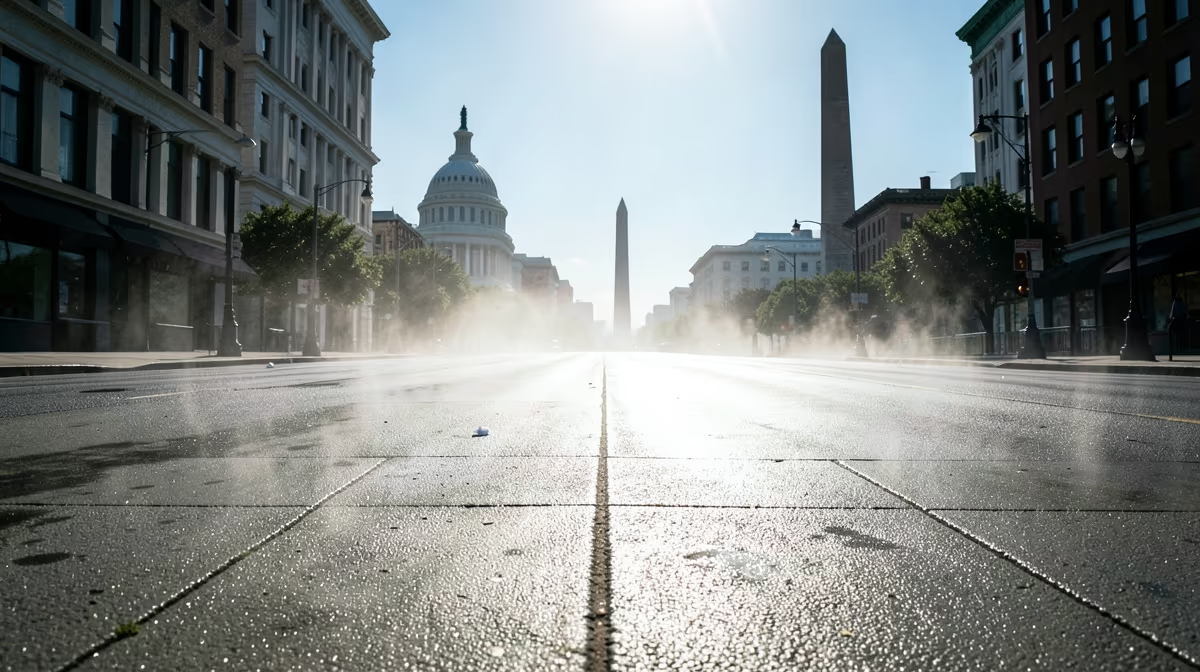
As a dangerous Washington DC extreme heat wave grips the region, residents are facing record-breaking temperatures that highlight critical vulnerabilities in urban planning. The National Weather Service has issued an excessive heat warning as heat index values climb past 110 degrees Fahrenheit, signaling a sustained threat to both public health and regional infrastructure stability.
##The Mechanics of a Heat Dome Washington, D.C. is currently experiencing a prolonged period of intense, stifling heat that has sent temperatures soaring well above normal levels for this time of year. This weather phenomenon, often described by meteorologists as a heat dome, is the result of a stationary high-pressure system that has parked itself over the Mid-Atlantic region. This system effectively blocks cooler air from reaching the District, creating a stagnant environment where heat becomes trapped near the surface.
Unlike typical summer weather, this pattern prevents temperatures from dropping significantly even after sunset. The combination of high ambient temperatures and significant humidity creates a heat index that makes the air feel much hotter to the human body than the thermometer actually reads. This is a multi-day event where the human body cannot cool itself effectively, even during nighttime hours, prompting meteorologist Sarah Jenkins of the National Weather Service to urge residents to treat these conditions with extreme seriousness.
##Urban Heat Islands and Infrastructure Resilience The current crisis has brought the long-term issue of urban heat islands into sharp focus. The root cause of the amplified temperatures in the National Capital Region is a combination of aging, inefficient infrastructure and the high density of concrete and asphalt. These surfaces absorb and retain solar radiation, releasing it slowly and preventing the city from cooling down overnight.
Beyond the environmental factors, the heat is placing unprecedented strain on regional infrastructure. Metro transit authorities have been forced to implement speed restrictions on surface-level tracks as a safety precaution against potential rail expansion, leading to inevitable delays for commuters. Meanwhile, energy demand has spiked across the Mid-Atlantic. While the power grid remains stable, utility providers like Pepco have requested that customers practice energy conservation during late afternoon hours to mitigate the risk of grid strain. The historical parallel to the 1936 North American heat wave remains a sobering reminder of how legacy architectural choices, often lacking in modern climate-resilient design, can struggle when pushed to their limits.
##Public Health and Safety Protocols Health officials have characterized extreme heat as a silent killer because of its ability to rapidly overwhelm the human body. As the Heat Emergency Plan remains activated, cooling centers have opened across the district, providing vital relief for the elderly, young children, individuals with chronic health conditions, and those experiencing homelessness. Local hospitals have proactively increased staffing levels in anticipation of a surge in heat-related illnesses such as heat exhaustion and dehydration.
The risk is not distributed equally. A hidden dimension of this crisis is the disparity in heat vulnerability across different D.C. wards. Historic redlining patterns continue to correlate with higher canopy deficits and lower surface temperature resilience, leaving certain neighborhoods significantly more exposed to the effects of the heat island. For those without access to air conditioning, moving to a public library, recreation center, or senior wellness center is not merely a comfort measure but a necessary step for survival.
##Political and Economic Dimensions The strain of this heat wave is felt throughout the machinery of government. There is ongoing partisan friction regarding the allocation of federal climate mitigation funding and the division of responsibility between the District government and federal agencies regarding the maintenance of critical infrastructure. Economically, the heat contributes to rising operational costs for federal facilities, regional productivity losses, and heightened demand on the PJM Interconnection power grid.
From a geopolitical standpoint, the extreme weather introduces security vulnerabilities that are often overlooked. Mission-critical facilities and national intelligence command centers located in heat-trapping suburban complexes face operational challenges when cooling systems are pushed to their maximum capacity. Protecting these nodes of national security against climate-driven disruptions has become a central, yet quiet, priority for policy makers analyzing the intersection of climate policy and national defense.
##Future Outlook and Expert Predictions The forecast for the next 24 hours suggests that the National Weather Service Heat Advisory will remain in effect, with peak heat index values hovering near 105 degrees. Demand on the electrical grid and utilization of municipal cooling centers are expected to remain at high levels. Looking ahead to the next 72 hours, meteorologists expect a slow-moving cold front to provide some relief by late Wednesday, though high humidity will likely persist even as temperatures begin a gradual decline.
Experts warn that the intensity of this weather event may force the city to extend the operating hours of cooling centers if the heat index remains elevated. The worst-case scenario—though not currently realized—would involve a grid failure triggered by peak cooling demand, which could lead to rolling blackouts and leave the most vulnerable residents without climate control during the height of the heat index. Conversely, the best-case scenario involves the rapid arrival of a cooling air mass that dissipates humidity and allows for a return to seasonal averages without further infrastructure degradation.
Frequently Asked Questions
How do you stay safe during a heat wave in Washington DC?
To stay safe during a DC heat wave, prioritize staying indoors with air conditioning and avoid strenuous outdoor activities during peak afternoon hours. Drink plenty of water even if you do not feel thirsty, and wear loose-fitting, light-colored clothing if you must venture outside.
What are the symptoms of heat exhaustion to watch for in DC?
Common symptoms of heat exhaustion include heavy sweating, rapid pulse, dizziness, fatigue, and nausea. If you experience these symptoms while outdoors in DC's high humidity, move to a cool place immediately and seek medical attention if your condition does not improve.
Are there public cooling centers in Washington DC during extreme heat?
Yes, the District of Columbia typically activates cooling centers, including public libraries, recreation centers, and senior wellness centers during extreme heat emergencies. Residents can check the DC Department of Energy and Environment website or call 311 to find the nearest location operating during a heat alert.
Why does Washington DC feel so hot during the summer?
Washington DC experiences intense summer heat partly due to the urban heat island effect, where concrete and asphalt absorb and retain heat. Additionally, the city's proximity to the Potomac River and surrounding wetlands often contributes to high humidity levels, which makes the air feel significantly hotter than the actual temperature.
How can I protect my pets during a DC heat wave?
Keep your pets indoors as much as possible and ensure they have constant access to fresh, cool water. Avoid walking dogs on hot pavement, which can burn their paws, and never leave them inside a parked vehicle, as temperatures can become fatal within minutes.
What is a heat emergency in Washington DC?
A heat emergency is declared by the District when the heat index is forecasted to reach 95 degrees Fahrenheit or higher. This declaration triggers specific city services, such as expanded cooling center hours and additional outreach to vulnerable populations to prevent heat-related illnesses.
Conclusion
The extreme heat wave currently impacting Washington D.C. remains a significant public health and infrastructure challenge. While the National Weather Service projects a transition toward more moderate temperatures by midweek, the immediate risks of heat exhaustion and power grid strain persist. Confirmed developments include the activation of the city’s Heat Emergency Plan, ongoing speed restrictions on Metro transit, and heightened readiness at regional medical facilities. Residents are advised to continue utilizing cooling centers and adhering to local conservation requests until the current high-pressure system fully dissipates. Future policy discussions will likely focus on the long-term integration of heat-resilient urban planning to mitigate the vulnerability of the capital region to similar climate events.


.webp)
