
World Cup 2026 Schedule Reveals Massive Shifts for Global Football Fans
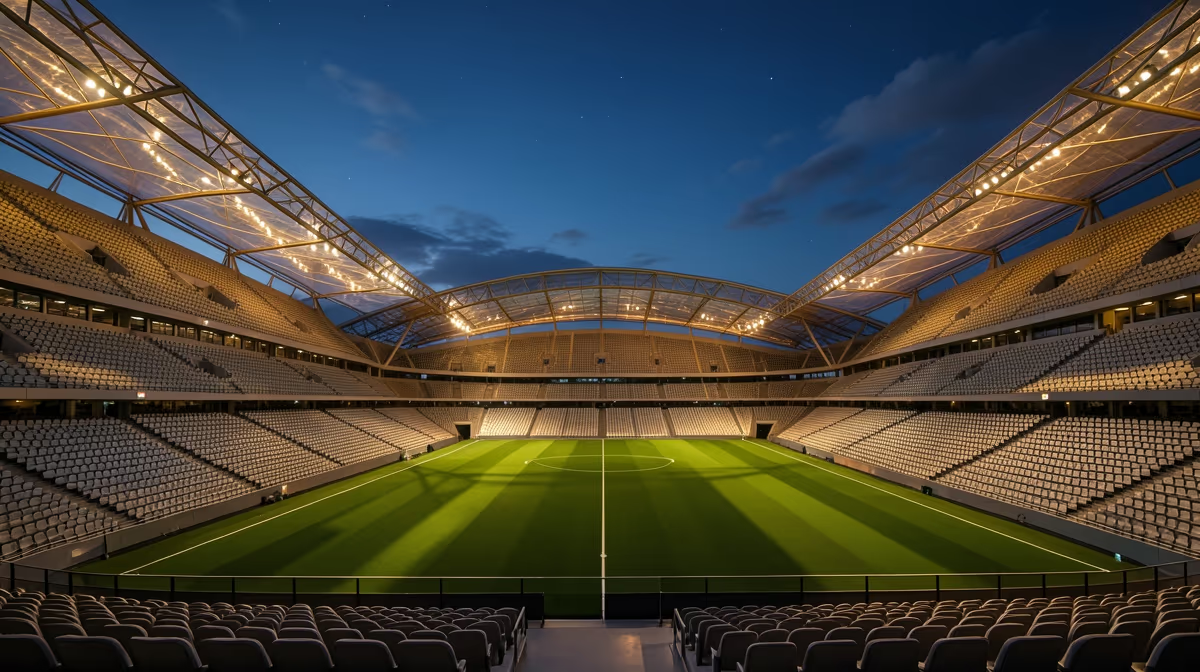
The global sporting calendar has entered a transformative phase as FIFA officially confirms the pathway for the 48-team expansion, permanently altering how the world perceives the premier international football tournament. Access the full world cup 2026 schedule and see the latest world cup quarter finals 2026 bracket updates to understand the massive logistical shift defining the upcoming cycle.
The Infrastructure of an Expanded Tournament
The 2026 World Cup represents a monumental departure from historical norms, featuring 104 matches played across 16 host cities in Canada, Mexico, and the United States. This expansion from the traditional 32-team format requires unprecedented coordination across three distinct time zones. The opening fixture is set for June 11, 2026, at the historic Estadio Azteca in Mexico City, while the final, which will determine the world champion, is scheduled for July 19, 2026, at MetLife Stadium in New Jersey.
The structure of the tournament involves 12 groups of four teams. The top two teams from each group, along with the eight best third-placed finishers, will advance to an expanded round of 32. This format shift is designed to optimize commercial broadcasting rights and increase engagement, though it presents significant challenges for team travel logistics and stadium capacity management. As nations prepare to compete, host cities are transitioning from the planning phase to intensive infrastructure readiness, as they anticipate an influx of global visitors on a scale rarely seen in modern sports.
Geopolitical and Economic Implications
The shift toward a multi-host, revenue-optimized model highlights the transition from centralized football governance to a broader, expansionist fiscal policy. For many nations, particularly those involved in joint hosting bids, the tournament serves as a form of soft power projection, signaling regional stability and logistical reliability. The economic rationale is clear: by utilizing legacy infrastructure across vast geographic areas, host nations aim to maximize tourism revenue and broadcasting appeal.
However, this commercial expansion creates a hidden tension regarding the subordination of domestic club football calendars. As FIFA prioritizes international scheduling, power is incrementally shifting away from established leagues toward the governing body. This creates a complex environment for national associations and professional players alike, who must balance the intense physical demands of the tournament with existing club commitments. The legacy of such events is increasingly measured not just by the competition itself, but by the ability of host nations to manage the diplomatic and economic consequences of hosting a truly global spectacle.
Tracking the Competition
For fans and analysts following the path of teams like England, the qualification process remains the primary focus. The road to the knockout stages is paved with high-stakes matches that will determine the final world cup 2026 bracket. While the general fixture list is established, specific team base camps and training facility allocations are still being finalized. This creates a fluid environment where logistical announcements are expected to increase in frequency over the next 24 to 72 hours.
Media speculation regarding venue selection and scheduling is currently at a high point. British audiences are particularly focused on how kick-off times will be optimized for prime-time viewing, ensuring that the tournament remains accessible despite the significant distance between North America and Europe. Governing bodies are expected to provide further clarity on ticket distribution timelines and broadcaster rights for UK fans shortly, which will be critical for those planning to travel or participate in viewing festivities.
Expert Outlook and Contingency Planning
The preparation phase for 2026 is a balancing act between ambition and logistical reality. Experts predict that the tournament success will hinge on the ability of FIFA and the host nations to mitigate potential travel delays and minimize scheduling conflicts for supporters. The best-case scenario involves a smooth rollout of fixtures that maintains high accessibility for home fans while accommodating the needs of a diverse global audience.
Conversely, the worst-case scenario involves logistical bottlenecks that could trigger public outcry. Given the scale of the 104-match schedule, the margin for error in transit and venue operations is slim. National fan engagement is expected to be a key indicator of the tournament health, as the emotional and economic stakes for participating countries continue to rise. Observers should monitor the official FIFA channels for updates on training base camps and transit arrangements as they are confirmed through the qualifying rounds.
Historical Context and Future Impact
The World Cup has evolved significantly since its inception in 1930. While it has survived global disruptions like the Second World War, the move to a 48-team format in 2026 is arguably the most radical structural change in its history. This evolution mirrors broader shifts in international diplomacy, where sporting influence is increasingly viewed as a tool for maintaining relevance. By analyzing the trajectory from the 1966 tournament to the current expansionist model, one can see how the event has transformed from a small tournament into a massive cultural and economic powerhouse that effectively dictates the work-life schedules of billions.
Frequently Asked Questions
When is the next FIFA World Cup taking place?
The next FIFA World Cup is scheduled to take place in 2026. It will be hosted jointly by Canada, Mexico, and the United States.
Where can I find the official World Cup fixture list?
You can find the official fixture list on the FIFA website under the tournament section. Major sports news outlets and football broadcasting sites also provide updated schedules once they are released.
Are the World Cup 2026 match times confirmed?
Specific kick-off times for each match in the 2026 World Cup are finalized by FIFA closer to the tournament start date. You should check official schedules periodically for any adjustments to the timing.
How many teams will compete in the 2026 World Cup?
The 2026 World Cup will feature an expanded format consisting of 48 teams. This is an increase from the previous 32-team format used in earlier tournaments.
Will England be playing in the next World Cup?
England participates in the qualification stages for the World Cup alongside other UEFA nations. They must successfully progress through these qualifying rounds to secure their place in the final tournament.
How can I buy tickets for World Cup matches?
Tickets are sold exclusively through the official FIFA ticketing portal. It is recommended to register on the FIFA website to receive notifications regarding sales phases and application deadlines.
Conclusion
The 2026 World Cup is set to be a landmark event characterized by unprecedented scale and complexity. With the fixture list confirmed and the host nation infrastructure in the final stages of coordination, the focus now shifts to the remaining qualification rounds and the tactical preparations of participating teams. Fans should remain attentive to official announcements regarding ticket distribution and broadcast schedules as the tournament draws closer. While logistical challenges remain, the structural foundation for a truly global, expanded tournament is now in place.


.webp)
