
EU Entry/Exit System Launch Will Change UK Travel Patterns Permanently
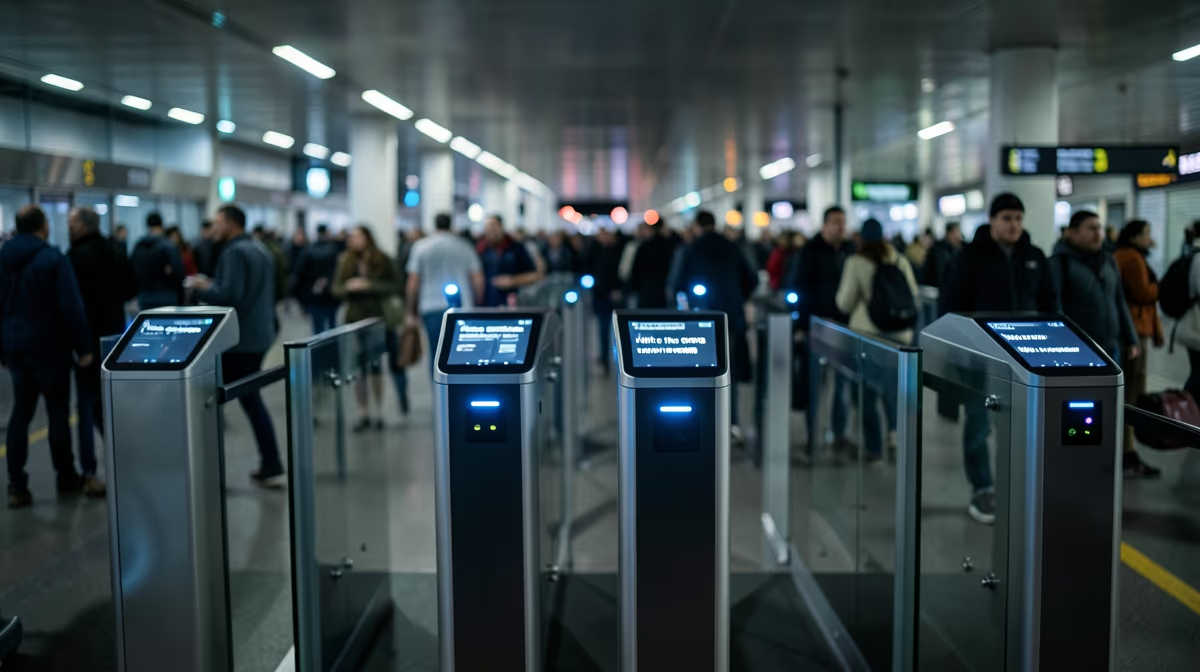
The landscape of cross-border transit between the United Kingdom and the European Union is undergoing a profound structural transformation as automated digital border control protocols prepare to come online. This upcoming entry/exit system represents a significant shift in how British citizens will navigate EU borders, impacting travel plans and border processing times as we move toward a fully digitized era of European security.
Understanding the New Framework
At its core, the Entry/Exit System, or EES, is a sophisticated, automated IT framework designed by the European Union to overhaul the management of its external borders. For decades, the movement of people into the Schengen Area—which encompasses most EU member states—has relied heavily on manual passport stamping. The EES marks the definitive end of that era. When the system becomes operational, the process of documenting the arrival and departure of non-EU nationals will be handled through a centralized digital registry.
This mechanism is not merely an administrative upgrade; it is a security-focused initiative intended to enhance the integrity of the Schengen zone. By systematically recording the name, travel document type, biometric fingerprints, and facial images of third-country nationals, authorities can monitor the duration of stays with unprecedented accuracy. For British travelers, this means that while the fundamental 90-day limit within a 180-day period remains unchanged, the enforcement of this rule will now be governed by automated data rather than manual observation.
Impact on UK Border Control and Transit
The logistical reality of implementing such a system at the UK-EU border is complex. Major transit hubs, including the Port of Dover, St Pancras International, and the Eurotunnel, are currently deep in preparations to integrate the necessary biometric kiosks into their existing infrastructure. These locations serve as the primary gateways for millions of travelers, and the shift from manual checks to digital biometric registration represents a significant operational challenge.
The primary concern for policy makers and transit operators is the potential for increased processing times. Because every traveler—unless specifically exempted—must provide biometric data upon their first entry into the Schengen zone, initial throughput at these ports is expected to face pressure. While the biometric profile remains valid for three years, meaning travelers will not need to provide their fingerprints and facial scan on every subsequent visit during that window, the initial registration process is inherently more time-consuming than a traditional document inspection. Both the UK Home Office and EU agencies are currently engaged in intensive communication to ensure that these processing booths are optimized to prevent significant bottlenecks that could disrupt cross-channel freight logistics and tourist travel.
The Political and Diplomatic Calculus
The transition toward this digital fortress model is rooted in the broader geopolitical recalibration following the UK's withdrawal from the EU. The move away from the Schengen-aligned framework has necessitated the creation of new border sovereignty protocols. By implementing the EES, the European Union is asserting its regulatory independence and reinforcing the perimeter of its common travel area.
From the perspective of UK officials and analysts, this represents a shift in security interdependence. What were once seamless physical borders are being replaced by digital checkpoints that require robust data-sharing agreements and a high degree of mutual trust between the UK and EU. This policy shift serves as a mechanism to address security concerns while balancing the necessity of maintaining efficient trade and migration routes. There is also a secondary, more nuanced dimension to this shift: the potential for sophisticated data-harvesting profiles. By creating a more granular view of travel patterns, the system may inadvertently influence how high-net-worth individuals and international business travelers view the ease of transit between the two regions, potentially affecting future investment patterns.
Future Outlook and Operational Risks
The timeline for implementation, currently targeted for November 2024, remains a focal point for intelligence analysts and industry stakeholders. The next 24 hours in the lead-up to this launch will likely see a surge in technical readiness reports, with significant scrutiny placed on the communication between the UK Home Office and port operators. As we progress into the following 72 hours and beyond, the emphasis will shift toward policy clarifications and potential staffing adjustments at major hubs to accommodate the new biometric verification flows.
Expert projections suggest a high likelihood of a phased rollout to mitigate the risk of mass disruption during peak travel periods. While the best-case scenario envisions a smooth integration with minimal latency and high public compliance, the worst-case scenario involves severe bottlenecks caused by hardware failures or data processing delays. Such complications could result in significant travel cancellations and an unintended degradation of cross-channel supply chains. The success of the project hinges on the stability of the IT infrastructure managed by eu-LISA and the effectiveness of contingency plans currently being finalized for high-traffic zones like Dover and St Pancras.
Frequently Asked Questions
What is the new EU entry/exit system (EES) and how does it affect UK travellers?
The Entry/Exit System (EES) is an automated IT system for registering travellers from non-EU countries each time they cross an EU external border. UK citizens travelling to the Schengen Area will need to provide biometric data, such as fingerprints and a facial image, upon their first entry into the zone.
Do UK citizens need to register for the EU entry/exit system before they travel?
UK citizens do not need to register for the EES in advance of their trip. The registration process happens automatically at the border crossing point upon arrival in an EU country, where you will provide your biometric information to officials.
Will the EES replace the need for a passport stamp for UK travellers?
Yes, the EES will effectively replace the manual passport stamping process for travellers from outside the EU. By digitally logging entry and exit data, the system aims to automate border control and improve the accuracy of monitoring authorised stay durations.
How long can I stay in the EU under the new entry/exit system?
The EES does not change the existing rules for short stays in the Schengen Area. UK travellers can continue to visit for up to 90 days within any 180-day period without a visa, with the system simply tracking these days more precisely to ensure compliance.
Will the EES cause delays at UK-EU border crossings?
There is a possibility of increased waiting times at border crossings, particularly during the initial implementation phase, as biometric registration takes longer than traditional passport checks. Transport providers and border authorities are working to implement digital pre-registration kiosks to help mitigate these potential delays.
Is the entry/exit system the same as the ETIAS visa waiver?
No, the EES and ETIAS are two separate systems, although they work together to enhance border security. While the EES digitally records entry and exit information at the border, ETIAS is a pre-travel authorisation scheme that requires travellers to apply and pay a fee before their journey.
Conclusion
The introduction of the Entry/Exit System marks a definitive evolution in the relationship between the United Kingdom and the European Union. By transitioning to a biometric, data-driven border model, the EU is prioritizing security and regulatory precision, while the UK continues to adapt its transit infrastructure to meet these new requirements. As the November 2024 launch date approaches, focus remains fixed on the technical stability of key ports and the ability of operators to balance security mandates with the need for efficient movement of people. For travelers, the immediate future will involve navigating a more automated entry process, one that requires patience as the new protocols stabilize within the broader context of European border management.


.webp)
