
EU Entry/Exit System Changes Are Creating New Realities for UK Travellers
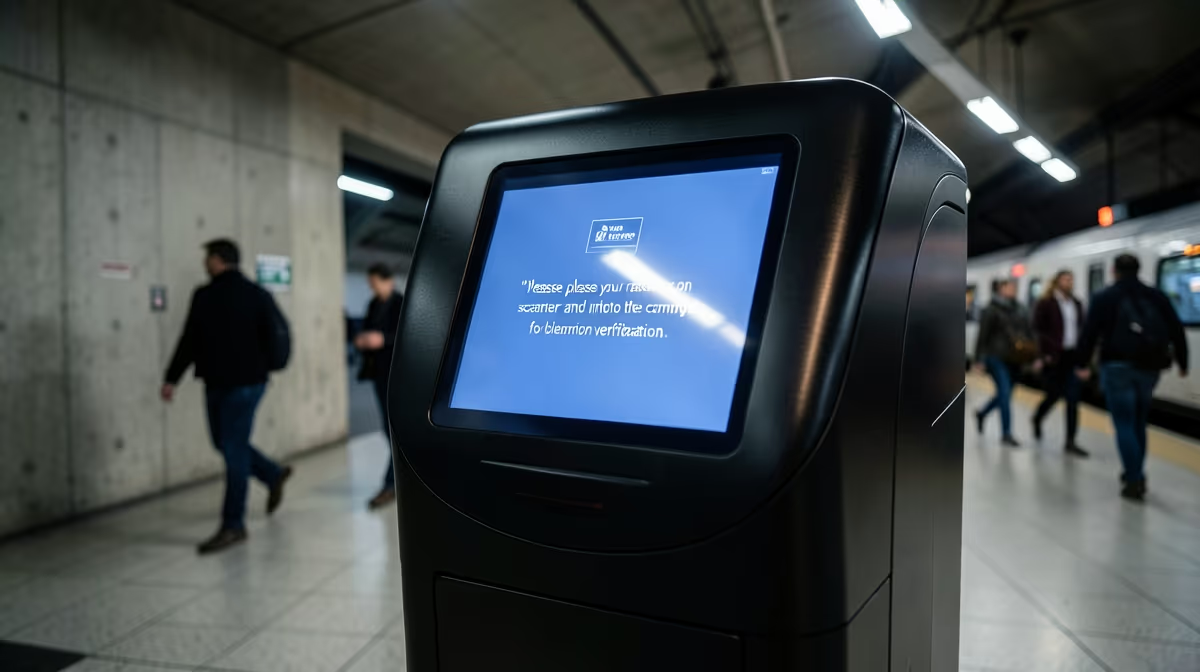
The landscape of cross-border movement is undergoing a quiet but seismic shift that will soon demand new digital formalities from every British traveller heading into the Schengen Area. The upcoming EU entry/exit system (EES) is set to fundamentally change how travellers from Great Britain cross into the Schengen area, replacing decades of manual passport stamping with a sophisticated, biometric-led security architecture.
The Mechanics of the Digital Border
At its core, the EES represents a transition from paper-based tracking to an automated, centralized IT platform designed to monitor non-EU citizens with unprecedented precision. Instead of relying on manual passport stamps, which have long served as the primary method for verifying the duration of short-stay visits, the new system will require travellers to scan their passports at self-service kiosks. Upon the first entry into the Schengen zone after the system becomes operational, visitors will be required to provide biometric data, specifically facial images and fingerprints. This data is then securely stored in a centralized database for three years, creating a permanent digital record that automatically calculates the length of a stay and flags any traveller who exceeds the permitted 90-day limit within any 180-day period.
Geopolitical and Economic Drivers
The necessity to re-establish border sovereignty and data control following the loss of EU-wide shared border databases post-Brexit serves as the primary root cause for this initiative. By implementing this system, the European Union is effectively aligning its external borders with a modern, high-tech security architecture, while simultaneously reinforcing the third-country status of British nationals. This shift has not been without friction. There is a palpable tension between the political legacy of regaining border control and the administrative reality of managing high-volume transit points like Dover and St Pancras. Economically, this creates significant logistical challenges. The prospect of increased processing times at these critical hubs threatens to dampen the tourism sector and potentially complicate cross-channel freight operations, as the time required to capture biometric data exceeds that of a simple visual document check.
Operational Hurdles and Logistics
For those navigating the travel corridors between the UK and the European continent, the primary concern remains the risk of physical bottlenecks. The Port of Dover, Eurostar terminals, and ferry operators are currently engaged in intense stakeholder meetings to address the potential for extreme queuing. As the rollout date approaches, the focus of both the UK Home Office and the European Union Agency for the Operational Management of Large-Scale IT Systems (eu-LISA) has turned toward infrastructure adjustments. Digital kiosks are being integrated into terminal layouts, and there is active exploration of mobile registration apps designed to mitigate the time spent at the border. However, the worst-case scenario—significant logistical bottlenecks leading to widespread travel disruption—remains a risk that authorities are attempting to mitigate through testing and phased implementation strategies.
Future Outlook and Technical Preparation
Over the next 24 hours, the UK Home Office is expected to ramp up communications regarding technical requirements and updated timelines for the transition. In the following 72 hours, operational focus will intensify at the juxtaposed border controls, where British and European authorities must coordinate their physical and digital workflows to prevent a complete slowdown of transit. Expert predictions suggest that while diplomatic pressure to delay full implementation to avoid chaos remains, the focus is shifting toward practical solutions like mobile pre-registration. The best-case scenario envisions a smooth, phased integration where digital infrastructure handles the volume efficiently, while the worst-case involves severe logistical delays that could ripple through the supply chain and trigger significant public political outcry.
Security and Privacy Considerations
A significant but often overlooked element of this transformation is the evolution of data privacy protocols. The system will store biometric data for three years to ensure long-term compliance with entry requirements. While this provides the EU with a clear, real-time overview of who is moving in and out of its territory, it has prompted discussions regarding the lack of public scrutiny over how such intimate personal data is shared between intergovernmental agencies. This hardening of the border mirrors historical parallels from the post-Cold War era, where transit points evolved from relatively porous zones into strictly regulated conduits of surveillance and documentation. For the traveller, this represents a permanent increase in the technical burden of international travel.
Preparing for the Shift
The transition to this new system marks a departure from the relatively friction-free travel that British citizens have long enjoyed within the European bloc. While the exact go-live date in the final quarter of 2024 remains subject to final review, the mandate is clear: the era of the manual stamp is nearing its end. Travellers must be prepared for a more tech-heavy arrival process that prioritizes data integrity and security above speed. As infrastructure adjustments continue at key ports, the success of the EES will hinge on whether digital kiosks and staffing levels can keep pace with the sheer volume of passenger and freight traffic moving across the English Channel.
Frequently Asked Questions
What is the new Entry/Exit System (EES) for the UK and EU?
The Entry/Exit System (EES) is an automated IT system introduced by the EU to register travelers from non-EU countries, including the UK, every time they cross an external border. It replaces the manual stamping of passports with digital records of entry and exit dates, along with facial images and fingerprints.
How will the EES affect British travelers going to the EU?
British travelers will need to provide biometric data, specifically fingerprints and a facial image, during their first visit to the Schengen Area once the system launches. This process will apply at all air, sea, and land borders and is intended to enhance border security and identify overstayers more effectively.
Do UK citizens need to register for EES before traveling?
There is no pre-registration process for EES for individual travelers. The registration of biometric data happens automatically at the border when you first enter the EU, meaning your first trip after the system goes live may take slightly longer than usual.
Is the EES the same as the ETIAS visa waiver?
No, the EES and ETIAS are two separate systems. EES is the digital record of your entry and exit, while ETIAS is a travel authorization similar to the US ESTA that requires an online application and fee prior to travel.
Will EES cause delays at UK border crossings like Dover or St Pancras?
There are concerns that the mandatory biometric checks could lead to longer processing times at border controls, such as the Port of Dover, Eurotunnel, and St Pancras International. Authorities are currently working on infrastructure adjustments and digital kiosks to help minimize potential queues for passengers.
How long will my EES data be stored?
Your EES data, including biometric information and travel dates, will be stored in the system for a period of three years. After this time, the data is automatically deleted unless you have overstayed your permitted visit in the Schengen Area.
Conclusion
The implementation of the EU Entry/Exit System signifies a major shift in the relationship between British travelers and the Schengen Area. While the system is confirmed as a mandatory requirement for all non-EU citizens, the logistical framework for its deployment remains in a state of final refinement. Travelers should anticipate that their first visit after the rollout will involve new biometric registration requirements at the border. Moving forward, the focus remains on the collaboration between the UK Home Office and European agencies to harmonize these digital checks with existing border infrastructure, aiming to balance stringent security objectives with the need for efficient passenger movement.


.webp)
