
Schengen EES Border System Launches With Major Travel Consequences
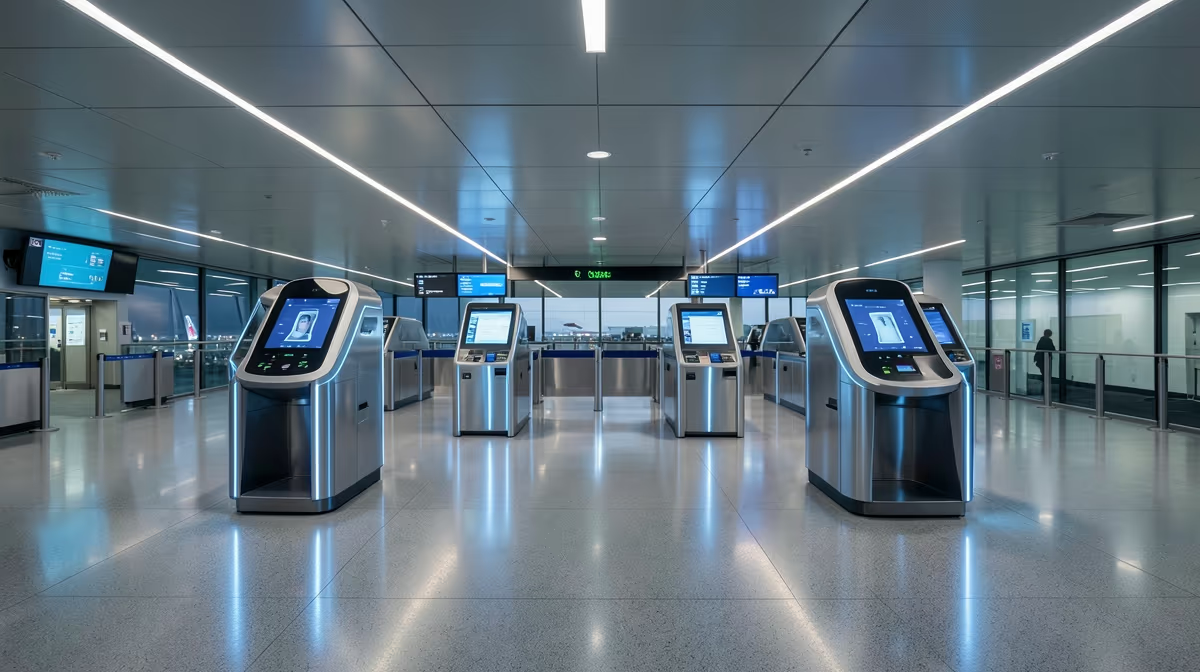
The upcoming implementation of the Schengen EES marks a significant shift in international travel regulations. As countries adopt advanced border control technology, passengers must prepare for new digital identity surveillance protocols designed to enhance security across the European Union. Starting November 10, 2024, the European Union will officially launch the Entry/Exit System (EES), a sophisticated automated IT system that fundamentally replaces the traditional manual stamping of passports for non-EU travelers with a centralized, biometric-backed digital registry.
Understanding the Schengen EES Framework
The Entry/Exit System is designed as an automated IT solution to track the movement of third-country nationals visiting the Schengen Area for short stays. Currently, the process relies on border agents manually checking and stamping passports, a method prone to human error and inconsistency. By transitioning to a digital infrastructure, the European Commission aims to modernize border management as part of the broader Smart Borders Package.
The system captures specific biometric data, including facial images and fingerprints, upon a traveler's first arrival at an external border crossing. This data is then stored in a centralized database that records arrival and departure dates, as well as any instances of refused entry. For the traveler, this means the end of ink stamps and the beginning of a digital footprint that accurately calculates the duration of a stay against the allowed 90-day limit. This framework applies to all non-EU nationals, whether they are traveling from countries requiring a visa or those participating in visa-waiver programs.
The Role of Biometric Border Control Technology
The shift toward biometric verification signifies a move from reactive border management to a more preemptive digital surveillance posture. By utilizing facial and fingerprint recognition, border authorities can verify identities with a degree of precision that paper-based documents cannot provide. This technological leap is intended to combat identity fraud and ensure that overstayers are identified with greater efficiency.
The implementation of this technology represents a significant investment in border security infrastructure. It moves the power of verification from the individual border guard to a centralized algorithmic database. While this enhances the integrity of the Schengen zone, it also shifts the burden of verification onto technical systems, necessitating a high degree of interoperability between the 29 participating member states, eu-LISA, and Frontex.
Navigating Digital Identity Surveillance at European Borders
As the launch date approaches, logistical concerns regarding the integration of biometric scanning equipment at high-traffic entry points remain at the forefront of the conversation. Travelers should anticipate potential delays during the initial rollout, as border guards and technical personnel refine the verification process.
The system is designed to function in tandem with the European Travel Information and Authorization System (ETIAS), which is slated for implementation in 2025. Together, these systems form a comprehensive digital perimeter. For the international traveler, the immediate impact is a change in the physical experience at the border, requiring biometric enrollment upon the first entry into the Schengen Area. Commissioner Ylva Johansson has framed the system as a game-changer for security, emphasizing its role in providing real-time data to protect the integrity of the border zone.
Analyst Perspective on Sovereignty and Security
The transition to the EES is rooted in the structural erosion of traditional border sovereignty. In an era defined by transnational threats, the reliance on manual verification has become a vulnerability. The political shift here is toward a centralized digital model, which creates new digital spheres of influence. Geopolitically, the interoperability of these systems between nations is defining the alliances of the 21st century.
There is also an economic dimension to this transition. The massive privatization of border infrastructure through contracts with defense contractors represents a significant shift in how border management is funded and executed. Furthermore, the commodification of travel patterns and biometric data presents new questions regarding how this information might be utilized in the future. Historically, this move mirrors the 19th-century implementation of internal passports used by the Russian Empire and Ottoman bureaucracy to control migratory labor and monitor population movement, illustrating that the drive for centralized oversight of human mobility is a recurring phenomenon in statecraft.
Predicting the Initial Rollout
As the November launch date looms, the focus is shifting toward the technical integrity of the system. Experts predict a phased, cautious rollout to mitigate the risk of hardware failures and biometric verification bottlenecks at high-traffic airports and land borders. In the next 24 hours, there will be an intensified focus on border testing protocols and the necessary technical adjustments at major European hubs to ensure all systems are synchronized.
Within the next 72 hours, observers expect heightened diplomatic discourse regarding potential congestion. The best-case scenario involves seamless technical synchronization across all member states, perhaps facilitated by the use of pre-registration mobile kiosks. Conversely, the worst-case scenario involves system-wide software glitches, which could result in prolonged queues, chaotic passenger flow, and political backlash regarding travel disruption. The success of the system depends heavily on how these technical and logistical variables are managed by eu-LISA and member states in the final days before the go-live.
Frequently Asked Questions
What is an entry and exit system?
An entry and exit system is a digital security solution designed to manage and monitor the movement of people or vehicles through designated access points, using hardware and software to track real-time logs and verify permissions.
How do electronic entry and exit systems work?
These systems require users to present a credential, such as an RFID card, biometric fingerprint, or facial scan, to a controller that validates the data against a centralized database before granting access.
Why is an automated entry and exit system important for security?
Automated systems eliminate human error and manual logging inconsistencies, providing accurate, time-stamped records that enhance security and enable rapid responses.
What are the benefits of using biometric entry and exit systems?
Biometric systems use unique physical characteristics like fingerprints or facial features that are difficult to steal or share, reducing credential fraud and creating a more efficient, keyless verification process.
Are entry and exit systems necessary for businesses?
Yes, they are essential for workplace safety, attendance management, and asset protection, while ensuring compliance with safety regulations regarding occupancy and emergency egress.
What should I consider when choosing an entry/exit management system?
Consider the number of access points, the volume of traffic, and the level of security required, while ensuring the system is scalable and compatible with existing infrastructure.
Conclusion
The implementation of the Schengen EES on November 10, 2024, represents a permanent shift toward digital, biometric-based border control. By replacing manual stamping with a centralized database for non-EU travelers, the European Union is attempting to reconcile the need for enhanced security with the realities of modern migration and high-volume travel. While the system promises to increase the efficiency and accuracy of border management, the initial rollout phase remains a significant logistical challenge. As member states and technical agencies finalize their integration protocols, international travelers should remain informed regarding new entry requirements and expect potential operational adjustments at border control points across the Schengen Area. The transition to this digital infrastructure reflects a broader global trend toward the preemptive management of cross-border movement, marking a definitive evolution in 21st-century diplomacy and security protocols.


.webp)
